


The never-before-published interview with Wernher von Braun
 Wernher von Braun with Mário Giudicelli
Previously Unpublished Interview with Wernher von Braun: Reflections on History, Science and Humanity (1970) Authorized by Dr Giudicelli to be published by Dr Marcello Bossois
By Mario Giudicelli
The following text presents a complete, unaltered transcript of an interview given by scientist Wernher von Braun to journalist Mario Giudicelli in Huntsville, Alabama, around 1970, years after the successful arrival of man on the Moon.
🚀 American Power and the Space Race
Giudicelli: Dr. Braun, Dr. Gordon Dean, Chairman of the Atomic Energy Commission, traveled to explain to the world that the U.S. would not use its nuclear power tyrannically, as American democracy is controlled by a system of checks and balances."checks and balances"Now that American rockets can reach the Moon, doesn't the military power of the United States become even more dangerous?
Von Braun: If that power were in the hands of the governments of the vast majority of nations today, it is very likely that this nuclear power and the rockets we have built could truly frighten the entire world population. But in the United States, in my view, this is completely impossible, because... American democracy is a very powerful instrument that prevents this nation from turning into something like Nazism or Stalinism..
Giudicelli: But you yourself were an important assistant to Adolf Hitler, manufacturing the V-1 and V-2 rockets. Why is your opinion today so contrary to your support for Nazism before the end of World War II?
Von Braun: Well, first of all, I wasn't the one who built the ME302 jet plane. My contribution to the V-1 and V-2 rockets was, in a way, limited. I was just part of an excellent team, but I wasn't the main figure. Our main scientist and boss was Dr. Dornmeyer. Remember, I wasn't even 30 years old yet.
Without a doubt, as a scientist and indeed as any citizen, I was a German patriot And I was heavily influenced by Adolf Hitler's government. What happened to me was exactly the same as what happened to any patriotic citizen of a country involved in a war. Our minds become more or less closed. It is our homeland that is threatened. In Germany and in distant Holland, even we scientists in such important and vital work as in Peneemunde, We knew nothing about the atrocities ordered by Goering or Heinrich Himmler.Even Adolf Hitler's cultural right-hand man, his architect Albert Speer, had very little information about what was happening in the distant and little-known concentration camps of Dachau, Buchenwald, or Auschwitz.
Giudicelli: Forgive me, but what led you to change from a Nazi shirt to a democratic shirt and put your science at the service of your adversary of yesterday?
Von Braun: Firstly, I was never what you would call a Nazi.Politics never interested me, nor any of my colleagues in Peneemunde. I simply worked with the traditional firmness, dedication, punctuality, and technique that are well-known characteristics of the Germans in their scientific endeavors. When we realized, in 1945, that the American armies were already a short distance away, our thought in the face of the undeniable Allied victory was not that the victorious generals would put us against a firing squad.
Giudicelli: So you're telling us that you didn't have what is normally called... "war hatred" against the adversary. Didn't you have the urge to kill Americans?
Von Braun: At no point. What we were thinking about was the best way to protect our instruments from Allied bombing and to prevent the Nazis themselves, on Adolf Hitler's orders, from planting bombs in our facilities.
Our first thought, as soon as we began our research related to jet rockets, was that to glorify our homeland. and also to be admired. When we understood that the war was lost and that victory had been achieved by the West, by the Allies, and by democracy, we reasoned that we would simply have to To raise the white flag and offer our science and research to the new leaders..
Giudicelli: But that sounds cynical and opportunistic to me. What do you have to say about that?
Von Braun: Far from it! In our work, what we truly desired, as scientists, was to invent something new and sensational for the worldThe use of V-1 and V-2 was a sort of byproduct of our scientific capabilities, which only became possible because the German government provided us with ample resources. We, personally as scientists, did not wish to kill anyone.
As soon as we were brought to the United States and started producing new science for American democracy, what happened was that we were enormously successful, because NASA's vast resources initially stemmed from the Cold War. fueled on one side by Mr. Khrushchev in the Soviet Union, and on the other by President John Kennedy in the United States.
Giudicelli: Could we not equally say that there is a similar tendency on the part of the United States to expand its power and that, therefore, the actions of Stalin and, later, of Mr. Nikita Khrushchev and Mr. Kosygin, in launching themselves into the space race, were due to the same motivations as those of the United States?
Von Braun: Most likely. The Russian people and government are certainly as patriotic and dedicated to their homeland as the Americans are, or as we were a few years ago in Germany. Neither the Russians would think they want to conquer the world, nor would the American people accept the accusation of wanting to rule the world. But the truth is that... Beneath the skin of each of us lies a ferocious animal that can never be tamed..
Giudicelli: In that case, I would like to know your opinion, or perhaps your prediction, about the future of communism.
Von Braun: If history teaches us anything, my impression is that sooner or later... Communism will eventually have to end.My opinion is that the human species, like any other animal species, lives, struggles, works, seeks to survive, or behaves precisely within the precepts of... survival of the fittestThe equality preached by Lenin and based on the economic ideas advocated by Karl Marx may sound very good on paper and in theory. But in practice, it doesn't work.
🇩🇪 The Rise of Hitler and the Influence of the Masses
Giudicelli: How can one explain that a country so vastly informed and educated, with a very high percentage of university graduates, with citizens like Beethoven and Kant, fell under the total power and influence of an Adolf Hitler?
Von Braun: For the same reasons you do in Brazil, here in the United States we also fall in love with supporting football clubs, Lana Turner, or Clark Gable. Masses are easily influenced by the combination of various elements.The power of words, the leader's personality, the social or economic conditions of the moment, and the state of ignorance about politics or the country's general condition. Put all that in one bag and you can lead the masses anywhere.
In the case of Germany, we had lost the First World War and were suffering from various problems. Soon a brilliant orator appeared who, taking advantage of this incredibly unstable and dramatic situation, rallied the masses, especially because the major German industrialists, who were now paying the price for defeat, saw in Adolf Hitler someone who would help them recover their losses.
Giudicelli: But you are an intellectual, a scientist, and therefore you would not be swayed by demagogues.
Von Braun: Undoubtedly, but my attention was essentially focused on getting a good job, in a field I was passionate about, and I belonged to an almost closed group that imagined crazy things about the possibilities of powerful rockets. Politics and romantic adventures were not part of our daily lives. Our free time was spent reading scientific magazines, but newspapers were left aside. Furthermore, we were, in a way, influenced by the press and had a certain attitude of... intellectual laziness to challenge what Hitler's journalists were writing.
🇧🇷 Impressions of Brazil: Wealth and Miscegenation
Giudicelli: During your brief visit to Brazil, what impressions did you gather from your stay in Rio de Janeiro? What caught your attention the most, both positively and negatively?
Von Braun: Three things stood out to me:
-
Immense Unnoticed Wealth: Brazilians don't seem to realize the importance of immense wealth they possess in every sense.For example, steakhouses, with their enormous variety of meats served in abundance and at incredibly cheap prices, in contrast to Germany or the USA, where this would only be accessible to the very rich. I've never seen anything like it in my entire life.
-
Extraordinary Racial Mix: It was tremendous racial mixFor those of us who live in the United States today, it's difficult to understand how Italian-Brazilians don't separate themselves from Black Brazilians, Jewish-Brazilians, Japanese-Brazilians, and so on. In the United States, nobody wants to mix with anyone, whereas... Brazil is a completely integrated nation, without social conflicts of any kind.This complete Brazilian integration must be some kind of miracle, for which I can find no explanation.
-
Four Annual Harvests and Waste: The third and equally astonishing detail is that, according to what I was told in Brazil, this nation seems to be the only one that possesses four annual harvestsIn Germany, we only had one harvest per year. This means that Brazil alone could feed the entire world if it so desired.Although I'm also told that Brazilians are enormously wasteful of everything, especially food.
Giudicelli: And what did the Brazilian audience think of them?
Von Braun: In what sense?
Giudicelli: As people; are they nice? Unpleasant? Good-looking? Ugly?
Von Braun: I didn't have the opportunity to interact with or deal with the public, generally speaking. From afar, they didn't seem very attractive to me. Although on the beach I saw some truly stunning women. What I did find, however, is that... Brazilians are very noisy.In every restaurant I've been to, there was unbearable noise, waiters shouting, people talking loudly, and none of that happens in Germany, because there's a lot of respect for noise in the streets and public places. But, who knows, maybe that's a characteristic of a cheerful nation. After all, you didn't lose two world wars and you keep winning the world football championships...
Giudicelli: Do you think Brazil could become a dangerous nation? Could it attack a neighboring country someday?
Von Braun: Please forgive me for expressing myself this way, but Brazil is not known even by Brazilians.Despite its enormous size, it's like a sleeping giant, whose presence goes unnoticed. I imagine that the day Brazil awakens from this slumber and begins to stretch its legs, it will soon threaten its immediate neighbors. Brazilians, however, don't seem to have any interest... in waking up, at least not yet.
🇺🇸 Cuisine and Human Destiny
Giudicelli: Why is the food so bad here in the United States, a country that is so rich and economically powerful?
Von Braun: The truth always seems to lie somewhere in the middle. It's true that we eat poorly. And we eat poorly, perhaps, because of a remnant of what I call the Protestant religious influence, which generally condemns the sin of pleasure. The truth is that they are eaten separately.America was founded differently from nations like Brazil. Immigrants came here from all over Europe and settled without contact with each other.
When you build a huge national organization like NASA, how can you create a restaurant that pleases everyone? The way, therefore, is to make a... Food that is more or less bland, allowing everyone to add whatever they want.But the food is very well prepared and, above all, clean.
Giudicelli: Any negative comments to conclude this interview?
Von Braun: I probably have only a few years left to live, and therefore I won't be around to witness this prediction. But my impression is that... The human species is an animal species doomed to disappear.as happened with so many thousands of other animal or plant species that they were unable to adapt to the environment in which they lived.
In the case of human beings, and unlike all other species, that curious and unique human characteristic—that of possessing intelligence, that is, the capacity to think and reason—far from serving humanity to improve its living conditions and happiness, has been used throughout its brief history on this planet for destruction, for combat, for wars, and for death. Now, with the invention of the hydrogen bomb, with the new rockets we are manufacturing, and with the endless conflicts between nations or internally between the same peoples of a nation, everything leads me to believe that... We are a doomed species."But I won't be here to see that debacle," concluded Dr. Von Braun.
Scientific references and institutional guidelines
The educational guidelines on this portal follow the clinical consensus of the leading medical societies of Allergy and Immunology:



 The Brazil Without Allergies Project consolidated its trajectory of care and social inclusion in 2007, when allergists and immunologists Dr. Marcello Bossois and Dr. Patrícia Schlinkert began volunteer work in Duque de Caxias, Rio de Janeiro, to assist the population affected by soot from the Reduc Refinery. What began as an emergency and temporary action became a permanent project of public utility, recognized by Municipal Law 3393 of 2024. With more than 700,000 consultations carried out, the project is now expanding its reach with the inauguration of a new unit in São Paulo, in the Campo Limpo neighborhood, in the southern part of the capital, reaffirming its commitment to bringing health to those who need it most. Through an initiative that complements the Brazilian Unified Health System (SUS), the "Brazil Without Allergies" program offers free allergy consultations and allergy testing to identify conditions such as rhinitis, asthma, bronchitis, atopic dermatitis, sinusitis, urticaria, food hypersensitivity, prurigo strophulus (insect bite allergy), otitis, and allergic conjunctivitis. The specialized care includes pediatric and adult allergists and offers allergy vaccines at affordable prices with the support of ABBAA. In addition to the new unit in Campo Limpo, the project is present in Rio de Janeiro in Duque de Caxias, Realengo, Nova Iguaçu (Red Cross building), Niterói, São Gonçalo, Maricá, Itaguaí, Xerém, and Iguaba, as well as Curitiba in Paraná, and also has national mobile units and initiatives in Africa and the United States. Prioritizing social inclusion, the project focuses on providing free care to those most in need. To schedule your appointment with an allergist and take your free allergy test, contact us by phone: Rio de Janeiro ☎️ +55 (21) 4063-8720, São Paulo ☎️ (11) 4210-1437, Curitiba ☎️ +55 (41) 3542-1838 or via WhatsApp 📲 +55 (21) 999545632, obtaining detailed locations and a link to the Campo Limpo map through the official website https://www.brasilsemalergia.com.br/.
 The Brazil Without Allergies Project consolidated its trajectory of care and social inclusion in 2007, when allergists and immunologists Dr. Marcello Bossois and Dr. Patrícia Schlinkert began volunteer work in Duque de Caxias, Rio de Janeiro, to assist the population affected by soot from the Reduc Refinery. What began as an emergency and temporary action became a permanent project of public utility, recognized by Municipal Law 3393 of March 25, 2024. With more than 700,000 consultations carried out, the project is now expanding its reach with the inauguration of a new unit in São Paulo, in the Campo Limpo neighborhood, in the southern part of the capital, reaffirming its commitment to bringing health and quality of life to those who need it most. Through an approach that complements the Brazilian Unified Health System (SUS) and international health systems, the "Brazil Without Allergies" project offers free allergy consultations and tests to identify pathologies such as rhinitis, asthma, bronchitis, atopic dermatitis, sinusitis, urticaria, food hypersensitivity, prurigo strophulus, otitis, and allergic conjunctivitis. The specialized care is provided by pediatric and adult allergists and offers allergy vaccines at affordable prices with the support of the Brazilian Beneficent Association for Allergy Support (ABBAA). In addition to the new unit in Campo Limpo, the project is present in Rio de Janeiro (Duque de Caxias, Realengo, Nova Iguaçu, Itaguaí, Xerém, Niterói, and Iguaba), as well as Curitiba in Paraná, and also has mobile units serving all of Brazil and international operations in Africa and the United States. Prioritizing social inclusion, the project encourages patients with health insurance plans to use their affiliated networks so that free and social care is focused on those who need it most. To schedule your appointment and take the free allergy test, patients can contact us by phone in Rio de Janeiro (21) 4063-8720, in São Paulo (11) 4210-1437, in Curitiba (41) 3542-1838 or via WhatsApp (21) 999545632, obtaining all the information and detailed locations through the official website brasilsemalergia.com.br
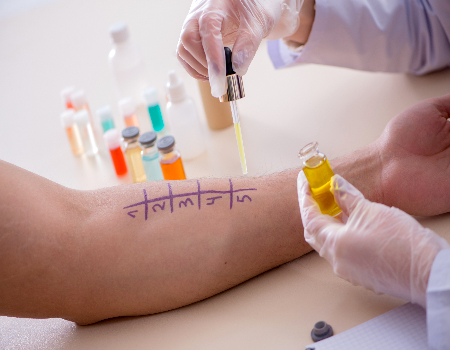 The Brazil Without Allergies Project consolidated its trajectory of care and social inclusion in 2007, when allergists and immunologists Dr. Marcello Bossois and Dr. Patrícia Schlinkert began volunteer work in Duque de Caxias, Rio de Janeiro, to assist the population affected by soot from the Reduc Refinery. What began as an emergency and temporary action became a permanent project of public utility, recognized by Municipal Law 3393 of 2024. With more than 700,000 consultations carried out, the project is now expanding its reach with the inauguration of a new unit in São Paulo, in the Campo Limpo neighborhood, in the southern part of the capital, reaffirming its commitment to bringing health to those who need it most. Through an approach that complements the SUS (Brazilian Public Health System), Brazil Without Allergies offers free and paid allergy testing consultations with allergists for various pathologies. We conduct tests to detect allergies that cause atopic dermatitis, asthma 🌬️, bronchitis 🫁, rhinitis, and prurigo strophulus (allergy to insect bites 🦟), including specific tests for dust, animal dander, food, and mosquitoes. Specialized care is provided by pediatric and adult allergists and offers allergy vaccines at affordable prices with the support of ABBAA. In addition to the new unit in Campo Limpo, the project is present in Rio de Janeiro in Duque de Caxias, Realengo, Nova Iguaçu (Red Cross building), Niterói, São Gonçalo, Maricá, Itaguaí, Xerém, and Iguaba, as well as Curitiba in Paraná, and also has national mobile units and outreach programs in Africa and the United States. Prioritizing social inclusion, the project focuses on providing free care to those who need it most. To schedule your appointment with an allergist and take your allergy test, contact us by phone: Rio de Janeiro ☎️ +55 (21) 4063-8720, São Paulo ☎️ (11) 4210-1437, Curitiba ☎️ +55 (41) 3542-1838 or via WhatsApp 📲 +55 (21) 999545632, obtaining detailed locations and the link to the Campo Limpo map through the official website https://www.brasilsemalergia.com.br/.
 Brazil Without Allergies' specialized care focuses on accurate diagnosis and accessible treatment of conditions such as atopic dermatitis, asthma 🌬️, bronchitis 🫁, rhinitis, and prurigo strophulus (allergy to insect bites 🦟). Our new unit in Campo Limpo, São Paulo, follows the network's standard of excellence, offering tests to detect allergies caused by dust, animal dander, and food. As a social inclusion project that complements the SUS (Brazilian Public Health System), we offer free and paid tests and treatments, relying on the fundamental support of ABBAA to make allergy vaccines available at affordable prices. We prioritize free care for those who need it most, encouraging patients with health insurance to use their own networks. Schedule your free allergy test 🆓 by contacting us at the following numbers: São Paulo ☎️ (11) 4210-1437, Rio de Janeiro ☎️ (21) 4063-8720 or Curitiba ☎️ (41) 3542-1838. You can also access the map of the new Campo Limpo unit or get more details on the institution's official website. Internationally recognized for its actions in Africa and the United States, the Brazil Without Allergies Social Project expands its health protection network with its arrival in Campo Limpo, in the South Zone of São Paulo. With a record of 700,000 consultations, our structure uses fixed clinics and mobile buses to bring allergist consultations and allergy tests to various regions, including Curitiba, Niterói, São Gonçalo, Maricá, Itaguaí and the Baixada Fluminense. We are a non-profit organization that seeks to democratize access to allergy vaccines and specialized treatments for sinusitis, otitis, and allergic conjunctivitis. Operating in accordance with ethical and legal standards, our medical team prioritizes social inclusion and overall well-being. To schedule appointments in São Paulo ☎️ (11) 4210-1437, Rio de Janeiro ☎️ (21) 4063-8720 or via WhatsApp 📲 (21) 999545632. Visit the website https://www.brasilsemalergia.com.br/ to find the unit nearest you and begin your treatment with a team that has been a leader in allergy health since 2007.
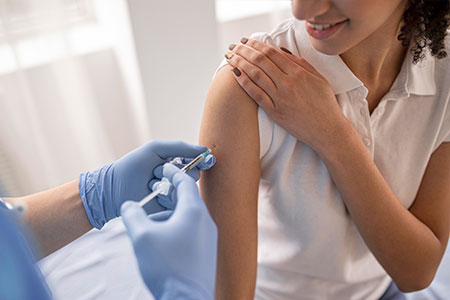 Protect Yourself with Vaccines at the Brazil Without Allergies Project! Vaccines are a safe and effective way to prevent diseases such as influenza, yellow fever 🟡, meningitis, pneumonia 🫁, and various allergies! The Brazil Without Allergies Project offers some free vaccines and medications through campaigns and sponsorships to help you have better health and quality of life. Our Locations — Rio de Janeiro: Duque de Caxias, Nova Iguaçu, Realengo, Itaguaí, Iguaba Grande (Red Cross) and Xerém. Paraná: Curitiba. 🩺 Our Services: We offer vaccines for Bronchitis 🫁, Rhinitis, Asthma, Atopic Dermatitis, and Candidiasis. Schedule your appointment! Phone RJ +55 (21) 4063-8720 and SP 11 4210-1437 ☎️WhatsApp: +55 (21) 999545632 Phone (Curitiba): +55 (41) 3542-1838 ☎️Find Our Locations Visit our website for complete addresses: https://www.brasilsemalergia.com.br/
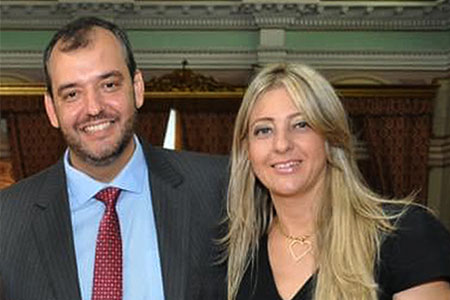 The Brazil Without Allergies Project 🇧🇷❤️ is the result of a journey of care and inclusion that began in 2007, when Dr. Marcello Bossois, an allergist and immunologist in Duque de Caxias, started volunteer work at a community association in the Baixada Fluminense region. What began as temporary support for local residents affected by the high incidence of allergies caused by soot from the region's refinery became a permanent project due to immense social demand. With the arrival of Dr. Patrícia Schlinkert, also an allergist in Duque de Caxias, the initiative strengthened, transforming into a public service organization that has already provided more than 700,000 consultations. Today, the project expands this legacy to São Paulo, with a new unit in the Campo Limpo neighborhood, in the southern part of the capital, reinforcing its mission to democratize access to healthcare. We offer specialized medical care and free 🆓 and paid allergy tests for conditions such as atopic dermatitis, asthma 🌬️, bronchitis 🫁, rhinitis, and prurigo strophulus (insect bite allergy 🦟). Complementing the work of the SUS (Brazilian Public Health System), Brasil Sem Alergia (Brazil Without Allergies) also offers allergy vaccines at affordable prices with the support of ABBAA (Brazilian Association of Allergy and Allergy). In addition to the new Campo Limpo unit, the project maintains units in Rio de Janeiro (Duque de Caxias, Nova Iguaçu, Realengo, Itaguaí, Xerém, Niterói, São Gonçalo, Maricá, and Iguaba Grande) and Paraná (Curitiba), as well as mobile units and international operations. To schedule your appointment with an allergist, contact us by phone: São Paulo ☎️ (11) 4210-1437, Rio de Janeiro ☎️ (21) 4063-8720, Curitiba ☎️ (41) 3542-1838 or via WhatsApp 📲 (21) 999545632. Check the detailed locations, including the Campo Limpo map, on the official website https://www.brasilsemalergia.com.br/.
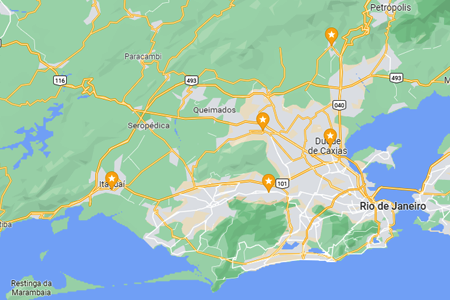 The Brazil Without Allergies Project consolidates its national presence and expands its reach with fixed units in Rio de Janeiro, Paraná, and now, in the capital of São Paulo, in the Campo Limpo neighborhood, South Zone. In addition to the physical clinics, the project has a strategic Mobile Unit that brings specialized medical care and free allergy tests to various cities, facilitating access to healthcare in remote regions. With over 700,000 consultations carried out since 2007 under the coordination of Dr. Marcello Bossois and Dr. Patrícia Schlinkert, the initiative complements the SUS (Brazilian Public Health System), offering support in the diagnosis and treatment of atopic dermatitis, asthma, bronchitis, rhinitis, and prurigo strophulus (allergy to insect bites). The new Campo Limpo unit in São Paulo reinforces this commitment, offering consultations with allergists and tests to identify allergic triggers. The project also provides allergy vaccines at affordable prices with the support of ABBAA, ensuring continuity of treatment. In Rio de Janeiro, fixed units serve Duque de Caxias, Nova Iguaçu (Red Cross), Realengo, Itaguaí, Iguaba Grande, Xerém, and Niterói, while in Paraná, service is provided in Curitiba. Prioritizing social inclusion, Brasil Sem Alergia focuses its efforts on those most in need, with international operations and mobile clinics. To schedule your appointment with an allergist and take your allergy test, contact us by phone: São Paulo ☎️ (11) 4210-1437, Rio de Janeiro ☎️ (21) 4063-8720, Curitiba ☎️ (41) 3542-1838 or via WhatsApp 📲 (21) 99545632. You can check the availability of the mobile unit in your region, see the map of the Campo Limpo unit and find all complete addresses on the official website https://www.brasilsemalergia.com.br/.
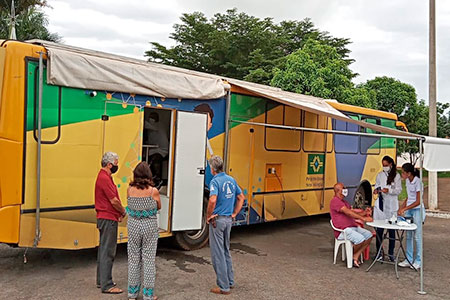 The Brazil Without Allergies Project reinforces its mission of social inclusion through its mobile and itinerant unit, which travels to various regions to bring health and well-being directly to your community. With the goal of democratizing access to specialized diagnosis, our mobile clinic offers consultations with an allergist and free allergy tests 🆓 to identify pathologies such as atopic dermatitis, asthma 🌬️, bronchitis 🫁, rhinitis, and prurigo strophulus (allergy to insect bites 🦟). This itinerant initiative complements the work of our fixed units located in Rio de Janeiro (Duque de Caxias, Nova Iguaçu, Realengo, Itaguaí, Iguaba Grande, Xerém and Niterói), Paraná (Curitiba), and our newest unit in São Paulo, in the Campo Limpo neighborhood, in the southern part of the capital. Working in a complementary way to the SUS (Brazilian Public Health System) and with the support of ABBAA (Brazilian Association of Allergy and Allergy), the project ensures that residents of more remote cities can also receive adequate treatment and allergy vaccines at affordable prices. To find out where our mobile unit is now, what the next destinations will be, or to schedule an appointment at the new Campo Limpo unit in São Paulo, contact us by phone: São Paulo ☎️ (11) 4210-1437, Rio de Janeiro ☎️ (21) 4063-8720 or via WhatsApp 📲 (21) 999545632. You can also check the map of the fixed Campo Limpo unit and get more information about the mobile unit's schedule on the official website https://www.brasilsemalergia.com.br/.


