


ABBAA Chaplaincy: Devotionals, Sermons, Bible Passages, and Timeless Prayers
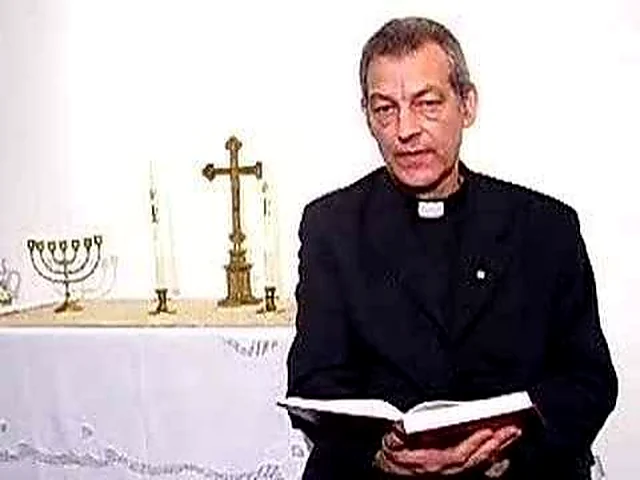
Reverend Dr. Vanuzio de Melo Ferreira — The Union Between Medicine and Pastoral Ministry
Trained in Medicine (Internal Medicine and Geriatrics, with a traditional practice in Copacabana, Rio de Janeiro) and a Presbyterian minister of the Reformed tradition, Reverend Dr. Vanuzio combines compassionate clinical listening with spiritual support for patients and families in leading the ABBAA Chaplaincy.
With the ongoing purpose of bringing inner peace, emotional comfort, and living hope to patients, families, and readers throughout Brazil, the ABBAA Chaplaincy is coordinated by... Reverend Dr. Vanuzio Ferreira, a geriatrician and retired pastor of the Presbyterian Church of Brazil, also featuring timeless reflections from guest reverends such as Rev. Rafael Luz and the Rev. Éber Magalhães Lenz Césarin addition to historical hymns of the Christian faith.
Integrated into humanitarian actions of Brazilian Charitable Association for the Support of Allergies (ABBAA) — recognized as a public utility organization (Municipal Law No. 3,393/2024 — Duque de Caxias/RJ) —, this spiritual library brings together exclusively timeless content organized into 4 categories and 12 thematic subcategories to facilitate your visits, daily reading, and meditation.

Explore the Chaplaincy by Thematic Categories and Subcategories
Timeless Devotionals and Pastoral Readings
Timeless pastoral meditations on peace in anxiety, inner healing, forgiveness, humility, and love for one's neighbor, written by Rev. Dr. Vanuzio Ferreira and guest reverends.
Sermons, Homilies and Expository Studies
Expository homilies on the Gospels, parables of Jesus, the mission of the Church, the Reformed tradition (Ecclesia Reformata), and a complete collection of 36 pastoral videos.
Biblical Passages of Refuge and Wisdom
A curated selection of Psalms of refuge, prophetic promises of renewal, and words of Christ and the Apostles for times of medical treatment and reflection.
Liturgical Prayers, Family, and Christian Spirituality
Perennial prayers of contrition and peace, intercession for parents, children and the sick, historical hymns of the Christian faith and exposition of the Apostles' Creed.
Timeless Devotionals and Pastoral Readings
Timeless pastoral meditations on peace in anxiety, inner healing, forgiveness, humility, and love for one's neighbor, written by Rev. Dr. Vanuzio Ferreira and guest reverends.
Comfort, Inner Healing, and Hope in Tribulation
14 timeless textsMessages of emotional refuge, overcoming fear, and trusting in divine providence.
Untie it and let it go. The death of Jesus' friend, Lazarus of Bethany, seemingly brought an end to the life plan that God had determined for Lazarus.
“Lazarus fell ill in Bethany, where Mary and her sister Martha lived. Mary was the one who anointed the Lord with perfumed oil and wiped his feet with her hair. And Lazarus, who was sick, was her brother. So his sisters sent word to Jesus, “Lord, the one you love is sick.” When Jesus heard this, he said to them, “This sickness will not end in death. No, it is for God’s glory so that God’s Son may be glorified through it.” Now Jesus loved Martha and her sister and Lazarus. So when he heard that Lazarus was sick, he stayed where he was two more days. Then he said to his disciples, “Let us go back to Judea.” “Master,” they replied, “a short while ago the Jews tried to stone you, and are you going back there?” Jesus answered, “Are there not twelve hours in a day? Anyone who walks in the daytime does not stumble, because they see the light of this world. But anyone who walks at night stumbles, because the light is not in them.” After saying this, he added, “Our friend Lazarus has fallen asleep, but I am going there to wake him up.” His disciples said to him, “Lord, if he sleeps, he will recover.” Jesus, however, had been speaking of his death, but they thought he meant natural sleep. Then Jesus told them plainly, “Lazarus is dead, and for your sake I am glad I was not there, so that you may believe.” Then Jesus said to her, “Did I not tell you that if you believe, you will see the glory of God?” So they took away the stone. Then Jesus looked up and said, “Father, I thank you that you have heard me. I know that you always hear me, but I say this for the benefit of the people standing here, that they may believe that you sent me. When he had said this, he called out in a loud voice, “Lazarus, come out!” The dead man came out, his hands and feet bound with strips of linen, and a cloth around his face. Jesus said to them, “Take off the grave clothes and let him go.” (John 11:40-44) (John 11:1-15)
The death of Jesus' friend, Lazarus of Bethany, seemingly brought an end to the life plan God had determined for Lazarus. When the Lord Jesus intervenes, He does so to remind us that death is only the moment when we leave our current material body and begin to await, in peaceful sleep, the glorious coming of the Lord, when we will receive bodies that do not decay. Possessing this new body, in every way similar to Jesus' body after his resurrection from the dead, we will then enter the presence of Almighty God, receiving from Him the Word of Wisdom that will guide the infinite life we will live in the Kingdom.
It is very telling that the Lord commands the removal of Lazarus's bonds, immediately after his return to the present dimension (still in his own body), and gives the order to "let him go." To let him continue the life that was suddenly interrupted.
The message of Lent takes us to the depths of death, but beckons us towards eternal life at the throne of the Messiah.
Amen! Amen! Amen!
God has turned his eyes to his people. On Friday night into Saturday I had a strange dream in which a group of young people had died, it wasn't very clear if it was an accident, and…
“The next day Jesus went to a town called Nain. Many of his disciples and a large crowd went with him. As he approached the town gate, a dead man was being carried out—the only son of his mother, and she was a widow. A large crowd from the town was with her. When the Lord saw her, his heart went out to her and he said, “Don’t cry.” Then he went up and touched the coffin, and those carrying it stood still. He said, “Young man, I say to you, get up!” The dead man sat up and began to talk, and Jesus gave him back to his mother. They were all filled with awe and praised God. “A great prophet has appeared among us,” they said. “God has visited his people!” News of this spread throughout Judea and the surrounding country.” (Luke 7:11-17)
On Friday night into Saturday, I had a strange dream in which a group of young people had died, it wasn't clear if it was an accident, and they were being prepared for burial. I watched the preparation and the procession for the burial, which would take place on the conveyor belts leading to the crematorium. Then I realized that one of the young people was alive, but they insisted on continuing the ceremony. I interrupted the process, introducing myself as a doctor and declaring the young man still alive, and with great difficulty, I forbade him from being taken to the crematorium. Then I woke up and spent the night meditating on the content of this dream. I realized that the Lord was showing me how negligent we are towards our children, who are treated as if they were dead, suffocated in this struggle for survival in which they should have the chance to accompany their parents, sharing the same dreams and ideals, growing together; however, in an unthinking desire for protection, we deprive them of the opportunity to develop. I read today's Gospel from this perspective. God is looking at His people and restoring the life we stole from our children when we stifled their creativity and prevented the development of their projects. God is looking at His people and saying, “Young man, I tell you, get up!” This is not a suggestion or a request, it is an express command from God for the depressed and devastated to hold onto God's hand and stand on His feet again. The place for living people is among the living, the place for capable people is among those who are fighting and winning.
Blessed be the Lord God, for a great prophet has arisen among us, Jesus of Nazareth, the Beloved Son, the one who does not believe in death and who affirms his mission to us with great clarity: “I have come that they may have life, and have it to the full.”
Amen!
Jesus is the Light of My Life This passage from the Gospel speaks to us about light and darkness. Jesus saw fit, at the moment when he was about to provide a man born blind with…
“As Jesus walked along, he saw a man blind from birth. His disciples asked him, “Rabbi, who sinned, this man or his parents, that he was born blind?” Jesus answered, “Neither this man nor his parents sinned, but this happened so that the works of God might be displayed in him. As long as it is day, we must do the works of him who sent me. Night is coming, when no one can work. While I am in the world, I am the light of the world.” After saying this, he spat on the ground, made some mud with the saliva, and put it on the man’s eyes. “Go,” he told him, “wash in the Pool of Siloam” (this word means messenger). So the man went and washed, and came back seeing. His neighbors and those who had seen him begging before asked, “Isn’t this the man who used to sit and beg?” (John 9:1-8)
This passage from the Gospel speaks to us about light and darkness. Jesus saw fit, at the moment when he was about to give a man born blind the ability to perceive light for the first time, to speak of his own mission.
The disciples inquired whether the child's parents or the child himself had sinned, causing him to be born blind. Jesus shifted the focus of their concern to what truly mattered: since he was blind, it was necessary that the works of God be displayed in him. Here was an opportunity to demonstrate God's love to the world. Jesus came as the light of the world, and that blind man could no longer be denied the right to see the light, to see Jesus. Thus, the healing took place, and the man was sent to a pool, which, not by chance, was called the Pool of Siloam (the pool of the messenger, of the envoy, of the awaited Christ), and he returned, now able to contemplate the light of the Savior of the world.
Upon being healed and regaining his sight, a door opened to a new life. Before, he was blind and a beggar; now he could see and take a new path.
Observe how Jesus teaches his disciples one of the most important guidelines of Christianity: “When faced with a situation where illness is certainly present because of sin, do not value the sin that caused the illness, value the life that is enslaved and destroyed, and do everything to restore that person to wholeness, in the name of Jesus.
Jesus, Master, have mercy on us! We will learn at the end of this episode that the group of leprosy patients consisted of ten individuals, and that at least one of them was not…
"As Jesus was on his way to Jerusalem, he passed along the border between Samaria and Galilee. As he entered a village, ten lepers came to meet him. They stood at a distance and called out in a loud voice, “Jesus, Master, have pity on us!” When Jesus saw them, he said, “Go, show yourselves to the priest.” And as they went, they were cleansed. One of them, when he saw he was healed, came back, praising God in a loud voice. He threw himself at Jesus’ feet and thanked him—and he was a Samaritan. Jesus asked, “Were not all ten cleansed? Where are the other nine? Was no one found to return and give praise to God except this foreigner?” Then he said to him, “Rise and go; your faith has made you well.” (Luke 17:11-19)
We will learn at the end of this episode that the group of lepers consisted of ten individuals, at least one of whom was not Jewish. He was an inhabitant of Samaria, considered a foreigner by the others. What surprises us is that in prosperity they distanced themselves, and in misfortune they united and walked together, supporting each other. This is also a point for reflection. After hearing the cries for help from the sick, Jesus gives them an unusual order, commanding them to present themselves to the priest. Now, according to the Law, this could only happen when a person was cured. They were obliged to present themselves to the priest, and after examining them thoroughly, he would declare them clean before the congregation. The men who sought a cure from Jesus were not cured upon hearing Christ's order, so how could they act in the way Jesus indicated? The priest would certainly declare them ill, and they would be worse off than before they knew Christ. I think the moment of obedience was preceded by many questions, doubts, and frustrations.
What matters is that they obeyed Christ and began the journey toward the fulfillment of their hopes. The first step of faith and obedience is always the most difficult. The other steps, however, will make a difference in their lives. And so it was, as they walked toward the presence of the Priest, the Lord honored the faith that was sprouting in their hearts, and they were healed. Euphoric, they ran back to their homes to give the good news. One, however, remembered with gratitude the rabbi who had healed him, and returned to thank him. Prostrate at his feet, he could not find words to express his gratitude. Jesus is amazed that only one of the ten had returned and asks in a questioning tone: “Were not all ten healed? Where are the other nine? Was no one found to return and give thanks to God except this foreigner?” Notice that the Lord did not despise that grateful man, for he immediately sent him home, affirming that faith had saved him. What the Lord emphasizes is that God should always be thanked for all the blessings received. From Him and through Him come every good and perfect gift. God expects our gratitude, always and in every circumstance.
My Good Shepherd Has an Unmistakable Voice In Jesus' time, shepherds kept their flocks in communal areas with walls and gates, outdoors. It was customary for them to…
“Truly, truly, I say to you, he who does not enter the sheepfold by the door but climbs in by another way, that man is a thief and a robber. But he who enters by the door is the shepherd of the sheep. To him the doorkeeper opens, and the sheep hear his voice. He calls his own sheep by name and leads them out. When he has brought out all his own, he goes before them, and the sheep follow him, for they know his voice. A stranger they will not follow, but they will flee from him, for they do not know the voice of strangers.” Jesus spoke this parable to them, but they did not understand what he was telling them. Jesus said to them again, “Truly, truly, I say to you, I am the door of the sheep. All who came before me were thieves and robbers, but the sheep did not listen to them. I am the door. If anyone enters by me, he will be saved, and will go in and out and find pasture. The thief comes only to steal and kill and destroy.” (John 10:1-10)
In Jesus' time, shepherds kept their flocks in communal areas with walls and gates, outdoors. It was customary for shepherds to take turns during the night watches, in shifts, to protect the flock.
At daybreak, the shepherds would come, one by one, to the gate and call their sheep by name. And so the sheep were separated into different flocks under the care of their shepherd.
There was no possibility of confusion because the sheep only obeyed the voice of their shepherd, and calls from strangers were never answered.
To become familiar with the shepherd's voice, the sheep were led from a very young age, either in his lap or on his shoulders, to accustom them to his smell and voice. Close interaction was essential for establishing friendship and trust.
Jesus assumes the role of the good shepherd, the one who loves and is capable of risking his life in a fight against bears and wolves that come to devour the sheep. He affirms that he is the "door" that gives rise to the sheepfold where the sheep will be safe, thus signifying that he was the hope of salvation for all, and that by entering "through him" we would all attain safety and salvation. With his unmistakable voice, Jesus calls his sheep and leads them to green pastures, and in the same way, Jesus calls his sheep and leads them back to the safety of his home.
Christ's sheep, because they live intensely with Him, recognize His voice and follow Him. The others follow other voices and get lost.
Those who, with a pure heart, are able to hear the Lord calling should not miss the opportunity to be led to the Father's House.
Think about this, and live in peace.
Nothing to Fear: Courage and Trust in Divine Providence The greatest inspiration that this text from Matthew brings us is the complete loss of fear in dealing with the forces of darkness and their representatives in…
“You will be hated by everyone because of my name, but the one who stands firm to the end will be saved. (25) If they have called the master of the house Beelzebub, how much more will they call his servants! So do not be afraid of them, for there is nothing concealed that will not be disclosed, or hidden that will not be made known. What I tell you in the dark, speak in the daylight; what is whispered in your ear, proclaim from the housetops. (28) Do not be afraid of those who kill the body but cannot kill the soul. Rather, be afraid of the One who can destroy both soul and body in hell. (32) Everyone who acknowledges me before others, I will also acknowledge before my Father in heaven. But whoever disowns me before others, I will also disown before my Father in heaven. (38) And whoever does not take up their cross and follow me is not worthy of me.” Matthew 10:22-39 (selected verses). The greatest inspiration this text from Matthew brings us is the complete loss of fear in dealing with the forces of darkness and their representatives in this present age. The Lord Jesus reminds us that the only fear we should have is for God, who can, in fact, affect both our physical and spiritual bodies. As the Word teaches us that "the fear of the Lord is the beginning of wisdom," it is the attitude of a truly wise person to live in accordance with the will of the Lord our God. Jesus' disciples should be witnesses to this way of life. This is contrary to the interests of the children of darkness. The power accumulated by them is very great, and they impose their ways of life, even if they are contrary to the will of God. Those who seek to please God, fleeing from the evil inspirations that corrupt our world, are considered liable to the penalties of the law. Such an inversion of values arises from the hatred that the children of darkness have for the children of Light. The Lord already knew that this He was at the heart of the corrupt, and He warns His Church of the worst, inspiring it to remain faithful, especially amidst adversity. He commands us not to be afraid, to trust in His providence, and to be shrewd in escaping the traps set for us. Thus, we understand the ethical stance before the Father so that the Lord's Name may be blessed among the nations, and that our names may be remembered by Jesus before God.” (Matthew 10:22-39)
The greatest inspiration this passage from Matthew brings us is the complete loss of fear in dealing with the forces of darkness and their representatives in this present age. The Lord Jesus reminds us that the only fear we should have is for God, who can, in fact, affect both our physical and spiritual bodies.
As the Word teaches us that “the fear of the Lord is the beginning of wisdom,” it is the attitude of a truly wise person to live in accordance with the will of the Lord our God. The disciples of Jesus should be witnesses to this way of life. This is contrary to the interests of the children of darkness. The power accumulated by these is very great, and they impose their way of life, even if it is contrary to the will of God. Those who seek to please God, fleeing from the evil inspirations that corrupt our world, are then considered liable to the penalties of the law. Such a reversal of values arises from the hatred that the children of darkness have for the children of Light.
The Lord already knew that this was the heart of the corrupt, and He warns His Church of the worst, and inspires it to remain faithful, especially in the midst of adversity. He commands us not to be afraid, to trust in His providence, and to be shrewd in escaping the traps that are set for us.
Thus, we understand the ethical stance before the Father so that the Lord's Name may be blessed among the nations, and so that our names may be remembered by Jesus before God.
Do not worry about tomorrow. At the beginning of his discourse, Jesus states categorically that man cannot be divided between God and the riches of this world. This is because…
"Therefore I tell you, do not worry about your life, what you will eat or drink; or about your body, what you will wear. Is not life more than food, and the body more than clothes? Look at the birds of the air; they do not sow or reap or store away in barns, and yet your heavenly Father feeds them. Are you not much more valuable than they? Can any one of you by worrying add a single hour to your life? And why do you worry about clothes? See how the flowers of the field grow. They do not labor or spin. Yet I tell you that not even Solomon in all his splendor was dressed like one of these. If that is how God clothes the grass of the field, which is here today and tomorrow is thrown into the fire, will he not much more clothe you—you of little faith? So do not worry, saying, ‘What shall we eat?’ or ‘What shall we drink?’ or ‘What shall we wear?’ For the Gentiles..." "For you seek after all these things, and your heavenly Father knows that you need them all. But seek first his kingdom and his righteousness, and all these things will be given to you as well. Therefore do not worry about tomorrow, for tomorrow will worry about itself. Each day has enough trouble of its own." (Mt. 6:24-34)
At the beginning of his discourse, Jesus states categorically that man cannot be divided between God and the riches of this world. This is because we depend emotionally on our material resources to feel secure about the survival of our family. We realize that humanity is divided between those who trust in their possessions and those who trust in God's providence. It is noteworthy that the percentage of those in the latter group is very small. We all run daily in search of economic conditions that guarantee food on the table and the payment of our monthly expenses. The true children of God know that the Father understands that we need food and clothing as well as housing and dignified working conditions. And therefore, they do not place their hopes in a new job or a new financial investment. Their hope and trust will always be in the Name of the Lord, even if they have obtained a new job or made a new investment. They work with peace of mind because they have already realized that God is always by their side, and that He is a Faithful and Zealous God. They wake up with peace in their hearts and go to their workplaces with complete confidence that the Father is taking care of them. Jesus, however, prepares us for an undeniable reality: Each day brings its own troubles. Each day brings its own challenges. We are capable of enduring the challenges of one day at a time; we cannot bear to experience in a single day the challenges of an entire week, and many want to endure the challenges of an entire month in a single workday. This is insane. Jesus watches over our sanity by drawing our attention to this fact: “Do not worry about tomorrow, for each day has enough trouble of its own.” Stop for a moment today and reflect on the rush of your life. Begin to learn to live day by day. May God bless you with this understanding. Amen.
The Way, the Truth, and the Life Jesus' admonition to his disciples not to let themselves be affected by any kind of worry. The fear of difficult situations that might…
“Do not let your hearts be troubled. You believe in God; believe also in me. My Father’s house has many rooms; if that were not so, would I have told you that I am going there to prepare a place for you? And if I go and prepare a place for you, I will come back and take you to be with me that you also may be where I am. You know the way to the place where I am going.” Thomas said to him, “Lord, we don’t know where you are going, so how can we know the way?” Jesus answered, “I am the way and the truth and the life. No one comes to the Father except through me.” (John 14:1-6)
Jesus' admonition to his disciples not to let themselves be affected by any kind of worry. The fear of difficult situations that may occur in the future causes severe harm to our bodies and robs us of our peace. Now, the future is yet to come, but fear makes our present painful. The compensation that the Lord Jesus offers us in exchange for letting go of our fears is the promise of God's providing love for the present moments, positively reflecting on what our future will be, and in the expectation of a Lord who cannot lie. Thus, he promises to go to the only future that interests us (eternal life in the Kingdom of God) and prepare a place for us, our place.
When Jesus tells his disciples that they know the way to eternal life, Thomas refutes this, denying that he knows such a way, and this dialogue opens the opportunity for Jesus to reveal himself to them as the Way that leads to God.
This certainty, which the Gospel passage brings us in today's reading, is what guides the Church of Christ: We believe in Jesus Christ, who is our Way to God, the only Truth that is eternal, and the only Life that deserves to be lived, not only in the material dimension, but for all Eternity with God.
The Spirit of the Lord is upon me. Right after forty days and forty nights of fasting and prayer in the desert, and of a violent spiritual struggle with the Tempter, Jesus, victorious and full…
“Then Jesus, in the power of the Spirit, returned to Galilee, and news about him spread throughout the whole surrounding region. He taught in their synagogues, and everyone praised him. He went to Nazareth, where he had been brought up, and as his custom was, he went into the synagogue on the Sabbath day. He stood up to read, and the scroll of the prophet Isaiah was handed to him. Unrolling it, he found the place where it is written: ‘The Spirit of the Lord is on me, because he has anointed me to proclaim good news to the poor. He has sent me to proclaim freedom for the prisoners and recovery of sight for the blind, to set the oppressed free, and to proclaim the year of the Lord’s favor.’ Then he rolled up the scroll, gave it back to the attendant and sat down. The eyes of everyone in the synagogue were fastened on him. He began by saying to them, ‘Today this scripture is fulfilled in your hearing.’” (Luke 4:14-21)
After forty days and forty nights of fasting and prayer in the desert, and a violent spiritual struggle with the Tempter, Jesus, victorious and full of the Holy Spirit, returns to Galilee and travels through the synagogues teaching. One Saturday, while in Nazareth, and as was his custom, he goes to the synagogue where he has the opportunity to read in the book of the prophet Isaiah the text that contains the most complete description of the life plan that the expected Messiah would fulfill.
When Jesus read the prophet's text and proclaimed that the prophecy was being fulfilled that day, He Himself established the standard that His followers, His Church, should follow until His second coming.
Our days are filled with intense religious confusion. There is a profusion of "prophets," "apostles," "bishops," and "missionaries." There is a profusion of creeds, beliefs, movements, churches, sects, and countless religious communities, pulverizing the Body of Christ and contaminating the hearts of the simple with extravagant promises of perfect health, abundance, and wealth. All these promises, without a doubt, are entirely devoid of commitment to the Gospel of Our Lord.
Christ, on the other hand, takes up the project that his Father had proclaimed centuries before through his servant Isaiah, and establishes the roadmap for life for all Christians:
The Messiah of Body and Soul John the Baptist is imprisoned. His harsh words against the sins of Governor Herod land him in the dungeon. He is allowed a visit from…
"Now when John, who was in prison, heard about the works of Christ, he sent his disciples to ask him, “Are you the one who is to come, or should we expect someone else?” Jesus replied, “Go back and report to John what you have seen and heard: The blind receive their sight, the lame walk, those who have leprosy are cleansed, the deaf hear, the dead are raised, the good news is proclaimed to the poor… Blessed are those who do not stumble on account of me.” As John was leaving, Jesus spoke to the crowd about John: “What did you go out into the wilderness to see? A reed swayed by the wind? What did you go out to see then? A man dressed in fine clothes? No, those who wear fine clothes are in kings’ palaces. Then why did you go out there? To see a prophet? Yes, I tell you, and more than a prophet. This is the one about whom it is written: ‘I will send my messenger ahead of you, who will prepare your way before you.’" "Truly I tell you, among those born of women there has not risen anyone greater than John the Baptist; yet he who is least in the kingdom of heaven is greater than he." (Mal. 3:1)
John the Baptist is imprisoned. His harsh words against the sins of Governor Herod lead him to the dungeon. He is allowed visits from his disciples while imprisoned, and John sends these disciples on a mission to Jesus to ask him an important question that will serve as a testimony for all humanity over the course of two thousand years: "Are you the Messiah, or should we expect someone else?"
Jesus keeps John's messengers with him for some time, has them accompany him in his routine as a preacher of the Good News, and allows them to witness the healing activities in the body and spirit of the crowds that follow him wherever he goes. After this observation period, he dismisses them with the following instruction: “Go and tell John what you have heard and seen.” And he reminds them of the miracles, signs, wonders, and sermons in which those men participated. Jesus' response was not merely rhetoric, but a theoretical and practical demonstration of everything that proved his authority and his mission as the Anointed One of God.
After the disciples of John the Baptist left, Jesus spoke to his own disciples and the crowd gathered there about the character and role of John the Baptist in the plan of salvation for humanity. He clarified that John was the "Elijah" prophesied by the prophet Malachi (3:1) who would come to straighten (in the hearts of men) the path that the Messiah (Jesus) would take while ministering the Word of salvation.
From this wonderful biblical passage, it is clear that the Church of Christ is here to intercede with Almighty God for the healing of the spirit and physical body of the faithful members of the Body of Christ. We cannot prioritize preaching over the act of healing human suffering. In Christ's vision, these actions go hand in hand, as both a privilege and a responsibility of the members of the Lord's Church.
"Therefore confess your sins to each other and pray for each other so that you may be healed. The prayer of a righteous person is powerful and effective." (James 5:16)
Where shall we go? You have the words of eternal life! In the synagogue of Capernaum were the regular attendees besides Jesus, his twelve closest disciples, and an unspecified number of…
“Whoever eats my flesh and drinks my blood remains in me, and I in him. Just as the living Father sent me and I live because of the Father, so the one who feeds on me will live because of me. This is the bread that came down from heaven. Your ancestors ate manna and yet died, but whoever feeds on this bread will live forever.” These things Jesus said while teaching in the synagogue in Capernaum. Many of his disciples, hearing this, said, “This is a hard saying; who can listen to it?” But Jesus, knowing that they were grumbling about this, said to them, “Does this offend you? Then what if you were to see the Son of Man ascend to where he was before? The Spirit gives life; the flesh counts for nothing. The words I have spoken to you—they are full of the Spirit and life. Yet there are some of you who do not believe.” For Jesus had known from the beginning who those were who did not believe and who would betray him. He continued: “This is why I told you that no one can come to me unless the Father has enabled them.” From this time many of his disciples turned back and no longer followed him. “You do not want to leave too, do you?” Jesus asked the Twelve. “Lord,” Simon Peter answered, “to whom shall we go? You have the words of eternal life. We have come to believe and to know that you are the Holy One of God.” Jesus replied, “Have I not chosen you, the Twelve? Yet one of you is a devil.” He was referring to Judas Iscariot, the son of Simon, who was one of the Twelve and was later to betray him. (John 6:56-71)
In the synagogue of Capernaum were the regular attendees besides Jesus, his twelve closest disciples, and an unspecified number of sympathizers and disciples not yet fully committed to the Gospel. The Master delivers a very challenging message: He contrasts the bread (manna) that had come down from heaven during the pilgrimage to Canaan with his own person and affirms: “I am the bread of life; whoever comes to me will never go hungry, and whoever believes in me will never be thirsty.” and “Whoever eats my flesh and drinks my blood has eternal life, and I will raise them up at the last day. For my flesh is real food and my blood is real drink.” This was too much for his fellow Jews who were listening to him, and this was Jesus' harsh and decisive response to the disdain with which they confronted him with the question: “What sign will you give us so that we may see it and believe you? What work will you do? Our ancestors ate the manna in the wilderness; as it is written: ‘He gave them bread from heaven to eat.’”
The debate was extremely heated; the atmosphere was seething with hatred against Jesus, who in turn felt his heart racing, and we dare say his face was already flushed. His listeners did not understand him when he spoke clearly, either through metaphors or parables. His ideas were millennia ahead of his contemporaries, and from verse 26 of chapter 6 onwards, there is a series of harsh expressions from Jesus. The disagreement reached such a level that many of the sympathizers and undecided disciples abandoned Christ. Seeing that many were leaving him, Jesus, still under the impact of the unpleasant moments, sharply asked the twelve who insisted on staying by his side: “Do you also want to leave?” Peter's answer came from the depths of his soul, like that of an impetuous man: “Lord, to whom shall we go? You have the words of eternal life; and we have believed and have come to know that you are the Holy One of God.” Still deeply moved, Jesus, far from feeling flattered, retorted, stating that one of them was the devil, that is, a divider, a traitor, unworthy. He was referring to Judas Iscariot. From this turbulent episode in Jesus' life, we are left with Peter's words: "Where else can we go? You have the words of eternal life..."
The choice made by Peter and the other disciples is our own choice as Christians. We commit ourselves to Christ in all situations. May God help us in this. Amen!
If Someone Is Thirsty The feast referred to in the text above is the Feast of Tabernacles. Many Jews went up to Jerusalem for the celebrations. Jesus' brothers…
“On the last day, the great day of the festival, Jesus stood and cried out, “If anyone thirsts, let him come to me and drink. Whoever believes in me, as the Scripture has said, ‘Out of his heart will flow rivers of living water.’” By this he meant the Spirit, whom those who believed in him were to receive, for as yet the Spirit had not been given, because Jesus was not yet glorified.” (Zc 14, 8; Is 58,11)
The feast referred to in the text above is the Feast of Tabernacles. Many Jews went up to Jerusalem for the celebrations. Jesus' brothers also went up, but first they ironically encouraged him to go as well so that he would become "famous," since his miracles and teachings were known in Galilee, but not in Judea.
The crowd gathered in Jerusalem spoke of nothing but the deeds and preachings of Jesus; however, everyone knew that the authorities had already decreed his arrest because of the content of his teachings. As an example of Jesus' sincerity, we find in this same chapter: "The world hates me because I testify against it that its works are evil" (7:7), and "Did not Moses give you the Law? Yet none of you keeps the law!" (7:19)
With courage and boldness, Jesus places himself in a visible spot and cries out in a loud voice: “If anyone is thirsty, let him come to me and drink. Whoever believes in me, as rivers of living water will flow from within him.” Even risking his life, the Lord preaches his Message, as the text says, “standing,” so that all might see and hear him, and his message concerns the outpouring of the Holy Spirit: The “thirst” that Jesus refers to is the “thirst for righteousness, for the hope of salvation, for the fullness of God’s presence,” the “rivers of living water” are the rivers of the gifts of the Holy Spirit for those who believe in Jesus and for those who are close to the redeemed.
Jesus was glorified shortly after this public discourse, and His Spirit was sent to us then. We, as the Church of Christ, possess the most formidable power that exists in the cosmos. It is our duty to use this gift for the honor and glory of the Lord God and in caring for our neighbor.
Just As It Was Before Today, our Church celebrates the National Day of Thanksgiving in advance. It seemed fitting to the Holy Spirit to bring this text to our reflection…
“This is what the Lord says: “In this place, which you say is nothing but a desert without man or beast; in the cities of Judah and in the streets of Jerusalem that are desolate, where no man dwells, nor is there any beast to be found, there will again be heard shouts of joy, songs of jubilation, the voice of the bridegroom and the bride, acclamations of those who will sing: ‘Give thanks to the Lord of hosts, for he is good; his mercy endures forever,’ as they offer sacrifices of thanksgiving in the temple, for I will restore the land as it was before.” (Jeremiah 33:11)
Today, our Church celebrates the National Day of Thanksgiving in advance. It seemed fitting to the Holy Spirit to bring to our reflection the text of the Prophet Jeremiah, where the Lord God consoles the hearts of His people who are surviving amidst a devastated, ruined city, without the joy of its inhabitants, and the comforting sound of herds grazing on the plains.
Living in these circumstances is a desperate situation. There is no present, no future, and the past was a sad reality, a painful path to be forgotten.
How many of us find ourselves in exactly this situation? Depressed, defeated, awaiting the relief of death, destroyed inside. Our lives perfectly fitting the image of a desert: dry, arid, suffocating.
Fortunately, we have a God who watches over everything and who does not remain silent. The word He sent to the people of Israel, and which reaches us today on this night of celebration, is one of tender compassion and love: “Shouts of joy will be heard again, songs of jubilation, the voice of the bridegroom and the bride, acclamations of those who will sing: Praise the Lord of Hosts, for he is good and his mercy endures forever!”
It is a new reality that opens up, for He promises to restore the earth to what it once was.
See how your life, in God's hands, will be completely restored, just as it once was during the best moments of your life. This is a promise from a God who is faithful.
This is why we are gathered here today to praise the glory of the Lord's name. He is good; his mercy endures forever, and his faithfulness continues through all generations.
Together, let us raise our hands and give thanks for your blessings.
The Lord is with us! Hallelujah!
We live by faith! The news that Jesus received, which made him extremely sad and wish to be alone, was about John the Baptist, his cousin, who had…
"When Jesus heard of it, he withdrew by boat to a solitary place. But the people heard of it and followed him on foot from the towns. When he went ashore, he saw a great crowd, and he had compassion on them and healed their sick. As evening approached, the disciples came to him and said, “This is a remote place, and it’s already late. Send the crowds away, so they can go to the villages and buy themselves some food.” Jesus replied, “They do not need to go away. You give them something to eat.” They answered, “We have here only five loaves of bread and two fish.” “Bring them to me!” he said. Then he commanded the crowd to sit down on the grass. Taking the five loaves and the two fish and looking up to heaven, he gave thanks and broke the loaves. He gave them to his disciples, and the disciples gave them to the people. They all ate and were satisfied, and the disciples picked up twelve basketfuls of broken pieces that were left over. The number of those who ate was about five thousand men, besides women and children.” (Mt. 14:11-21)
The news Jesus received, which caused him extreme sadness and a desire to be alone, concerned John the Baptist, his cousin, who had just been beheaded in King Herod's palace. His bitterness, however, did not prevent him from feeling compassion for the crowd that awaited him when he disembarked—about five thousand men, not counting women and children. Another evangelist, writing on the same subject (Mark 6:34), recounts Jesus' impression at that moment: looking at the people, he felt they were like "sheep without a shepherd." Therefore, he overcame his personal grief and healed all the sick who were brought to him. As evening fell, a new challenge arose. Everyone was hungry, including the disciples who had no provisions, and it was time to dismiss the crowd so they could buy food in the neighboring villages. Jesus put the spiritual experience of his disciples to the test. It was necessary for them to learn that the spiritual world has the power to interfere in the material world, and when this happens, the space for miracles arises. With the multiplication of the loaves and fishes, Jesus was teaching his followers that from that moment on they would live by faith and from faith they would draw strength, sustenance, and power to change the impossibilities of this world. Church, this is what we were called to do: To witness to the Power from on High.
May Adonai bless you all!
Practical Faith, Humility, Forgiveness, and Love for Others
17 timeless textsReflections on reconciliation, active mercy, Christian ethics, and consistency of life.
The Parable of the Good Samaritan A scholar with a doctorate in Theology sought out Jesus for a debate of ideas. He questioned the Lord about a matter of great importance…
“A lawyer stood up to test him, saying, “Teacher, what must I do to inherit eternal life?” He said to him, “What is written in the law? How do you read it?” He answered, “You shall love the Lord your God with all your heart, and with all your soul, and with all your strength, and with all your mind; and your neighbor as yourself” (Leviticus 19:18). And he said to him, “You have answered correctly; do this, and you will live.” But he, desiring to justify himself, said to Jesus, “And who is my neighbor?” Jesus said to him, “A man was going down from Jerusalem to Jericho, and he fell among robbers, who stripped him and beat him and departed, leaving him half dead. Now by chance a priest was going down that road, and when he saw him he passed by on the other side. So likewise a Levite, when he came to the place and saw him, passed by on the other side.” But a Samaritan, as he traveled, came to where the man was; and when he saw him, he took pity on him. He went to him and bandaged his wounds, pouring on oil and wine. Then he put the man on his own donkey, brought him to an inn and took care of him. The next day he took out two denarii and gave them to the innkeeper. ‘Look after him,’ he said, ‘and when I return, I will reimburse you for any extra expense you may have.’ Which of these three do you think was a neighbor to the man who fell into the hands of robbers?” The expert in the law replied, “The one who had mercy on him.” Jesus told him, “Go and do likewise.” (Deut 6:5)
A scholar with a doctorate in Theology sought out Jesus for a debate. He questioned the Lord on a matter of great importance to all religious people: "How can I save my soul and possess eternal life with God?" He certainly already knew the answer, and upon receiving Jesus' response, he quoted the Torah. Jesus was pleased with the doctor's opinion because he referenced the salvation of his soul to obedience to the Law of love for one's neighbor and not to the set of laws concerning animal sacrifices on altars or the observance of religious festivities and ordinances about foods considered pure or impure. But the man insisted, wanting an objective answer from Jesus, since up to that point he had asked a question and had already given the answer. Jesus only agreed that the doctor of the law was right. He then asked whom he should consider his neighbor, and there the Master told the famous parable of the Good Samaritan. At the end of the parable, Jesus returns the question to his inquisitor, who then acknowledges that he would be the neighbor of all who might need his mercy.
At the end of a discussion that, for the doctor of the law, would only have theological and academic meaning, Jesus makes it clear that such knowledge only makes sense when it moves human beings to help the suffering, when it promotes the well-being of the needy, and heals the wounds of the helpless. Faith without works, in the words of James, is dead: “What good is it, my brothers and sisters, if someone claims to have faith but has no deeds? Can such faith save them? Suppose a brother or a sister is without clothes and daily food. If one of you says to them, ‘Go in peace; keep warm and well fed,’ but does nothing about their physical needs, what good is it? In the same way, faith by itself, if it is not accompanied by action, is dead.” (James 2:14-16)
Learning to Pray with Jesus Jesus was outside the territory of Israel at the time these events were not narrated. There did not seem to be a clear reason for this…
“Jesus left that place and withdrew to the region of Tyre and Sidon. And behold, a Canaanite woman from that region came out and cried out, “Lord, Son of David, have mercy on me! My daughter is cruelly tormented by a demon.” Jesus did not answer her a word. And his disciples came and urged him, saying, “Send her away, for she is crying out after us.” He answered, “I was sent only to the lost sheep of the house of Israel.” But she came and knelt before him, saying, “Lord, help me!” He answered, “It is not right to take the children’s bread and throw it to the dogs.” She said, “Yes, Lord, but even the dogs eat the crumbs that fall from their master’s table.” Then Jesus said to her, “Woman, you have great faith! Your request is granted.” And her daughter was healed at that moment.” (Mt. 15:21-28)
Jesus was outside the territory of Israel at the time these events were not narrated. There did not seem to be a clear reason for his pilgrimage to the region of the Phoenicians. It is certain that he was still under the impact of the news of the death of his cousin John the Baptist, and it is also certain that in Israel he would not find a moment alone to grieve and mourn the loss of such an important figure from the beginning of his ministry. His fame had already crossed borders, and even in Phoenicia, he was sought out by a woman who desperately pleaded with him for the spiritual liberation of her daughter, whom she believed to be tormented by a demon. The Lord, at first, ignored her and continued on his way. The woman persisted, the disciples grew annoyed by this inconvenience and begged Jesus to send her away. Jesus left another provocation hanging in the air, besides his apparent disinterest in that suffering soul: "I was only sent to the lost sheep of Israel!" – The woman heard his words and cried out once more for help. For the third time, the Lord tests his disciples and that woman: “It is not right to throw the children’s bread to the dogs!” – And for the third time, the woman also demonstrates her tenacity and pleads again: “Even the dogs eat the crumbs that fall from their masters’ table.” That was enough; the Lord had shown his disciples what he wanted: When asking God for something, first have conviction in your heart that God can do what you need; second, wrestle, insist desperately with God (as Jacob wrestled with the Angel) until you obtain your blessing. Far from rebuking the Canaanite woman, the Lord Jesus praises her in front of men who had despised her a few minutes before: “O woman, great is your faith!” and continues: “Let it be done for you as you wish.” And at that very moment her daughter was healed.
Have you learned how you should pray now?
May the Holy Spirit of God enlighten us all with His wisdom.
That's How Christians Are The apostles' request for Jesus to increase their faith comes after Jesus instructs them that whenever someone sins against them,…
“The apostles said to the Lord, “Increase our faith!” The Lord said, “If you have faith as small as a mustard seed, you can say to this mulberry tree, ‘Be uprooted and planted in the sea,’ and it will obey you.” “Suppose one of you has a servant plowing or tending sheep. Will he say to him when he comes in from the field, ‘Come at once and sit down to eat’? Will he not rather say to him, ‘Prepare my supper, and gird yourself and serve me while I eat and drink, and afterward you will eat and drink’? If the servant has done all that he was commanded, is his master obligated to him? So you also, when you have done all that you were commanded, say, ‘We are unworthy servants; we have only done our duty.’” (Luke 17:5-10)
The apostles' request for Jesus to increase their faith comes after Jesus instructs them that whenever someone sinned against them, and after being rebuked showed repentance and asked for forgiveness, that person should be forgiven. Even if this happened seven times a day and the person asked for forgiveness seven times. It was a difficult command for the apostles to accept and obediently fulfill. Thus, it was as if they exclaimed: “This is impossible for an ordinary human being like us, Jesus, increase our faith!”
Jesus replied, "You have enough faith, which, even being the size of a mustard seed, is capable of great works!"
To put an end to this matter, Jesus then speaks of a man whose servant had spent the whole day working in his field, and upon returning to his master's house was also given the task of cleaning himself, changing his clothes, preparing his master's food, and even serving at the table.
A behavior that might seem merciless on the part of that man, but which well illustrates the basic thought of Jesus.
And Jesus adds: “If a servant does everything his master commands, is his master indebted to him?” Jesus affirms that he is not. Furthermore, the servant should consider himself like any other servant, and that he had done no more than his duty.
This didactic example, absurd in its content, was used by Jesus to reinforce his previously announced guidelines, which led the apostles to exclaim: "Increase our faith!"
What the Lord ultimately says to his disciples is: “Forgive all those who come to you asking for forgiveness; this is an instruction I give you, and it is irrevocable and non-negotiable.”
That's necessarily how Christians are. God bless you all.
Children and Heirs of God When the Lord Jesus came to be among us bringing us the good news of salvation, He brought with Him something more than the complete forgiveness of our sins…
"Therefore, brothers and sisters, we are debtors, not to the flesh, to live according to it. For if you live according to the flesh, you will die; but if by the Spirit you put to death the deeds of the body, you will live. For all who are led by the Spirit of God are sons of God. For you did not receive a spirit of slavery to fall back into fear, but you received the Spirit of adoption as sons, by whom we cry, 'Abba! Father!' The Spirit himself bears witness with our spirit that we are children of God, and if children, then heirs—heirs of God and fellow heirs with Christ, provided we suffer with him in order that we may also be glorified with him." (Romans 8:12-17)
When the Lord Jesus came to be among us, bringing us the good news of salvation, He brought with Him something more than the complete forgiveness of our sins and favor before God the Father. The Lord Jesus revealed to us that a new reality was being inaugurated for Humanity, the era of humankind's sonship with God. In truth, He brought us back what we had lost in Eden: God the Father.
For millennia, our relationship with God was that of special creatures, committed to the Eternal One, in the sense of worshipping His Name and honoring Him. In Christ, not only have these aspects gained greater relevance, but now the opportunity has arisen, having been made a new creation through the remission of sins on the cross, to receive the certificate of adoption by the Eternal One, who has allowed us to once again call Him Abba, Father.
At this moment of returning to the Father's house, humanity became Jesus' sister, and co-heir with Him.
The great significance of this regeneration is that we gain access to the rich promises and treasure of the Father's House. We are spiritually enriched by the priceless inheritance we receive through Jesus.
This treasure that has enriched us is composed of precious jewels of true peace, crowns made with the gold of harmony with the heart of God, diamonds of the greatness of the carats of the power of the Eternal, precious pearls of the prayers of the saints that are heard before the throne of God, silver of the law of the Lord that has come to be written in our hearts, pure linens and precious silks of the enveloping of the Holy Spirit within us.
This is the treasure of the Father's house that has been our inheritance. Believe me, this is the only treasure that has value for all eternity. Thieves cannot undermine or steal it, nor can moths or rust corrode these possessions. They are ours and cannot be taken from us. Christ gave them to us and with his blood signed the deed of ownership.
As children of God, brothers and sisters of Jesus, and heirs of God, we have the right to live confidently, knowing that the Lord never forsakes his children. Therefore, when setbacks arise, when difficulties press upon us, when threats are leveled against us, when demands mount, we know that we have a Father to whom we can and should turn. This right Jesus won on the cross; it is our right, it is our inheritance. We sing this, but we don't always believe it to be true. However, Christianity is like this: living each day under the Holy and Protective hand of God, relying on his paternal goodness and his unceasing care.
Thinking this way, feeling this way, perceiving the Eternal in this way, we will never remain fallen and will always have reasons to start over and walk towards victory.
Hypocrisy Jesus was teaching in the synagogue on a Sabbath. There was a woman there who had been possessed by a spirit for eighteen years, making her ill:…
Jesus was teaching in the synagogue on a Sabbath. There was a woman there who had been possessed by a spirit for eighteen years, making her ill. She was bent over and could not straighten up at all. When Jesus saw her, he called her over and said to them, “You are freed from your infirmity.” Then he laid his hands on her, and immediately she straightened up and praised God. But the synagogue leader, indignant that Jesus had healed on the Sabbath, said to the people, “There are six days for work. So come and be healed on those days, not on the Sabbath.”
“Hypocrites!” the Lord said to them. “Does not each of you on the Sabbath untie his ox or his donkey from the stall and lead it out to give it water? And ought not this woman, a daughter of Abraham, whom Satan has kept bound for eighteen years, be set free from this bondage on the Sabbath day?” When he said this, all his opponents were humiliated, but all the people were thrilled to see all the wonderful things he was doing. (Luke 13:10-17)
At this point in his ministry, Jesus was a well-known preacher, and the group of disciples who accompanied him demonstrated that he was not someone to be treated disrespectfully. Therefore, even though the synagogue leader was irritated by Jesus's actions, he was afraid of upsetting someone who held a certain prominence among the people. He unleashed his hatred for what he believed to be a violation of God's Law (Jesus had healed someone on the Sabbath) on the defenseless worshippers of the Temple, particularly on the unfortunate suffering woman. Now, it so happens that no one had asked Jesus to heal that woman, much less had the sick woman herself even considered asking for her restoration. It was Christ himself who, seeing her in that deplorable state and being informed that she had been like that for 18 years, took pity on her, called her, laid his hands on her, and declared her free from her illness. Therefore, Jesus should have been rebuked, not the congregation. But hypocrites act this way, demonstrating their authority only against those who seem weak to them. Jesus vehemently rebukes them and announces that God's love for those who suffer is manifested in any place or day of the week to attend to those who need this love. Thus, Jesus consolidates his divine authority, restoring to the sacred day of the week (the Sabbath) its ministerial function of mercy towards one's neighbor.
It is with joy that we perceive the Lord Jesus as the liberator from religious shackles that only have the appearance of piety, but which in truth are a manifestation of human vanity.
The Power of Faith and an Example of Humility The apostles said to the Lord, “Increase our faith!” The Lord said, “If you have faith as small as a mustard seed, you can say to this mulberry tree, ‘…
The apostles said to the Lord, “Increase our faith!” The Lord said, “If you have faith as small as a mustard seed, you can say to this mulberry tree, ‘Be uprooted and planted in the sea,’ and it will obey you.”
Which of you, having a servant plowing or tending sheep, will say to him when he comes in from the field, ‘Come at once and sit down to eat’? Will he not rather say to him, ‘Prepare my supper, and gird yourself and serve me while I eat and drink, and afterward you will eat and drink’? If the servant has done all that he was commanded, is his master obligated to him? So you also, when you have done all that you were commanded, say, ‘We are servants with others; we have done what we ought to have done.’” (Luke 17:5-10)
Two beautiful paragraphs recounting the Lord's daily life in the instruction of his disciples. In the first, the accurate response to a request that seemed absurd. The disciples, perhaps believing that this would demonstrate religious virtue, asked Jesus to increase their faith. It is undoubtedly a request with great impact when one wishes to demonstrate a genuine interest in growing in the knowledge of God's power. Jesus' response, however, is discordant with that proposition of the disciples. Increase faith? Why? A little faith is enough to move mountains, to perform wonders and miracles. Much is not needed; a little is sufficient, because a little is effective.
The problem was that the disciples didn't even show a little faith. To ask that their faith be increased was pure arrogance and naiveté. The most correct thing to do would have been to acknowledge that they didn't live in the dimension of faith and ask: "Lord, give us faith!"
Next, insisting on the need for his disciples to develop humility more than any other virtue, and having sensed that his students lacked this gift of the Holy Spirit, he proposes a short story in which a landowner receives one of his servants at home. This servant had been working all day tilling the land and tending the cattle, and was tired. Even so, the master ordered him to wash and prepare his evening meal, and only after serving his master was he allowed to eat. It becomes clear that the purpose of this short story is to develop a feeling of hatred in the listeners towards the attitude of that master, who did not respect his servant's right to rest and eat after a day's work, but instead ordered him to work even harder. The hardworking servant who performed his ministry all day and even used part of his right to rest to work a little more deserves praise; however, in a "shock" argument, Jesus states that he does not deserve praise, but that he should feel that he only fulfilled his obligations, even if these obligations went beyond the limits. He should also consider himself a somewhat inefficient servant because he only did what was expected of him.
It is not pleasing to our "ego" to think this way, but this is how the Lord Jesus wants us to perceive our role in this material dimension, in this world, in the present age: We were created by God to serve Him and to serve our neighbor. We deserve nothing, and we should be content with the joy of duty fulfilled, without expecting rewards.
It's difficult, but this is CHRISTIANITY.
May the Lord help us to understand this.
Pray for those who persecute you. Biblical expressions that speak of the destruction of enemies, who will fall under the mighty hand of God, and will be crushed under our...
“You have heard that it was said, ‘An eye for an eye and a tooth for a tooth.’ But I tell you not to resist an evil person. If someone strikes you on the right cheek, turn to him the other also. And if someone sues you for your tunic, let him have your cloak as well. If someone forces you to go one mile, go with him two miles. Give to the one who asks you, and do not turn away from the one who wants to borrow from you. You have heard that it was said, ‘Love your neighbor and hate your enemy.’ But I tell you, love your enemies and pray for those who persecute you, so that you may be children of your Father in heaven. He causes his sun to rise on the evil and the good, and sends rain on the righteous and the unrighteous. If you love those who love you, what reward will you get? Are not even the tax collectors doing that? If you greet only those who love you, what reward will you get?” "What are your brothers and sisters doing that is extraordinary? Do not even pagans do these things? Be perfect, therefore, as your heavenly Father is perfect." (Mt. 5:38-48)
Biblical expressions that speak of the destruction of enemies, who will fall under the mighty hand of God and be crushed under our feet, are frequently found in the Old Testament. At that time, Israel fought and was fought by neighboring nations, in a climate of war where bloodshed was a reality, and the destruction of cities was the prize for the victors.
The evangelical world has spiritualized these experiences and started using "battlefield" expressions in expressions of spiritual warfare, but the enemies are still flesh and blood.
We are tempted, and we succumb to the temptation to hurl curses and insults at those who deliberately harm us with their wickedness, and we yearn, at all costs, for the powerful avenging hand of God upon the heads and families of our neighbors and coworkers who are our adversaries.
However, this is not Christianity. See how different the approach Jesus takes on this matter: “Do not confront the wicked person,” “If someone strikes you on one cheek, turn to him the other also,” “If someone takes your tunic, give him your cloak as well,” “If you are forced to walk a thousand unnecessary steps, walk another thousand steps,” “If someone in need asks you for something, do not refuse him,” “Love your enemies,” “Do good to those who hate you,” “Pray for the lives of those who mistreat you.”
These teachings of Christ are nothing like what "false teachers" are teaching in the name of Christ.
How far from Christ are those who preach another gospel. A biblical expression defines them well: As we have said before, so now I say again: If anyone is preaching to you a gospel other than the one you received, let him be accursed. (Galatians 1:9)
Those who humble themselves will be exalted. In his parable, the Lord Jesus uses two characters who were quite well-known to his countrymen. One of the characters was a cultured man, knowledgeable…
Jesus told them this parable about some who trusted in themselves that they were righteous and despised others: “Two men went up to the temple to pray. One was a Pharisee and the other a tax collector. The Pharisee stood and prayed thus with himself, ‘God, I thank you that I am not like other men, extortioners, unjust, adulterers, or even like this tax collector. I fast twice a week; I give tithes of all that I get.’ But the tax collector, standing far off, would not even lift up his eyes to heaven, but beat his breast, saying, ‘God, be merciful to me, a sinner!’ I tell you, this man went down to his house justified rather than the other. For everyone who exalts himself will be humbled, but he who humbles himself will be exalted.” (Luke 18:9-14)
In his parable, the Lord Jesus uses two characters well-known to his countrymen. One of the characters was a cultured man, knowledgeable in God's Law, respected, and possessing political power, as he participated in the Sanhedrin, the body responsible for enforcing the laws. The other character was despised by the community. He collected taxes to support the nation's social causes, but by exceeding this function, he extorted an extra amount that was pocketed. In the popular imagination, he was the very figure of the sinner. Now, Jesus has them both go to the Temple to pray. The pompous Pharisee, in his prayer, thanks God for being the embodiment of perfection: He was not a thief, he was not unjust, he was not an adulterer, he fasted twice a week, and he paid tithes on all his profits. And to top it all off, he created a new kind of sin: "I am not like the tax collector standing there!" This was not a prayer, it was an "apotheosis of self-praise." He certainly expected God to applaud him in Heaven. The tax collector, however, lacking the courage to lift his eyes to heaven, beat his breast and exclaimed in shame: “God, have mercy on me, a sinner!” Jesus said that this man went home justified, while the other did not. An interesting historical fact is that the Pharisee, who tried to create a new kind of sin when he said, “I am not like that tax collector over there!”, ended up bringing the whole curse upon himself. Nowadays, few know what a “tax collector” is, but everyone knows very well that “Pharisee” is synonymous with falsehood, prejudice, vanity, and pride.
Remember this parable of Jesus whenever the desire to appear more important than is appropriate assails your heart.
Reconciliation and Peace with the Brother You have heard that it was said to the people long ago, ‘You shall not murder, and anyone who murders will be subject to judgment.’ But I tell you that anyone who is angry…
You have heard that it was said to the people long ago, ‘You shall not murder, and anyone who murders will be subject to judgment.’ But I tell you that anyone who is angry with a brother or sister will be subject to judgment. Again, anyone who says to a brother or sister, ‘Raca,’ is answerable to the Sanhedrin. And anyone who says, ‘You fool!’ will be in danger of the fire of hell. Therefore, if you are offering your gift at the altar and there remember that your brother or sister has something against you, leave your gift there in front of the altar. First go and be reconciled to them; then come and offer your gift.
Raw emotions explode, and before we can contain the torrent of harsh words escaping our mouths, as if a dam had burst, profanities we would never have thought ourselves uttered reach the ears of a friend or sibling.
Words spoken without thinking hurt and wound the soul of the one who receives them. And so, from one harsh remark to another, from one rude remark to another, we create around us a space of wounded hearts, souls full of resentment towards us.
As the good Master taught us, it is not necessary to physically kill someone to be considered guilty of a crime; it is enough to act in a rude and unloving way. In this way, He even states that if we become angry with our neighbor, we will already be punished by the judges of first instance, and if we call our neighbor an idiot, we will receive punishment from the Supreme Court, and if, by chance, in our anger, we call someone crazy, we will receive punishment from the hands of God, being cast into the eternal fire of hell.
These are certainly didactic expressions used by the Master, whose purpose is to lead us to reflect on our pettiness, our vanity, our pride, and our prejudices, and to learn to control our most primitive impulses and grow towards reconciliation.
This is why Jesus emphatically asserts that there is no true religion without reconciliation. There is no true worship of God that can come from the heart of someone who has caused hurt in the spirit of another person, and therefore, before offering worship and praise to God, it is essential to be at peace with all people: “Leave your gift before the altar and go first to be reconciled to your brother.” May the Lord inspire us to act in this way! Amen!
Resignation Sometimes we sadly find that much of modern-day Christianity has nothing to do with Christ.
“A large crowd was following Jesus. Turning to them, he said: “If anyone comes to me and does not hate his father and mother, his wife and children, his brothers and sisters—yes, even his own life—he cannot be my disciple. And whoever does not carry his cross and follow me cannot be my disciple. Suppose one of you intends to build a tower. Won’t you first sit down and estimate the cost to see if you have enough money to complete it? Otherwise, when you have laid a foundation and are not able to finish, all who see it will begin to ridicule you, saying, ‘This person began to build and wasn’t able to finish.’ Or suppose a king is going to wage war against another king. Won’t he first sit down and consider whether he is able with ten thousand to meet the one coming against him with twenty thousand? And if he is not a great way off, he sends a delegation and asks for terms of peace. In the same way, those of you who do not give up everything you have cannot be my disciples.” Salt is a good thing, but if it loses its flavor, how can it be restored? (Luke 14:25-34)
Sometimes we sadly find that much of modern-day Christianity has nothing to do with Christ.
Otherwise, how can one imagine a preacher at the beginning of his career treating those who approach him in this way, so sincerely and so clearly explaining what awaits them if they truly follow him? Our Lord and Savior Jesus Christ did not remain idle in his house receiving visitors, nor did he build a temple where he waited for the faithful to come and worship him. Rather, he began a long and arduous missionary career, going towards those who needed to hear the Word of salvation. He committed himself to everyone, rich and poor, men and women, masters and servants, extending a companionable and redeeming hand to all. However, he never denied that following him was undertaking the most difficult commitment of their lives. The Lord made it very clear that his followers were expected to give their complete dedication and unconditional love. His disciples would be people who would love their own interests less, even their own lives, when faced with the choice between ego and Christ. The Lord added that following Him meant being willing to share the Cross of Christ, each carrying their own cross. And He says something that few preachers of our day, eager for faithful in their churches to increase their revenue, dare to say: Stop, think, calculate, see if it is worthwhile to be my (Christ's) follower. This is illustrated by the comparison of a man who has to build a structure and a king who is about to go to war with another king. It is necessary to analyze with the head, and not with emotion, when someone is about to become a disciple of Jesus, since RENUNCIATION is the watchword when one is willing to follow Him. Amen.
If You Love Me... We say we love Jesus, however, He conditions this love on the fulfillment of His commandments. When we scrutinize the Gospels and the Epistles…
“If you love me, you will keep my commandments. And I will ask the Father, and he will give you another Advocate to be with you forever— the Spirit of truth. The world cannot accept him, because it neither sees him nor knows him. But you know him, for he lives with you and will be in you. I will not leave you as orphans; I will come to you. Before long, the world will not see me anymore, but you will see me. Because I live, you also will live. On that day you will realize that I am in my Father, and you are in me, and I am in you. Whoever has my commands and keeps them is the one who loves me. The one who loves me will be loved by my Father, and I too will love them and show myself to them.” (John 14:15-21)
We say we love Jesus, however, He conditions this love on the fulfillment of His commandments. When we scrutinize the Gospels and Epistles in search of Jesus' "Torah," we find nothing to support this statement of Christ. This is because we search with eyes already accustomed to expressions like: "Don't do this, don't do that!" When we search for Jesus' "Torah" with Jesus' eyes, we find only one commandment: "A new commandment I give to you, that you love one another; as I have loved you, that you also love one another. John 13:34" In this way, we understand that there is no way to affirm our love for Jesus if we do not love one another.
The Prophet Isaiah wrote about this subject and referenced the person of Christ – the Cornerstone – as the solution for a righteous life: “Therefore the word of God will say to them: ‘Order upon order, order upon order, line upon line, line upon line, here, there!’” (Isaiah 28:13) and “Therefore the Lord God says to them: ‘I am laying in Zion a stone, a chosen block, a precious cornerstone, a foundation; whoever trusts in it will not stumble. I will make justice the plumb line, and righteousness the level.’” (Isaiah 28:16-17)
By leaving us with this guidance, the Lord Jesus prepares our hearts for the future, when He, seated at the right hand of God, will remain in control of the Cosmos, being represented on earth by the Holy Spirit, the other Paraclete (comforter). Jesus refers to the Holy Spirit as "another" Paraclete because Jesus had been, during His time with us, the Great Comforter.
The Gospel text concludes with the comforting promise:
"He who loves me (and who demonstrates this love by also loving his neighbor – see the beginning of the text) will be loved by my Father (God), and I (Jesus) will manifest myself to him (us)."
Words of comfort and peace.
His many sins have been forgiven. A Pharisee invited Jesus to eat with him. Jesus went into his house and sat down at the table. A sinful woman from the city, when she learned that he was…
A Pharisee invited Jesus to eat with him. Jesus entered his house and reclined at the table. A sinful woman from the city, when she learned that he was reclining at the table in the Pharisee's house, brought an alabaster jar of perfume; and standing behind him at his feet, weeping, her tears began to fall on his feet. Then she wiped them with her hair, kissed them, and poured perfume on them. When the Pharisee who had invited him saw this, he said to himself, “If this man were a prophet, he would know who is touching him and what kind of woman she is—that she is a sinner.” Then Jesus said to him, “Simon, I have something to say to you.” “Tell me, Teacher,” he said. “A certain creditor had two debtors: one owed him five hundred denarii, and the other fifty. When they could not pay, he forgave them both their debts. Which of them will love him more?” Simon answered, “I suppose the one to whom he forgave more.” Jesus said to him, “You judge correctly.” Then he turned to the woman and said to Simon, “Do you see this woman? I entered your house, and you did not give me water for my feet, but she has wet my feet with her tears and wiped them with her hair. You did not give me a kiss, but from the time I came in, she has not stopped kissing my feet. You did not anoint my head with oil, but she has anointed my feet with perfume. Therefore I tell you, her many sins have been forgiven—for she has shown great love. But whoever has been forgiven little loves little.” Then he said to her, “Your sins are forgiven.” Those who were at the table with him began to say, “Who is this man who even forgives sins?” But Jesus, turning to the woman, said to her, “Your faith has saved you; go in peace.”
After this, Jesus traveled about from one town and village to another, proclaiming the good news of the kingdom of God. The Twelve were with him, and also some women who had been cured of evil spirits and diseases: Mary (called Magdalene) from whom seven demons had come out; Joanna the wife of Chuza, the manager of Herod’s household; Susanna; and many others. These women were helping to support them out of their own means. (Luke 7:36–8:3)
Three people are the protagonists of this episode: The Pharisee – considered holy and pure, the woman – a prostitute, and Jesus – the messenger of hope.
The Pharisee invites and receives Jesus into his house, and also receives a woman of ill repute who enters his house uninvited, drawn by the presence of the Master. Embarrassed, he does not immediately expel her, for she kneels behind Jesus and, weeping, pours her tears upon his feet and anoints them with perfume, repeatedly kissing his feet as a sign of repentance and acknowledgment of her sinful state.
Realizing what was going on in the host's mind, Jesus forces him to pronounce a sentence that would ultimately be against himself. And Jesus' conclusion could be none other than this: In terms of love for God, the prostitute showed greater intensity than the religious leader.
For Jesus, religiosity only makes sense if it is the fruit of intense love for God; otherwise, it is sterile and meaningless. For Jesus, religiosity also only makes sense if it reflects God's love for sinners, for whom God himself had become flesh and dwelt among us. For Jesus, religiosity only makes sense if it leads religious people to have the authority to extend God's forgiveness to all, and to rejoice in the conversion of those who are far from God. For us, the Church of Christ, our religiosity will also only make sense if it is based on the teachings of the Master. Let us love one another as He loved us, and let us always extend forgiveness to repentant sinners.
Be merciful to me, a sinner! During his prayer, the tax collector committed two serious sins before God: 1 – Pride: I am not like other men (I am superior to them),…
“He also told this parable to some who trusted in themselves that they were righteous and despised others: Two men went up to the temple to pray, one a Pharisee and the other a tax collector. The Pharisee stood and prayed thus with himself, ‘God, I thank you that I am not like other men, extortioners, unjust, adulterers, or even like this tax collector. I fast twice a week; I give tithes of all that I get.’ But the tax collector, standing far off, would not even lift up his eyes to heaven, but beat his breast, saying, ‘God, be merciful to me, a sinner!’ I tell you, this man went down to his house justified rather than the other; for everyone who exalts himself will be humbled, but he who humbles himself will be exalted.” (Luke 18:9-14)
During his prayer, the tax collector committed two grave sins before God: 1 – Pride: I am not like other men (I am superior to them), for I am honest, I follow the Law, and I am faithful to my wife, I tithe, and I observe the ritual fast. 2 – Prejudice: “I am not of the same ilk as this wretched tax collector (who is contaminating the sacred atmosphere of the temple with his presence).
In saying his prayer, the tax collector demonstrated two great virtues:
Turning enemies into friends While Jesus' disciples went into the city to buy food, the Master remained outside the city walls, sitting by Jacob's well…
"So Jesus came to a town in Samaria called Sychar, near the plot of ground Jacob had given to his son Joseph. Jacob’s well was there, and Jesus, tired as he was from the journey, sat down by the well. It was about noon. When a Samaritan woman came to draw water, Jesus said to her, “Will you give me a drink?” (His disciples had gone into the town to buy food.) The Samaritan woman said to him, “You are a Jew, and I am a Samaritan woman. How can you ask me for a drink?” (For Jews do not associate with Samaritans.) Jesus answered her, “If you knew the gift of God and who it is that asks you for a drink, you would have asked him and he would have given you living water.” “Sir,” the woman said, “you have nothing to draw with and the well is deep. Where can you get that living water?” “Are you greater than our father Jacob, who gave us this well and drank from it himself, as did his sons and his livestock?” Jesus answered, “Everyone who drinks this water will be thirsty again, but whoever drinks the water I give them will never thirst. Indeed, the water I give them will become in them a spring of water welling up to eternal life.” The woman said to him, “Sir, give me this water so that I won’t get thirsty and have to keep coming here to draw water.” (John 4:5-15)
While Jesus' disciples went into the city to buy food, the Master remained outside the city walls, sitting by Jacob's well, resting and waiting for the time to eat. Suddenly, a woman from Sychar approached, seeking water for her family. She was a woman on her sixth marriage, possessing a strong temperament, capable of venturing outside the city alone and confronting a stranger whose clothing and Aramaic accent betrayed him as a Jew, an enemy of her people. When the woman refused to promptly draw water with the rope and pitcher she carried, Jesus made a very strange remark: "If you wish, I can give you special water, living water, which will quench your thirst not only now but for all eternity." The woman's response reveals that she had not understood the difference between the material water from the well and the spiritual water (the Gospel of Christ, the announcement of salvation) that Jesus offered her. Seeing that it would be difficult to make her discern between the material and the spiritual, Jesus resorts to a stratagem, telling her to call her husband. Because of his omniscience, he knew the woman's life and presented himself as a prophet. A dispute of religious opinions ensued between the two, until Jesus revealed himself as the Christ she had been waiting for. Hastily, she left her water jar at the well and went to the city where she revealed everything that had happened between her and Jesus. Jesus was then led to spend two days among the Samaritans, proclaiming the good news, healing souls and saving many. The converted Samaritans testified: “We no longer believe just because of what you said; now we have heard for ourselves, and we know that this man really is the Savior of the world.”
Observe how the Lord overcomes a historical rivalry and wins the hearts of enemies. Shouldn't we do the same?
May we always do so!
A Treasure in Heaven The commandments were created by God to allow everyone to live together within limits that do not negatively interfere with the lives of others…
“As Jesus was starting out on his journey, a man ran up to him and knelt before him. ‘Good Teacher,’ he asked, ‘what must I do to inherit eternal life?’ ‘Why do you call me good?’ Jesus replied. ‘No one is good—except God alone. You know the commandments: “Do not murder, do not commit adultery, do not steal, do not give false testimony, do not defraud, honor your father and mother.”’ ‘Teacher,’ he declared, ‘all these I have kept since I was a boy.’ Jesus looked at him and loved him. ‘One thing you lack,’ he said. ‘Go, sell everything you have and give to the poor, and you will have treasure in heaven. Then come, follow me.’ At this the man’s face fell. He went away sad, because he had great wealth.” (Mark 10:17-22)
The commandments were created by God to allow everyone to live together within limits that do not negatively interfere with the lives of others. If any influence were to occur when someone placed themselves under the guidance of God's Law, it would always be of a beneficial nature towards others. Good influence, a blessing for the community. Therefore, the righteous who fulfilled the Law knew that they were pleasing the heart of the Lord and that for this reason they would have access to God's blessings in earthly life and happiness in eternal life.
One day, after years of taking the Lord's Law seriously, a man concluded that he was still not certain of his salvation. Since his youth, he had been an example of religious life, and yet he longed for proof that he was accepted by God and that he was on the right path to redemption. This motivated him to kneel before Jesus and plead for guidance that would lead him to inherit eternal life. Jesus put him to the test and walked with him through the universe of the Law in which he was immersed: "You know the commandments..." It is clear that Jesus would complete the sentence with the proposal: "Then fulfill them!" But the man interrupts him, affirming that he fulfilled everything the Law required. Thus, incisively, Jesus calls him to truly engage with the Kingdom of God, to make a commitment to God: "You lack one thing: Go, sell everything you have and give to the poor, and you will have treasure in heaven. Then come, follow me." Jesus' proposal went beyond inheriting eternal life; it promised spiritual wealth, which is far superior to material wealth. The former is lasting, the latter is fleeting, corrupting, and degrading. One sells their soul to obtain material riches over the blood of the innocent.
Jesus' message is not accepted by the heart of the religious man preoccupied with inheriting eternal life. He owned numerous properties, and for him, inheriting eternal life would also be a great acquisition to increase his capital. Elsewhere in the Gospel, the Lord Jesus will state: “No one can serve two masters; for either he will hate the one and love the other, or he will be devoted to one and despise the other. You cannot serve God and Mammon (the god who represented material wealth).” Matthew 6:24.
The heart, the life, the mind—everything in that man was imbued with the desire to maintain his wealth and material power. Despite being religious, he was not a man of faith. Although he obeyed God's Law, he did not love the Lord of the Law; although he feared God, he did not feel like His son. This emptiness within his heart and soul impelled him to seek Jesus, but the answer he received left him even sadder.
Serving the Kingdom of God necessarily means replacing values, living inspired by the message of Christ's Gospel: “But seek first the kingdom of God and his righteousness, and all these things will be added to you.” Matthew 6:33
May the Lord help us to live. Amen!
Overcome evil with good. True love is selfless. We cannot approach other people to demonstrate Christ's love irresponsibly. Love…
"Let love be without hypocrisy. Abhor what is evil; cling to what is good. Be devoted to one another in brotherly love. Honor one another above yourselves. Never be lacking in zeal, but keep your spiritual fervor, serving the Lord. Be joyful in hope, patient in affliction, faithful in prayer. Share with the Lord’s people who are in need. Practice hospitality. Bless those who persecute you; bless and do not curse. Rejoice with those who rejoice; mourn with those who mourn. Live in harmony with one another. Do not be proud, but associate with the lowly. Do not be conceited. Do not repay anyone evil for evil. Be careful to do what is right in the eyes of everyone. If it is possible, as far as it depends on you, live at peace with everyone. Do not take revenge, my dear friends, but make room for everyone else." "Refrain from giving thanks to your enemy the Son of Man for his wrath, for it is written: 'Vengeance is mine; I will repay,' says the Lord. On the contrary: 'If your enemy is hungry, feed him; if he is thirsty, give him something to drink. In doing this, you will heap burning coals on his head.' Do not be overcome by evil, but overcome evil with good." (Romans 12:1-21)
True love is selfless. We cannot approach others to demonstrate Christ's love irresponsibly. Love that expects something in return is actually an exchange of favors. Within the Church of Christ, as the Apostle Paul teaches us, love must be without hypocrisy. When this happens, and we love even those who are not lovable, that is, we love even those who hate us, we are within what Christ taught us. Although our first impulse is to seriously curse those who have hurt us, being in Christ, the new man, the new creation of God, is able to overcome personal pain and bless those who have wronged him, those who have persecuted him. Hearing these words of Paul has a very special meaning. Because of Christ, he suffered the pain of beatings, felt in his soul the contempt of those who once admired him, felt in his spirit the pain of the solitude of prison. And it is this same suffering man who asks those who are also victims of violence to pray for and bless those responsible for their pain.
This seems to us an inconsistent attitude, typical of someone suffering from mental illness. However, what actually happens in the life of a Christian is that he has the full certainty that he is a member of the Kingdom of God, a co-heir with Christ of God's blessings, and that he is the "apple of God's eye." Therefore, whoever violates a child of God will certainly receive in his own body and spirit the consequences of his actions. He will be subject to the wrath of the Eternal God.
In this way, the sincere Christian is concerned about the soul that has wronged him, knowing that the future of that man, that woman, will be bleak, and that that soul will suffer the consequences of his actions. It is within this spirit that the Apostle recommends that, when it depends on us, we should seek to be at peace with all men. And even more so, that we should never take revenge ourselves, but leave vengeance in God's hands, for this, the Apostle affirms, belongs to God. And he goes further in his teachings: If your enemy is hungry, feed him; if he is thirsty, give him something to drink. These Pauline teachings are firmly rooted in the teachings of Christ. Thus, as Christians, we receive the challenge to act in the same way.
May the Lord help us to live like this. Amen!
Live what you preach, preach what you live. In this blessed text for our meditation, the Lord Jesus is drawing attention to a highly relevant spiritual fact: Not all who…
“Not everyone who says to me, ‘Lord, Lord,’ will enter the kingdom of heaven, but only the one who does the will of my Father who is in heaven. Many will say to me on that day, ‘Lord, Lord, did we not prophesy in your name and in your name drive out demons and perform many miracles?’ Then I will tell them plainly, ‘I never knew you. Away from me, you evildoers!’ Therefore everyone who hears these words of mine and puts them into practice is like a wise man who built his house on the rock. The rain came down, the streams rose, and the winds blew and beat against that house; yet it did not fall, because it had its foundation on the rock. But everyone who hears these words of mine and does not put them into practice is like a foolish man who built his house on sand. The rain came down, the streams rose, and the winds blew and beat against that house, and it fell with a great crash.” "The force of the law struck that house, and it collapsed, and its ruin was great. When Jesus had finished saying these things, the crowds were amazed at his teaching, because he taught them as one who had authority, and not as their teachers of the law." (Mt. 7:21-29)
In this blessed text for our meditation, the Lord Jesus is drawing attention to a highly relevant spiritual fact: Not all who wish to enter the Kingdom of God will succeed! This is because the Kingdom of God is a place for true worshippers, who know the Word of God and practice it. They not only preach, but live it. They not only teach, but embrace it. The Kingdom is, therefore, a place for ethically correct people. There is no place for hypocrisy. Thus, religious people must take great care to examine themselves every day and verify, through the sieve of God's Word, whether they are being good and faithful servants. Being religious is not enough. As Jesus told us, many have prophesied in the name of Jesus, performed miracles in the name of Jesus, and cast out demons in the name of Jesus, yet they will be considered by Christ as people who practiced iniquity, and therefore were kept away from God. The Lord Jesus Christ is emphatic on this subject so that there is no doubt. Whoever practices the Word and is not merely a hearer is considered by Him to be a wise man who has built his house on the rock (the Word of God), and who, in evil days of violent storms, is able to stand firm because his hope is not based on the things of this world, but on faith in God. Whoever knows the Word and does not practice it, whoever hears the voice of Jesus but turns a deaf ear, is compared to a foolish man who builds his house (his life) on sand. He will remain standing only while everything is calm and very good; however, when evil days arrive, and the violence of life knocks on that door, he will not stand, and his ruin will be great.
Consider how great our responsibility is before the world around us. There are many who, through their frivolous attitude, invalidate their preaching in the hearts of those who listen. Thank God that even the wicked cannot invalidate the power of the name of the Lord Jesus Christ, but what a sad fate is chosen by those who do not want to engage wholeheartedly in the practice of God's will.
I know very well that you, who are reading this right now, are making the right choice. You are saying yes to Jesus, you are paying attention to his words, and you are putting them into practice in your life.
May the Name of the Lord be magnified in your life. May everyone perceive in their dealings with you that there is someone else present, alongside you, Christ the Savior.
Reflections from Other Reverends and Christian Thinkers
12 timeless textsTimeless pastoral texts by Rev. Rafael Luz and Rev. Éber Magalhães Lenz César.
Celestial stock market... The Gospel presents us with the parable of the talents, which can be misunderstood if we do not reflect upon it deeply, because we are not dealing with a…
“At that time, Jesus told his disciples this parable: A man was going on a journey. He called his servants and entrusted his property to them. To one he gave five talents, to another two, and to another one, each according to his ability. Then he went on his journey. The servant who had received five talents went at once and put his money to work and gained five more. So also, the one who had received two talents gained two more. But the one who had received one talent went away, dug a hole in the ground and hid his master’s money. After a long time the master of the servants returned and settled accounts with them. The one who had received five talents came and brought five more, saying, ‘Master, you entrusted me with five talents. See, I have gained five more.’ His master said to him, ‘Well done, good and faithful servant! You have been faithful with a few things; I will put you in charge of many things. Come and share your master’s happiness!’ The one who had received two talents also came and said, ‘Master, you entrusted me with two talents; see, I have gained five more.’” Here are two more that I have gained.’ His master said to him, ‘Well done, good and faithful servant! You have been faithful with a few things; I will put you in charge of many things. Come and share your master’s happiness!’ Then the one who had received one talent came and said, ‘Master, I knew that you are a hard man, reaping where you have not sown and gathering where you have not scattered seed. So I was afraid and went out and hid your talent in the ground. Here is what belongs to you.’ His master replied, ‘You wicked, lazy servant! You knew that I reap where I have not sown and gather where I have not scattered seed? Then you should have deposited my money with the bankers, so that when I returned I would have received it back with interest.’ Then he ordered, ‘Take the talent from him and give it to the one who has ten talents. For to everyone who has, more will be given, and he will have abundance; but from him who does not have, even what he has will be taken away. And throw that worthless servant into the bank.’ Outside, in the darkness, there will be weeping and gnashing of teeth! (Mt 25:14-30)
The Gospel presents us with the parable of the talents, which can be misunderstood if we don't reflect on it deeply, because we are not dealing with a simple settling of accounts between a master and his servants, but with something much more serious: the discovery of the meaning of our lives. The great question that will be in our hearts and minds as this life is drawing to a close is precisely this: What have we invested our existence in? Is life worth living?
In accounting, there is a statement at the end of each fiscal year that shows investors and shareholders how the capital they provided was invested. This final balance sheet shows the company's assets and liabilities, gains and losses, rights and obligations, accounts receivable and accounts payable, and any increase in net worth or losses. This overview allows the shareholder to decide whether to continue investing or seek a more profitable business. Now, God the Father invested everything in us; the Son paid a high price, more than all the gold, silver, and fortunes in the world. It is therefore His right to want to know at the end of our lives what we did with our lives, with His grace, with the new life we received, with the work of salvation. A person who is extremely kind and loving towards us never asks anything in return, because their love is unconditional and freely given, but we feel obligated to reciprocate, which can be a great joy, like that of the first two servants who doubled the talents entrusted to them, or it can be a moment of great tension and anguish, marked by fear, because of a distorted relationship with the Master. We can see that the other two were not concerned with justifying why they used the talent they received well, because regardless of the Master's strictness and demands, they felt it was their duty to reciprocate the trust placed in them.
Get up! This account from the Gospel of John invites us to think a little more about how we should act when our hearts feel hopeless.
"After these things, there was a feast of the Jews, and Jesus went up to Jerusalem. Now there is in Jerusalem by the Sheep Gate a pool, which in Hebrew is called Bethesda, having five porticoes. In these lay a multitude of sick people, blind, lame, paralyzed, waiting for the moving of the water. For an angel went down at a certain time into the pool and stirred up the water; then whoever stepped in first, after the stirring of the water, was made well of whatever disease he had. Now a certain man was there who had been sick for thirty-eight years. When Jesus saw him lying there, and knew that he had already been in that condition a long time, He said to him, “Do you want to be made well?” The sick man answered Him, “Sir, I have no one to put me into the pool when the water is stirred up; for while I am coming, another steps down before me.” Then Jesus said to him, “Rise, take up your bed and walk.” And immediately the man was made well, and he took up his bed and walked. And that day was..." Saturday. So the Jews said to the man who had been healed, “It is the Sabbath; the law forbids you to carry your mat.” He replied, “The man who made me well said to me, ‘Pick up your mat and walk.’” They asked him, “Who is the man who told you to pick up your mat and walk?” But the man who had been healed did not know who it was, for Jesus had slipped away into the crowd. Later Jesus found him at the temple and said to him, “See, you are well again. Stop sinning or something worse may happen to you.” The man went away and told the Jewish leaders that it was Jesus who had healed him. And because Jesus was doing these things on the Sabbath, the Jewish leaders began to persecute him. (John 5:1-16)
This account from the Gospel of John invites us to think a little more about how we should act when our hearts feel hopeless.
An ancient tradition, and some manuscripts, indicate that the feast the Jews celebrated was Passover, but the text of the account only clarifies that it was Saturday. The Sabbath rest was one of the most sacred precepts; only the danger of death suspended its validity. The sick man in question is a paraplegic or chronically disabled person. Jesus, seeing him lying there and knowing what was happening, takes the initiative and asks him what seems obvious: "Do you want to be healed?". The answer, even more interesting, is not given directly, but rather as an explanation: "I have no one to help me!". The tone seems to be one of total frustration: 38 years with that illness seemed to obscure the man's hope of healing, as there was no one to help him. With the question, which was not answered, Christ wants the sick man to leap from resigned despair to hope and the will to live. By saying "heal you," Jesus encompasses more than just physical health. How many of us, when faced with Christ himself, insist on not responding correctly, and begin to lament, believing that there is no one to help us?
Just as with the sick man, Jesus also knows what is happening to us, and He comes to meet us, takes the initiative, and, even if it seems obvious to us, He wants us to trust in Him, even if it seems there is no one to help us. By healing on a Sabbath, Jesus Christ shows us that the Gospel cannot be enslaved by any institution. He is the one who invites us to live this Gospel, fulfilling what He tells us, trusting and walking with Him. "Get up!", this is Christ's command.
My Homeland for Christ: Gratitude, Citizenship, and Prayer for Brazil When we recall the history and continental immensity of Brazil — with its forests, rivers, coastlines, and a cheerful, communicative people,…
"Blessed is the nation whose God is the Lord, the people he chose for his inheritance." (Matthew 5:13-16 · Psalm 33:12)
When we recall the history and continental immensity of Brazil — with its forests, rivers, coastlines, and a cheerful, communicative, hospitable, and welcoming people — our hearts should rise in gratitude to God for this blessed land and for the precious freedom to profess our faith, gather in peace, and freely share the Holy Scriptures.
At the same time, Christian love for the homeland does not close its eyes to the ethical, social, and moral wounds that afflict our cities and families: corruption, violence, inequality, lack of healthcare and education, and the loss of solid spiritual reference points. The numerical growth of religiosity must always be accompanied by integrity, sound doctrine, and genuine transformation of character.
Therefore, we are called to intercede incessantly for our country, our cities, and our families. Revived, sanctified, and Spirit-guided Christian communities—acting in fact as “salt of the earth” and “light of the world”—make a profound difference in society. “My Country for Christ” should not be just a historical hymn, but the sincere and daily longing of every Christian heart.
Occupying the Last Place: Humility and Justice Before God On the back of each Sunday bulletin, we always reserve a space for "prayer requests." Today, we refer to those who suffer persecution…
"For everyone who exalts himself will be humbled, and he who humbles himself will be exalted." (Luke 14:1, 7-14)
On the back of each Sunday bulletin, we always reserve a space for "prayer requests." Today, we refer to those who suffer persecution caused by the vanity and pride of those who consider themselves superior, whether due to delegated authority in their professions, hierarchical, academic, or financial reasons. In the text above, with the wise words of Jesus, we identify these attitudes and can observe them both in those who are above us and in ourselves, and thus understand what our behavior should be in the face of the injustices of the world. Even in the face of humiliation that we may suffer, we must have the certainty that the Apostle Paul had when he said: "Who will bring any charge against God’s elect? It is the Lord who justifies them." Thus, we must have the confidence that our "exaltation" will come from God himself, and not from institutions or people who seek social or professional advancement. "For everyone who exalts himself will be humbled, and he who humbles himself will be exalted." Carefully, we must observe our own attitudes so that we do not end up like those who are always seeking the first places, who act according to the rewards they may receive. In fact, we could even receive them, for Christ affirms: "If you were of the world, the world would love its own," but according to another passage, already in 1 John, where the community already knew well what it was to suffer unjust accusations for the sake of the truth, we read: "The world is passing away, and also its desires; but whoever does the will of God lives forever." Let us be steadfast, always in prayer, so that with the strength of the Holy Spirit we may overcome injustices and denounce the disloyalties of this world. Let us not be corrupted by the promises of the first places and recognition, for what interests us is to be recognized by the Lord. Thus, let us allow Jesus to show the way to all who persecute us: "Then you will go away, ashamed, to occupy the lowest place."
Looking up at the heights... Interpreting the Ascension of Jesus theologically, the angels recommend that we not keep "looking" at the sky, but that we wait and prepare for His return…
"Then the eleven disciples went to Galilee, to the mountain where Jesus had told them to go. When they saw him, they worshiped him; but some doubted. Then Jesus came to them and said, 'All authority in heaven and on earth has been given to me. Therefore go and make disciples of all nations, baptizing them in the name of the Father and of the Son and of the Holy Spirit, and teaching them to obey everything I have commanded you. And surely I am with you always, to the very end of the age.'" (Mt 28:6-20)
Interpreting the Ascension of Jesus theologically, the angels recommend that we not remain "gazing" at the sky, but that we wait and prepare for the glorious return of the Lord. This is, until the end of time, the mission of the Church, in tension between the visible and the invisible, between present reality and the future city towards which we journey. The ascension of Christ is our ascension! We cannot limit the Feast of the Ascension only to this "ascent" of Jesus among the clouds, especially since the terms are confusing in the light of human reason. When we undertake any human endeavor, we immediately want to know what we will have to do, what our role will be.
The Christian disciple of Jesus already has the answer to what to do: “Go therefore and make disciples of all nations, baptizing them in the name of the Father and of the Son and of the Holy Spirit, teaching them to observe all things that I have commanded you.” Jesus commanded so many things, his teaching is so dense, how are we going to remember them all? – someone might argue. “I give you a new commandment…”. There you have it! Here we have the mission of the Church – to announce the gospel that leads the listener to the practice of the greatest of all commandments: love for brothers and sisters. It is normal to question whether an imperfect and sinful Church will be able to handle this mission of such great importance; a holy community, strong in faith, would better fulfill this task. Matthew is not mistaken in this regard, for in the early days of Christianity there was no shortage of fervent people who recognized Jesus as the one true God and Lord, prostrating themselves before him, but there were also those weak in faith, who still doubted, just as happens today in our communities. Jesus did not give the mission only to the fervent, but to all who participate in the community, for that is what defines "Being Christian": proclamation and witness!
The gatecrashers... God has prepared something wonderful for humankind, as the apostle Paul tells us, there is nothing in this world that can compare to the beauty of it…
“At that time, Jesus spoke again in parables to the chief priests and the elders of the people, saying: “The kingdom of heaven is like a king who prepared a wedding feast for his son. He sent his servants to call those who had been invited to the feast, but they refused to come. Then he sent other servants, saying, ‘Tell those who have been invited, “See, I have prepared my dinner; my oxen and fattened cattle have been slaughtered, and everything is ready. Come to the wedding feast!”’ But they paid no attention and went off—one to his field, another to his business. Others seized his servants, mistreated them, and killed them. The king was furious. He sent his troops and destroyed those murderers and burned their city. Then he said to his servants, ‘The wedding feast is ready, but those who were invited did not deserve to come. Go therefore to the street corners and invite to the feast anyone you find.’” Then the servants went out into the streets and gathered all they could find, both bad and good, and the wedding hall was filled with guests. But when the king came in to see the guests, he noticed a man there who was not wearing wedding clothes. He asked, ‘Friend, how did you get in here without wedding clothes?’ The man was speechless. Then the king told the servants, ‘Tie him hand and foot, and throw him outside, into the darkness, where there will be weeping and gnashing of teeth.’ For many are invited, but few are chosen.” (Mt 22:1-14)
God prepared something wonderful for humankind, as the apostle Paul tells us, nothing in this world can compare to the beauty of this full life in God. And it all began with the incarnation of Jesus Christ; the celebration began there... and some didn't understand. And God didn't keep the surprise He wanted to give humanity a secret; from ancient times He had been announcing it, giving signs that this time would come. The special guests reacted in the worst possible way. In the beginning, the Feast wasn't for everyone, only for the privileged of Israel; they were the first to whom God manifested His love, that's undeniable! But who would have thought, in the time of the promises they even believed, despite the setbacks, but when the time of the happy realization arrived, when the feast was about to truly begin, some went to work in the fields, others went to trade, and others, more stressed, assaulted the servants and killed them... And whoever thought that the Host of the Feast would cancel everything was mistaken. The Lord ordered the gates of his house to be opened and invited all those who were standing on the street corners: “Please come to my house to eat, drink, dance, listen to music and have fun until dawn. There is plenty of food and drink. I want everyone to share in my joy, for my Son is celebrating his wedding…” Well, the new guests quickly accepted this wonderful invitation; it was like one of those big store sales, the banquet hall was packed. In the final verse, the Lord spotted a man who wasn't wearing wedding clothes… and the gospel concludes, “Many are called, but few are chosen.” What's that all about? If the poor fellow was invited on a street corner, of course he was dressed rather haphazardly; nobody said that the guests had to wear any special attire… And it seems the gospel ends on a sour note… With a not very happy ending, at least for the man who wasn't wearing the appropriate clothes… Well; Here we will forget the literal meaning of the text and the history of the Feast; this is just a way for Matthew's communities to reflect that in Jesus Christ, God calls all people, without any distinction, to come and participate with him in a life of communion, which already begins in this life, and which will one day reach its fullness... To try to live a form of Christianity that does not have Jesus Christ and his Gospel as a reference for life is to crash this Feast. Paul, in his Baptismal theology, calls this "putting on" the new man, putting on Christ, and without this new garment that transforms us into another Christ, and that totally configures us to him, his way of thinking and his way of acting, we will always be "gatecrashers" in the Kingdom, and we run the risk of being left out, precisely at the best part of the Feast...
Fishing with Christ... Many times throughout our lives, we experience moments when we are unable to achieve what we intend. We have many dreams, projects;…
One day Jesus was standing by the Sea of Galilee, and the crowd was pressing in on him to hear the message of God. He saw two boats by the lake nearby; the fishermen had gone out of them and were washing their nets. He got into one of the boats, the one belonging to Simon, and asked him to put out a little from the shore. Then he sat down and began to teach the people. When he had finished speaking, he said to Simon, “Put out into deep water, and let down your nets for a catch.” Simon answered, “Master, we’ve worked hard all night and haven’t caught anything. But because you say so, I will let down the nets.” When they had done so, they caught so many fish that their nets began to break. So they signaled to their partners in the other boat to come and help them, and they came and filled both boats so full of fish that they began to sink. When Simon Peter saw what had happened, he knelt down before God. Jesus said, “Lord, go away from me, for I am a sinful man!” Simon and all his companions were astonished at the catch of fish they had taken, and so were James and John, the sons of Zebedee, Simon’s partners. Then Jesus said to Simon, “Don’t be afraid; from now on you will catch people.” So they pulled their boats up on shore, left everything and followed him. (Luke 4:21-31)
Many times throughout our lives, we experience moments when we fail to achieve what we intend. We have many dreams and projects; we strive to realize them and spare no effort in achieving our goals. However, many other times, we work all night and catch nothing. Are we acting wrongly and in need of precise guidance? Today's Gospel shows us that even as experienced fishermen, we should listen to Jesus' guidance. He knows our hearts and knows what we need. He knows our deepest emotions and feelings.
Fishing with Christ doesn't just mean casting your nets where He directs you, but following Him, seeking His teachings, and dreaming according to His will. Our plans should always align with a worthy Christian life, so that we may witness God's presence throughout our "fishing" journey. Many of the things we so desire lose their value after they have been achieved, as the text tells us. Even with so many fish, they left everything and followed Jesus, understanding that true happiness is not in selfish and superficial achievements, but in a fullness of life. May you reflect more deeply on what fulfills you, on what truly satisfies you. Perhaps it is necessary to take the boat to a place where the lake is very deep and cast the nets again. Be assured that fishing with Christ, we will lack nothing!
"You, who approached the shore, did not seek out wise men or rich men."
You only want me to follow you. Lord, you looked into my eyes, smiling, and pronounced my name. There on the beach, I left my boat; next to you, I will seek another sea.” (Hymn ‘The Boat’)
Unlimited fulfillment... Judaism already recognized the duty of forgiving offenses, but it was a recent achievement, only enforceable through a list of…
"Then Peter came to Jesus and asked, 'Lord, how many times shall I forgive my brother or sister who sins against me? Up to seven times?' Jesus answered, 'I tell you, not seven times, but seventy-seven times.' Therefore, the kingdom of heaven is like a king who wanted to settle accounts with his servants. As he began the settlement, a man who owed him ten thousand talents was brought to him. Since he was not able to pay, the master ordered that he, his wife, his children and all that he had be sold to repay the debt. At this, the servant fell on his knees before him and begged him, 'Be patient with me, and I will pay back everything.' The servant's master took pity on him, canceled the debt and let him go. But that same servant went out and found one of his fellow servants who owed him a hundred denarii. He grabbed him and began to choke him, saying, 'Pay me what you owe!' His fellow servant fell on his knees before him." "He stood on his feet and begged him, 'Be patient with me, and I will pay you back.' But he refused. Instead, he went and threw him into prison until he paid the debt. When his fellow servants saw what had happened, they were greatly distressed and went and reported to their master everything that had happened. Then his master called him in and said to him, 'You wicked servant! I forgave you all that debt because you begged me to. Shouldn't you have had mercy on your fellow servant, just as I had mercy on you?' And in anger his master handed him over to the jailers to be tortured until he should pay back all he owed. This is how my heavenly Father will treat each of you unless you forgive your brother or sister from your heart.” (Mt 18:21-35)
Judaism already recognized the duty of forgiving offenses, but it was a recent achievement, only enforceable through a list of precise rates. Human pettiness always seeks a measure, a norm that satisfies it. To forgive, yes, but how many times? The rabbis, to emphasize God's liberality, said that he forgives three times; the rabbinical schools required their disciples to forgive a certain number of times their wives, children, siblings, etc., and this list varied from school to school. Peter asks Jesus what his rate is. Jesus had taught to love one's enemies and to pray for those who persecute us so that we may be children of the Father who is in heaven, who makes the sun rise on the evil and the good and sends rain on the just and the unjust. In the Lord's Prayer, he had taught to ask: "forgive us our debts as we forgive our debtors." Peter, who, through his contact with Jesus, understood that the measures previously considered valid no longer suffice, attempts an answer: "up to seven times?". That's more than double three, and moreover, it's a symbolic number signifying fullness. Jesus formulates his answer by taking up the symbolic number, but multiplying it in such a way that it signifies unlimited fullness. It is necessary to forgive always! The conclusion of the Gospel is very clear: no one can give something they haven't yet experienced or received. Our experience of love with others depends on the experience of love we have had with God. If we haven't yet discovered His magnificent love manifested in Jesus, if we haven't yet realized that He loves us with a boundless, free, and unconditional love, our love for others will always be like that: a caricature of true love, a fragile, small love, a love that excludes and never knows how to forgive.
They returned by another route... In each new cycle of the Christian journey, we are invited to reflect on the paths we will take. We know we need to make changes…
"After Jesus was born in Bethlehem in Judea, during the time of King Herod, Magi from the east came to Jerusalem and asked, 'Where is the one who has been born king of the Jews? We saw his star when it rose and have come to worship him.' When King Herod heard this he was disturbed, and all Jerusalem with him. When he had called together all the chief priests and teachers of the law, he inquired of them where the Messiah was to be born. 'In Bethlehem in Judea,' they replied, 'for this is what the prophet has written: "And you, Bethlehem, in the land of Judah, are by no means the least among the rulers of Judah; for from you will come a ruler who will shepherd my people Israel."' Then Herod secretly called the Magi and inquired of them precisely what time the star had appeared. He sent them to Bethlehem and said, 'Go and search carefully for the child, and when you have found him,'" "Let me know, so that I too may go and worship him." After they had heard the king, they departed; and behold, the star that they had seen in the East went before them, until it came and stood over where the child was. And when they saw the star, they rejoiced with exceeding great joy. And going into the house, they saw the child with Mary his mother, and fell down and worshiped him; and opening their treasures, they presented him with gifts: gold, frankincense, and myrrh. And being warned in a dream not to return to Herod, they departed to their own country by another way. (Mt 2:1-12)
In each new cycle of the Christian journey, we are invited to reflect on the paths we will travel. We know that we need to make changes and adjust to the constant movement of our own society, where everything and everyone lives in constant flux. Situations arise at every moment, and we are certain that along with opportunities will also come difficulties and adversities. Each new cycle of life symbolizes a new beginning and arrives full of hope: the desire to start a new life, to establish worthy goals, and to renew sincere purposes before God. When the "wise men from the East" went to meet the newborn, with their offerings to worship him, they traveled a long way. When we seek something that we consider to be of great value, we need to be willing to walk, to persevere. Many times it will be necessary to face the fury of those who seek to see our failure. The path of prayer may seem very long and tiring, especially when we don't see our supplications answered immediately, or when we feel that God is not listening, but it is the only path that leads us to the encounter with Christ, and this path must be illuminated by the light of Scripture. After the encounter with Jesus, a small detail, which we often don't notice, was extremely important. Herod will seek the child to kill him! The wise men can no longer walk the same path. A change of direction is necessary! It is God himself who leads us to this change, for with his divine warning, he warns us against those who try to kill our hope. Whoever finds Christ cannot return by the same path! May the Lord guide us on new paths and may we be grateful for the journey traveled, for what we have received or failed to receive, for joy and for sorrow. May we live each day with optimism and kindness, carrying everywhere a heart full of understanding and peace. May the encounter with Jesus make us leave behind the paths of falsehood and selfishness. And so, we can experience a renewal of habits and attitudes, such as spending more time with family, reorganizing work hours. Caring more for our children, going out more with them. Walking more on the beach, going out with friends, hugging, smiling for the simple pleasure of smiling. Exchanging affectionate emails, not just the routine ones involving decisions and finances. Using the phone to say hello, wish someone a good trip, bless those we love! Taking care of our health, understanding others better, serving with joy and good cheer. May the peace of Christ guide all our steps!
If the grain of wheat dies, it will still produce much fruit. The hour of Jesus, also called in the Gospel of John the hour of "glory," is the decisive moment of the cross—the hour of total service and self-giving…
“Truly I tell you, unless a kernel of wheat falls to the ground and dies, it remains only a single seed. But if it dies, it produces many seeds.” (John 12:20-33)
The hour of Jesus, also called in the Gospel of John the hour of "glory," is the decisive moment of the cross—the hour of total service and the complete surrender of life for love of humanity.
“If a grain of wheat falls into the ground and dies, it produces much fruit.” The Father gives us Jesus, the grain fertilized by the power of the Spirit, made Bread of Life for our salvation and restoration. Before the Greeks who wished to see Jesus, the Master reveals that true spiritual greatness does not reside in selfish attachment to one's own life, but in the generous giving that generates eternal life.
With joy we renew our covenant and share in Christ's plan, understanding the struggles and renunciations of the earthly journey as a fruitful passage to resurrection, fraternal communion, and full joy in God.
Overcoming Conflicts: Works of the Flesh and Fruit of the Spirit in Relationships No human relationship—whether in the family, the community, or the workplace—is naturally free of tension, because people…
“I say then: Walk in the Spirit, and you shall not fulfill the lust of the flesh… But the fruit of the Spirit is love, joy, peace, longsuffering, gentleness, goodness, faithfulness, meekness, self-control.” (James 4:1-2 · Galatians 5:16-22)
No human relationship—whether in the family, community, or workplace—is naturally free of tension, as people bring different backgrounds, sensitivities, needs, and perspectives. When selfishness, excessive ambition, envy, or pride take control, the conflicts described in James 4:1-2 arise.
The Scriptures point to three areas in which the human heart needs special spiritual vigilance: the ethical use of material resources, so that money is never valued more than people (1 Timothy 6:9-10); the humble exercise of authority and mutual service, recognizing that all power belongs to God and should never become oppression (1 Chronicles 29:11-13); and purity and faithfulness in family affections, created by God as a source of blessing and mutual respect (Hebrews 13:4).
The biblical solution to overcome conflict is both peaceful and transformative (Proverbs 20:3; Matthew 5:5-9): walking daily in the Holy Spirit, replacing the works of the flesh with the fruit of the Spirit—love, joy, peace, patience, kindness, goodness, faithfulness, gentleness, and self-control (Galatians 5:16-22).
A lifestyle choice... There is a clear contrast between the richness of biblical teaching on the "Kingdom" and the poverty of the idea that Christians have of it. The image of…
“The kingdom of heaven is like treasure hidden in a field, which a man found and covered up. Then in his joy he goes and sells all that he has and buys that field. Again, the kingdom of heaven is like a merchant looking for fine pearls, who, on finding one of great value, went away and sold everything he had and bought it. Again, the kingdom of heaven is like a net that was let down into the lake and caught all kinds of fish. When it was full, the fishermen drew it up on the shore. Then they sat down and sorted the good into baskets, but threw the bad away. This is how it will be at the end of the age. The angels will come and separate the wicked from the righteous and throw them into the blazing furnace, where there will be weeping and gnashing of teeth. Have you understood all these things?” “Yes,” they replied. He said to them, “Therefore every teacher of the law who has been instructed about the kingdom of heaven is like the owner of a house who brings out of his storeroom new treasures as well as old.” (Mt 13:44-52)
There is a clear contrast between the richness of biblical teaching on the “Kingdom” and the poverty of the idea that Christians have of it. The image of the Kingdom hardly resonates with our minds anymore. And even if some expressions continue to persist in current ecclesial vocabulary (“building the Kingdom,” “coming of the Kingdom”...), they seem to have lost their inner dynamism and a clear, defined content. However, the Kingdom constitutes the primary object of New Testament preaching. John the Baptist and Jesus begin their preaching with the joyful announcement: “The Kingdom of God is near.” The Good News proclaimed by Jesus is, in short, the coming of the Kingdom of God. What does Jesus want to tell us?
The central point of convergence in the parable of the hidden treasure and the precious pearl lies in the decision of the farmer and the merchant to part with all their possessions to acquire the found treasure, because it was exceedingly precious. Common sense showed them the advisability of investing everything in acquiring the greater good. The loss would result in gain, the folly would reveal itself as wisdom.
This is how the disciple behaves in relation to the Kingdom. His discovery leads him to redefine his entire life, giving new meaning to each of its aspects, subordinating them to the absolute of the Kingdom. The disciple is predisposed to any sacrifice. Nothing seems too burdensome when it comes to placing the Kingdom and its values at the center of his existence.
The disciple is faced with the responsibility of making a choice that will revolutionize his entire life. He will not always be sure of the step he should take. Hence the possibility of being carried away by fear and uncertainty. The disciple's conviction in making this decision will depend on how he has been touched by the Kingdom. The deeper the experience, the more secure the disciple will be.
A superficial experience will hardly lead to a radical choice. That's where it's revealed who has truly become a disciple of the Kingdom.
Sermons, Homilies and Expository Studies
Expository homilies on the Gospels, parables of Jesus, the mission of the Church, the Reformed tradition (Ecclesia Reformata), and a complete collection of 36 pastoral videos.
Expositions on the Gospels, Miracles, and Parables of Christ
17 timeless textsIn-depth Bible studies on the teachings, miracles, and parables of the Master.
Faith is exercised only in its fullness, never partially. In Paul's Epistle to the Hebrews we read: “Faith is the substance of things hoped for, the evidence of things not seen.” (Hebrews 11:1). In…
"Immediately after this, Jesus made his disciples get into the boat and go on ahead of him to the other side, while he dismissed the crowd. After he had dismissed them, he went up on a mountainside by himself to pray. When evening came, he was there alone. Meanwhile, the boat was already a considerable distance from land, buffeted by the waves because the wind was against it. Shortly before dawn Jesus went out to them, walking on the lake. When the disciples saw him walking on the lake, they were terrified. “It’s a ghost!” they said, and cried out in terror. But Jesus immediately said to them: “Take courage! It is I. Don’t be afraid.” Peter answered him, “Lord, if it’s you, tell me to come to you on the water.” He said, “Come.” Then Peter got out of the boat, walked on the water and went toward Jesus. But when he saw the wind, he was afraid and, beginning to sink, cried out, “Lord, save me!” At that very moment, Jesus reached out his hand and caught him, saying, “You of little faith, why did you doubt? And when they climbed into the boat, the wind ceased.” (Matthew 14:22-32)
In Paul's Epistle to the Hebrews we read: “Faith is the substance of things hoped for, the evidence of things not seen.” (Heb. 11:1). In the experience recounted in Matthew, the disciple Peter submits himself to the test of walking on water. Initially, he wanted to test whether the “ghost” seen walking on the sea was indeed Jesus; however, he was the one exposing himself and about to demonstrate how much faith he possessed in his heart. Jesus, accepting his “challenge,” responds: “Come!”, and Peter, after taking the first step of faith (the most difficult), realizes that the water is solid beneath his feet, and walks towards Jesus. In the middle of his walk, he looks away at the contrary winds and begins to sink. Jesus comes to his aid and, extending his hand, pulls him back. At this moment, he rebukes him: “You of little faith, why did you doubt?” When we read the Epistle to the Hebrews, we realize that faith is the greatest force that can lead us to great achievements, and to perceive a reality that does not yet exist in fact, but which is like solid water beneath our feet; that is, for us, what is still hope is already a real fact. We learn, therefore, from Jesus, that faith is exercised in its fullness, never in small amounts. Peter had faith, but it was little, and that is why he sank, even after a period in which he experienced a miracle.
As for us, let us hold fast to the integrity of the faith, its entirety, for we depend on it for life.
Good seeds are few, but they produce much. We know this parable of Jesus and its meaning. However, it is worth remembering. The good seed is the Gospel, the Sower is the Church of…
“That day Jesus went out of the house and sat by the lake. A large crowd gathered around him, so he got into a boat and sat in it, while the crowd stood on the shore. Then he told them many parables, saying: “A farmer went out to sow his seed. As he was scattering the seed, some fell along the path, and the birds came and ate it up. Some fell on rocky places, where it did not have much soil. It sprang up quickly, because the soil was shallow. But when the sun came up, the plants were scorched, and they withered because they had no root. Other seed fell among thorns, which grew up and choked the plants. Still other seed fell on good soil, where it produced a crop—a hundred, sixty, or thirty times what was sown. He who has ears to hear, let him hear.” Then the disciples came to him and asked, “Why do you speak to them in parables?” Jesus replied, “Because the knowledge of the secrets of the kingdom of heaven has been given to you, but not to them.” (Mt. 13:1-11)
We know this parable of Jesus and its meaning. However, it is worth remembering. The good seed is the Gospel, the Sower is the Church of Christ, the seed that falls along the path represents passersby who don't want to "waste time" with these "church things," the seeds on stony ground are those "who seek the true religion," and will continue searching throughout their lives. They embrace this or that religious movement only to become disillusioned and start following a new siren song. The seeds among thorns are those who accept the Word but soon reject it because the Word opposes their economic and social interests. The seeds that fell on good soil and produced fruit are those who know how to evaluate what is truly good for their lives and choose to listen to and follow Christ, meditating on His Word day and night. Their lives are guided by the Master's teachings and become a source of blessing for others.
This is a message for all of God's people from the Holy Spirit: Preach the Word, live the Word, and wait patiently, for it is the Holy Spirit's job to gather those who truly love God, the good seeds that will bear abundant fruit.
Live in a way worthy of the Gospel of Christ, proclaim the good news. Millions are not worthy to hear the precious teachings of Jesus, but there are many good seeds that the Holy Spirit is gathering in His barns (the churches) for eternal salvation.
May the peace of Christ be with you all!
Discerning Spirits It was Saturday, a holy day for the Jews, and everyone was heading to the synagogue, where worship and the study of God's Word took place. Jesus…
“Then they went to Capernaum, and immediately on the Sabbath he entered the synagogue and began to teach. The people were amazed at his teaching, because he taught them as one who had authority, not as their teachers of the law. Soon a man with an impure spirit came into their synagogue and cried out, “What do you want with us, Jesus of Nazareth? Have you come to destroy us? I know who you are—the Holy One of God!” Jesus rebuked him, saying, “Be quiet, and come out of him!” And the impure spirit, convulsing him and crying out with a loud voice, came out of him. The people were all amazed and asked each other, “What is this? A new teaching! With authority he gives orders to impure spirits and they obey him!” News about him spread quickly throughout the whole surrounding region of Galilee.” (Mark 1:21-28)
It was Saturday, a holy day for the Jews, and everyone was heading to the synagogue, where worship and the study of God's Word took place. Jesus also went to a synagogue in Capernaum, and having the opportunity, he used it to expound the gospel of the Kingdom of God. His words were firm, from someone who deeply understands the subject he is presenting, and thus, everyone was impacted by what they learned.
The synagogue was open to all Jews who wished to enter. Sacrifices were performed in the temple in Jerusalem, but in the synagogues, under the greater influence of the Pharisees, studies and refinement took place. Thus, a man entered the congregation bringing with him an unwelcome visitor. This man had allowed a spirit of perdition to possess his body and manifest itself in the material world through him. Intending to silence the words of grace and truth flowing from Jesus' lips, the man took the floor and accused Jesus of wanting to corrupt the truths of Judaism (Have you come to destroy us?). At the same time, creating an embarrassing situation, he praised the master, affirming that he knew he was "the Holy One of God." Thus, puffed up with pride, Jesus thought twice before responding to that accusation.
The Word of God states in 1 Corinthians 12:10 that the Holy Spirit distributes special gifts to each person as He pleases, and among these is the "discernment of spirits." Jesus was also endowed with this marvelous gift, and He saw that an unclean spirit dwelt within the heart of that man, and immediately Jesus commanded: "Be quiet and come out of him!", which was promptly obeyed, and the man was freed.
More than praising Jesus' exorcist abilities, this passage from the Holy Gospel leads us to reflect on the ever-increasing need in our times to ask the Holy Spirit to grant us the capacity to discern spirits. We are fighting together for the evangelical faith (Philippians 1:27), and this does not please the infernal forces. Evil has been persistently sending its workers, full of evil power, into the heart of the Faith Community to provoke division in the Church, and it is necessary for each of us to perceive when the word comes from God and when it comes from the evil one.
Let us pray in this regard. May the Lord strengthen His Church. Amen!
Ready to bear fruit... In this life everything is debatable and negotiable except death, which will happen to us sooner or later, and death will bring judgment…
“At that time some of those present told Jesus about the Galileans whose blood Pilate had mixed with their sacrifices. Jesus replied, “Do you think that these Galileans were worse sinners than all the others because they suffered this way? I tell you, no! But unless you repent, you too will all perish. Or do you think that those eighteen who died when the tower in Siloam fell on them were more guilty than all the others living in Jerusalem? I tell you, no! But unless you repent, you too will all perish.” Then he told this parable: “A man had a fig tree planted in his vineyard. He went to look for fruit on it, but did not find any. So he said to the man who tended the vineyard, ‘For three years now I have been coming to look for fruit on this fig tree and haven’t found any. Cut it down!’” “Why let it waste the land?” the man replied, “Sir, leave it alone for one more year, and I’ll dig around it and fertilize it. If it bears fruit next year, fine! If not, then cut it down.” (Luke 13:1-9)
In this life, everything is debatable and negotiable except death, which will happen to us sooner or later, and death will bring us God's judgment. It is a truth we don't even like to think about, and during Lent, God's word invites us to reflect on that first moment when we will stand before God after death. We know there will be a judgment, and this means that God expects something from each of us. We could even say that we have a goal to achieve, a mission to fulfill, and in that case, the first thing to do is to be available to God, even if we don't consider ourselves capable of it, as happened with Moses.
But this availability must always be accompanied by total trust in God, nurturing in us the hope and certainty that He walks with us, even if sometimes the road is as steep as a desert. In this regard, the apostle Paul reminds us that when this unwavering trust in the Lord who guides us is lacking, we may be walking towards death and not towards life. Our faith must be unwavering, even if something goes wrong, because as mere mortals, we are subject to the unpredictability of this life, those events that we do not expect and that can affect us or someone in our lives, like those Galileans who were involved in a conflict with Pilate's soldiers in the Temple of Jerusalem and were brutally murdered, or like that group of workers who tragically died in the collapse of a tower that was under construction.
It is not God who causes these events to punish and chastise sinners, as some religious currents may think. The massacre of the Galileans was an act of violence against life, ordered by Pilate, and the fall of the tower, at least at that time, was not a terrorist attack, but a workplace accident, which also deserves reflection, since workplace accidents happen because of some human error or unsafe condition. However, God allows these events because He respects human freedom, but from the tragedy, He teaches us some truth that serves for our edification.
There will be joy in Heaven over one sinner who repents. Sheep that get lost along the way, straying from the company of their companions and out of sight of their shepherd, are so weak when they are found…
“Now all the tax collectors and sinners were drawing near to Jesus to hear him. And the Pharisees and the scribes grumbled, saying, “This man receives sinners and eats with them.” So he told them this parable: “Suppose one of you has a hundred sheep and loses one of them. Does not leave the ninety-nine in the open country and go after the lost sheep until he finds it? And when he finds it, he joyfully puts it on his shoulders and goes home. Then he calls his friends and neighbors together and says, ‘Rejoice with me; I have found my lost sheep.’ I tell you that in the same way there will be more rejoicing in heaven over one sinner who repents than over ninety-nine righteous persons who do not need to repent.” “Or suppose a woman has ten silver coins and loses one. Doesn’t she light a lamp, sweep the house and search carefully until she finds it?” And when she finds it, she calls her friends and neighbors together, saying, ‘Rejoice with me, for I have found the coin which I had lost.’ I tell you, there is joy in the presence of the angels of God over one sinner who repents.” (Luke 15:1-10)
Sheep that get lost along the way, straying from the company of their companions and out of sight of their shepherd, when found, are so weak from walking through the desert without water or food that they can only return to the fold on the shoulders of their shepherd.
Such is the reality for those who choose to leave the Lord's ways and venture down the wrong paths of this life. The pastor's ministry is to seek and save the lost sheep, and to keep the others who have chosen to follow God's Law safe in green pastures.
Observe the careful way Jesus treats the lost sheep: People of great value to the heart of those who lost them. The sheep are valuable to their shepherd just as a lost coin is valuable to its owner. Therefore, however terrible the mistake, when genuine repentance reaches the heart and mind of the sinner, that is the moment of redemption, and the instant to carry that spiritually wounded person on one's shoulders for a time, until they reach the fold where the others are, protected and living in peace with God.
There is always hope for all who realize they are in the desert of loneliness. There is always reason to revive for all those who feel dead in their spirits. When you hear the voice of the shepherd (Jesus) calling, walk towards the Master, and let Him heal your wounds. For those who feel this way, hear the affirmation of the Gospel of Christ: There will be joy in heaven for every sinner who repents.
May God guide your life. Amen.
Today there was salvation in this house. Tax collectors were public employees responsible for collecting taxes. However, they had the freedom to charge a little more for the benefit of the people…
“As Jesus entered Jericho, he was passing through the city. A man named Zacchaeus, a chief tax collector and a wealthy man, was trying to see who Jesus was, but because he was short he could not see over the crowd. So he ran ahead and climbed a sycamore tree to see him, since Jesus was going to pass that way. When Jesus reached the spot, he looked up and said to him, ‘Zacchaeus, come down immediately, for I must stay at your house today.’ So he came down at once and welcomed him gladly. All the people saw this and began to mutter, ‘He has gone to be the guest of a sinner.’ But Zacchaeus stood up and said to the Lord, ‘Look, Lord! Here and now I give half of my possessions to the poor, and if I have cheated anybody out of anything, I will pay back four times the amount.’ Jesus said to him, ‘Today salvation has come to this house, because this man, too, is a son of Abraham. For the Son of Man came to seek and to save the lost.’” (Luke 19:1-10)
Tax collectors were public employees responsible for collecting taxes. However, they had the freedom to charge a little more for their own benefit. They held a position that allowed the less scrupulous to illicitly enrich themselves by exploiting their countrymen. It is reasonable to assume that the chief tax collector was even richer than his subordinates. And that is how Zacchaeus is described in the Bible: "Zacchaeus, chief tax collector, and a rich man." This short man wanted to see who Jesus was, but his height prevented him from standing before the barrier of people who also wanted to see Jesus passing through Jericho. Undeterred, he climbed a sycamore tree, a plant similar to a fig tree, but with a robust trunk and low branches, and from there he saw and was seen by Jesus. What surprises us is that although Zacchaeus did not know Jesus, Jesus knew Zacchaeus. And so, calling him by name, he offered Zacchaeus the opportunity to be his host.
It was a moment of great joy for that man, rich, powerful, but despised by his countrymen. Jesus, who was admired and honored by all, was treating him, an outcast, as a friend. That personal encounter with Jesus caused such a transformation in Zacchaeus' life that, during dinner, he stood up and said to Christ: "Lord, I resolve to give half of my possessions to the poor; and if I have defrauded anyone of anything, I will restore four times as much." It was such a radical proposal that it would probably have left him with only enough to live modestly.
This is what happens when we truly encounter Jesus; our whole life undergoes a radical change, and we begin to value the things that truly have value and dignity. Money and the power that emanates from it cease to be the masters of our lives, of our destiny. It stops driving our lives. It comes to occupy the place and function that are destined for it, and nothing more.
Today is the time for salvation to come to your home as well. Seek to see who Jesus is, even if it means climbing a sycamore tree.
God bless us all.
Jerusalem, Jerusalem, you who kill the prophets of God. Jesus, according to the account of the evangelist Matthew (Mt. 22:34), had silenced the Sadducees in their counter-argument, and likewise came to…
“That same day some Pharisees came to Jesus and said, “Get out of here, for Herod wants to kill you.” He replied, “Go tell that fox, ‘I will keep on driving out demons and healing people today and tomorrow, and on the third day I will reach my goal.’ In any case, I must keep on my way today and tomorrow and the next day—for surely no prophet can die outside Jerusalem! Jerusalem, Jerusalem, you who kill the prophets and stone those sent to you! How often I have longed to gather your children together, as a hen gathers her chicks under her wings, but you were not willing! Look, your house is left to you desolate. For I tell you, you will not see me again until you say, ‘Blessed is he who comes in the name of the Lord!’” (Luke 13:31-35)
According to the account of the evangelist Matthew (Mt. 22:34), Jesus had silenced the Sadducees in their counter-argument, and likewise humbled the Pharisees in their theological refutation. It was becoming very difficult to silence that marginal rabbi, who was saying what needed to be heard, calling everyone to repentance and conversion. Therefore, a group of Pharisees decided to resort to threats of supreme power, which Jesus would certainly respect for fear of losing his life. Thus, they warned Jesus to flee, because Governor Herod personally wanted to have him killed. A foolish attempt, for Jesus was not intimidated, and with the confidence of those who know they are on the right side of history, he responded authoritatively to his false friends and put an end to the matter.
What follows is one of the saddest observations about the behavior of God's people, whose civil and ecclesiastical authorities, here represented by the city of Jerusalem, had throughout their history frequently rebelled against the prophets of the Eternal God, stoning and killing His messengers.
The Lord's sadness is so great at the realization that the prelates, magistrates, and governors preferred religious bureaucracy, which sanctioned the depraved and corrupt attitudes of their leaders, to the inspired Word brought by the servants of the Most High God, that He bids farewell to Jerusalem saying: "You will not see me again until the day comes when you say, 'Blessed is he who comes in the name of the Lord!'" That is, the day of Jesus' triumphal entry into Jerusalem, Palm Sunday, which heralded that His victory over Evil on the cross of Calvary was very near.
We see, then, that the world's rejection of Jesus Christ is not a privilege of the present generation. But in our days, we are perceiving events happening around us, and this violently affects our spirit, and just as Jesus did, we also lament over our country, where evil forces clearly demonstrate their power. Our anguish only ceases when we remember that on Calvary, the Master gave himself in mercy for his own, and thus, the new Heavenly Jerusalem arose, the dwelling place of the saved. A place where false religion and temporal power cannot, in any way, influence the destiny of God's people. In this place, the Sun of Righteousness will reign, bringing us salvation in its rays. (Mal. 3:20)
Jesus of Nazareth, the Anointed One of God In this passage from the Gospel, we study a portion of the Gospel that leads us to the moment when Jesus Christ himself reveals himself as the…
“Then Jesus, in the power of the Spirit, returned to Galilee, and news about him spread throughout the whole surrounding region. He taught in their synagogues, and everyone praised him. He went to Nazareth, where he had been brought up, and as his custom was, he went into the synagogue on the Sabbath day. He stood up to read, and the scroll of the prophet Isaiah was handed to him. Unrolling it, he found the place where it is written: ‘The Spirit of the Lord is on me, because he has anointed me to proclaim good news to the poor. He has sent me to proclaim freedom for the prisoners and recovery of sight for the blind, to set the oppressed free, and to proclaim the year of the Lord’s favor.’ Then he rolled up the scroll, gave it back to the attendant and sat down. The eyes of everyone in the synagogue were fastened on him. Jesus began by saying to them, ‘Today this scripture is fulfilled in your hearing.’” (Luke 4:14-21)
In this passage from the Gospel, we study a portion of the Gospel that leads us to the moment when Jesus Christ himself reveals himself as the one sent by God, his chosen one, his Anointed One, Emmanuel, which means "God with us." Great is his courage to say this within the Synagogue of Nazareth. After reading from the book of the prophet Isaiah, which speaks precisely of the coming of God's anointed one, he looks at the congregation and affirms, without leaving any doubt: "Today this Scripture has been fulfilled in your hearing," referring to himself.
The continuation of this passage in the Gospel of Luke clearly shows us that his words do not bring joy and hope, but hatred and a desire to kill him. So much so that they drag him to the top of the hill on which the city was built, intending to throw him off the cliff. By the mercy of God, Jesus manages to escape their murderous hands.
Even with the threat of death hanging over his head for the crime of heresy he was accused of, the Lord did not abandon the life plan that God himself had determined for him and fulfilled it to the end, when on the cross he declared: "It is finished!"
God's plan, fully embraced by Jesus, is simple and consists of:
Evangelizing the poor: those without resources and the poor in spirit – those who do not place their hopes in riches, but in God.
To proclaim liberation to the captives: To bring hope to those who have reached rock bottom in their lives and are prisoners of sin, dragging themselves through mediocrity, opaque lives.
Restoring sight to the blind: Opening the eyes of the soul to those who live in the darkness of spiritual blindness. Filling with light spirits that are in darkness, restoring lives.
To set the oppressed free: To destroy the power of the oppressors, to restore the right to freedom, which is a gift from God to all living beings.
To proclaim the acceptable year of the Lord: To preach the Gospel of repentance, life change, genuine conversion, and to restore God's covenant with mankind.
The Lord undertook this project on behalf of His Church, and we, as members of the body of Christ, are co-participants in this same ministry.
Jesus the Christ, God's Anointed One for All Peoples Beginning of the ministry of Jesus Christ. He had already been presented to the world by God the Father as the Messiah: “This is my beloved Son, in whom I am well pleased…”
Then Jesus began to say to them, “Today this scripture has been fulfilled in your hearing.” All spoke well of him and were amazed at the gracious words that came from his lips. “Isn’t this Joseph’s son?” they asked. “Surely you will quote this proverb to me: ‘Physician, heal yourself!’ And you will quote this proverb to me: ‘Do here in your hometown what we have heard that you did in Capernaum.’” He continued, “Truly I tell you, no prophet is accepted in his hometown. Truly I tell you, there were many widows in Israel in Elijah’s time, when the sky was shut up for three years and six months, and a severe famine spread over the land. Yet Elijah was sent to none of them, but only to a widow in Zarephath in the region of Sidon. And there were many lepers in Israel in the time of Elisha the prophet, and none of them was cleansed, but only Naaman the Syrian.” All the people in the synagogue were furious when they heard this. And "Rising up, they drove him out of the city and took him to the brow of the hill on which the city was built, so that they might throw him down the cliff. But Jesus, passing through the midst of them, went away. And he went down to Capernaum, a city of Galilee, and taught them on the Sabbath. And many were astonished at his teaching, for his word was with authority.” (Luke 4:21-32)
The beginning of Jesus Christ's ministry. He had already been presented to the world by God the Father as the Messiah: "This is my beloved Son, in whom I am well pleased!", and now Jesus of Nazareth himself makes it very clear that He is the one everyone was waiting for, the Messiah, the Anointed One of God for the redemption of mankind and of Israel. This statement, made after the reading of the book of the prophet Isaiah in the synagogue of Nazareth, causes astonishment in the assembly, and everyone begins to wonder how this could be. Jesus had been raised in Nazareth, and they knew his family, and therefore his humble origins. It was unacceptable that the son of a carpenter, from the same social class as Jesus' listeners that day, could be the Messiah, who everyone knew would be from the lineage of David the King.
Because of the unbelief of his listeners, Jesus becomes angry and begins to comment on the situation, saying that no prophet was welcome or accepted in his own land, and that is why these prophets often helped and performed miracles for foreigners. He recalls the experiences of Elijah and Elisha when speaking about this subject. Jesus' words provoke hatred in his listeners, and they even plot his assassination, attempting to throw him from the top of the hill where the city of Nazareth was built. Jesus, however, manages to escape his enemies.
A tumultuous start to his ministry!
Looking closely at this episode, one can already perceive in Christ his aversion to a religion of a nationalistic nature, devoid of missionary and universalist values. When he refutes the words of the Jews present, he ironically comments on their attitude, but mainly emphasizes that God's love is for all peoples, and not just for one nation.
The Gospel of peace and God's mercy, brought to us by Jesus, necessarily has its roots in God's restorative love for all peoples, and this is how it was preached by Christ. The Jews of Jesus' time had some difficulty understanding it, but many paid attention to his words and were transformed into fishers of men for the Kingdom of God. With Christ's attitude, we have learned that our mission is to preach the Word to everyone, regardless of who they are at the present moment, because if they accept the Word, they will be transformed into children of the Most High God, a Holy Nation of the Lord, new lives before society and before God the Father.
May the Lord enlighten us. Amen.
Deny yourself, take up your cross, and follow me! Peter, the disciple, was a true friend of Jesus. He had left his profession and his family to go and live the adventure of following that…
"From that time on, Jesus began to show his disciples that he must go to Jerusalem and suffer many things from the elders, the chief priests and the teachers of the law, and that he must be killed and on the third day be raised to life. Peter took him aside and began to rebuke him. “Never, Lord!” he said. “This shall never happen to you!” Jesus turned and said to Peter, “Get behind me, Satan! You are a stumbling block to me; you do not have in mind the concerns of God, but merely human concerns.” Then Jesus said to his disciples, “Whoever wants to be my disciple must deny themselves and take up their cross and follow me. For whoever wants to save their life will lose it, but whoever loses their life for me will find it. What good is it for someone to gain the whole world, yet forfeit their soul? Or what can anyone give in exchange for their soul? For the Son of Man is going to come in his Father’s glory with his angels, and with him he will come to me.” And then he will repay each person according to what they have done. Truly I tell you, some who are standing here will not taste death before they see the Son of Man coming in his kingdom.” (Mt. 16:21-28)
Peter, the disciple, was a true friend of Jesus. He had left his profession and his family to live the adventure of following the one he considered to be the Messiah. Satan often uses our friends, for they are the ones who can get close to us and influence us with pernicious advice. We keep our enemies far away, at a good distance.
The famous rebuke that the disciple Peter receives from Jesus is well recorded in this Gospel. A few days earlier Jesus had called him a "blessed instrument of the Holy Spirit," now he was calling him an "instrument of Satan" and casting out the demon from his presence. This was because Peter tried to block the progress of the Project of Redemption of Humanity, when the Son of Man, transformed into the Lamb of God, would give his life for the redemption of many.
In the discourse that follows this very uncomfortable episode, the Lord makes it very clear that a “cross,” not a treasure chest of gold, is reserved for all those who choose to follow Him in this present world. This cross that Jesus announces has been interpreted in various ways. For me, Jesus was referring to the consequences of choosing to be on His side. Choosing Jesus means renouncing evil and all the pleasures that delight our material body. This is what “deny yourself…” means. Our society, built upon what gives material pleasure, leads us rapidly toward the destruction of our character, of our lives. However, we long for the pots of meat and the abundance of bread from slavery in Egypt (Ex. 16:3) and we rebel against this proposal of Jesus.
Accepting the Master's teachings is the beginning of wisdom.
We will have very little to regret by doing this.
The Love of God and the New Birth The essence of this text is the doctrine of Christian salvation: God's love for the world led Him to send His Son and give His Son's life for…
The essence of this text is the doctrine of Christian salvation: God's love for the world led Him to send His Son and give His Son's life for the restoration of humanity. This restoration occurs through faith in and acceptance of Jesus as the one and only sufficient savior, and through acceptance of the Holy Spirit's work in the believer's life, causing them to be born again through water baptism and baptism in the Holy Spirit.
Faith in the Son of Man is the key to beginning the restoration process in all our lives.
God's grace comforts us when it teaches us that Jesus came into the world not to condemn the world, but so that the world might be saved through him.
With this certainty in our hearts, let us live through the season of Lent comforted in Christ.
The Master's Care for the Simple of Heart One of Jesus' disciples, named John, once approached him to report that they had found a man using the name of Jesus…
John said to him, “Teacher, we saw someone driving out demons in your name, and we tried to stop him, because he was not one of us.” “Do not stop him,” Jesus said, “for no one who does a miracle in my name can in the next moment say anything bad about me, for whoever is not against us is for us. Truly I tell you, whoever gives you a cup of water to drink because you belong to Christ will certainly not lose their reward. And whoever causes one of these little ones who believe in me to stumble, it would be better for them to have a large millstone hung around their neck and to be thrown into the depths of the sea. If your hand causes you to stumble, cut it off. It is better for you to enter life maimed than with two hands to go into hell, into the unquenchable fire. And if your foot causes you to stumble, cut it off. It is better for you to enter life lame than with two feet to be thrown into hell.” "Hell. And if any of your eyes cause you to stumble, I will pluck it out. It is better for you to enter the kingdom of God with one eye than to have two eyes and be thrown into hell, where their worm does not die, and the fire is not quenched.” (Mark 9:38-48)
One of Jesus' disciples, named John, once approached him to report that they had found a man who, using Jesus' name, was casting out demons. With a certain pride, he told Jesus that they had forbidden such a man from continuing to do so because he was not one of those who could be called Jesus' disciples. John certainly expected a word of praise from Jesus, but what he received was harsh criticism.
John had created in his heart a spirit of corporatism. Only those who followed Jesus very closely could speak in his name and administer spiritual gifts. Jesus was becoming the exclusive property of the disciples' "Church."
Recognizing the spirit of pride acting through one of his own, the Master gently but firmly rebukes him: “Do not forbid him!” and goes on to explain that no one who obtains permission from the Spirit of God to perform miracles in the name of Jesus should be forbidden. And he justifies this by saying: “For whoever is not against us is for us.”
What we can conclude is that a certain man had his heart changed by the words of Jesus, and although he was not invited by Jesus to join the college of apostles, he did not give up living in accordance with the Gospel he had heard from the Master. In this way, he began to spread the Word of Jesus and to perform, in His name, miracles of liberation for lives tormented by evil. We understand, therefore, that there is a recognition here on the part of Jesus that many will not be within the formal circles, the hierarchy, and the orthodoxy of the Church, but, having had their hearts truly touched by Christ, will be preaching the same Gospel directly under the guidance of the Spirit of God. It is felt that Jesus defends these "little believers" with great vehemence.
It is almost with threats of hellfire that Jesus speaks violently to John.
Above the phrase: “We saw a man…” (spoken by John), Jesus proposes: “If your eye causes you to stumble, pluck it out,” and continues: “If your hand causes you to stumble or your foot causes you to stumble, pluck them out so that you will not be thrown into hell.” Jesus’ concern for the humble of this world who want to follow him and who are harmed by the “leaders” of the Church is so great that he even suggests to the “vain owners of the Church” that they tie a stone around their necks and throw themselves into the sea, to avoid harming the simple of heart and faithful followers.
These are words for reflection not only for the leadership of the Church, but for all churches that abusively consider themselves the owners of the Gospel of Christ.
The Full Ministry of Jesus Today's Gospel speaks to us of the liberating ministry of Jesus Christ. Even though it distresses us to see what is happening in our times, when…
"As soon as they left the synagogue, they went with James and John to the house of Simon and Andrew. Simon's mother-in-law was lying in bed with a fever, and they immediately told him about her. He went to her, took her hand and helped her up; the fever left her immediately, and she began to wait on them. That evening, after sunset, they brought to him all who were sick and demon-possessed. The whole town gathered at the door. He healed many who were suffering from various diseases and drove out many demons. He would not allow them to speak, because they knew him. Very early in the morning, while it was still dark, Jesus got up, left the house and went off to a solitary place, where he prayed. Simon and his companions went to look for him, and when they found him, they exclaimed, “Everyone is looking for you!” Jesus replied, “Let us go somewhere else—towards the nearby villages—so I can preach there also. That is why I have come.” He went away from there, preaching in all the synagogues and throughout Galilee, and driving out demons.” (Mark 1:29-39)
Today's Gospel speaks to us of the liberating ministry of Jesus Christ. Even though it distresses us to see what is happening in our time, when religious groups abuse biblical passages that comfort our hearts, speaking of the miraculous power that emanates from the heart of Jesus to heal us from evil oppressions and physical illnesses that afflict us. Even though it is unbearable to see that they use the name of Jesus for personal enrichment, deceiving many as if the Power of God were the property of false religious leaders, we do not have the right to deny that Christ used God's mercy, bringing us powerful manifestations of physical healing and liberation from demonic possession. We read that Jesus healed the infectious fever of Peter's mother-in-law, and when the Bible describes those who were brought to him after sunset to be healed, there is reference to "sick" (physical illness) and "possessed by demons" (spiritual illness). The Lord Jesus knew demons and was known by them, and the last thing Jesus wanted was to be worshipped by demons or to receive public testimony of his divinity coming from the mouth of a demon-possessed person, and that is why he did not let them speak. It's interesting how today false Christian leaders promote circus-like television spectacles presenting long dialogues with fallen angels. How far they are from the Master's ways! When Simon Peter noticed Jesus was missing in the morning and went to look for him, Jesus replied: “Let us go to the neighboring villages so that I may preach there also…” And so he did, preaching in all the synagogues, and… casting out demons.
The Lord has given us authority over “serpents and scorpions,” referring to demons. The Church must use this authority whenever necessary.
The Lord our God is the only Lord. When asked which of the commandments of the Torah could summarize the spirit of the entire Law, the Lord Jesus immediately mentioned…
“One of the scribes, who was listening to them argue, came up to him and, seeing that he had answered them well, asked him, “Which commandment is the most important of all?” Jesus replied, “The most important is this: ‘Hear, O Israel: The Lord our God, the Lord is one. Love the Lord your God with all your heart and with all your soul and with all your mind and with all your strength.’ The second is this: ‘Love your neighbor as yourself.’ There is no commandment greater than these.” The scribe replied, “You are right, Teacher. You have spoken correctly: God is one and there is no other besides him.” (Mark 12:28-32)
When asked which of the Torah's commandments could summarize the spirit of the entire Law, the Lord Jesus immediately related the Law to Love. No one is obligated to love; however, failing to love is so serious in God's view that He preferred to classify the lack of love as sin. The Lord asks for our love for Himself in the category of God in our lives, and He asks for our love equally for our neighbor in the category of our brother. When He refers to the love He expects from us, He affirms that He desires it with "all our heart," with "all our soul," with "all our mind," and with "all our strength." It is not a "frivolous" love, but one of total involvement, at all times and in all places. When referring to our neighbor, He gives as an example the love we have for ourselves, elevating human relationships to levels far superior to what we can imagine. The Lord subjects everything else described in the Law (Torah) to these two commandments. The Lord is zealous in His relationship with human beings and requires equal zeal from us in our relationship with our neighbor. The Evangelist Matthew, in chapter 24, verses 11 and 13, records Jesus' words: “And because lawlessness will abound, the love of many will grow cold. But he who endures to the end shall be saved.” Therefore, there is constant antagonism between love for Almighty God, love for our neighbor, and the interests of the wicked society in which we live. The faithful believer knows, feels, and lives the unquestionable reality that above all and everyone, the Lord God is infinitely greater and better, and places his life in this greater dimension, where love is the great Maestro who guides us on the path of truth.
Eternal Life. Let us meditate a little on this theme during this week that begins today. Learn to put God first in everything in your life. Be faithful to the teaching of Jesus who warns us: “But seek first the kingdom of God and his righteousness, and all these things will be added to you” (Matthew 6:33). May the Lord bless us. Amen!
The children of this world are more prudent than the children of light. This is one of the most curious passages in the Bible. Jesus' observations walk the line between coherence with his other teachings, which…
Jesus also said to his disciples: “There was a rich man who had a manager. This man was accused of wasting his possessions. He called the manager in and said to him, ‘What is this I hear about you? Give an account of your management, for you can no longer be manager.’ The manager said to himself, ‘What shall I do, since my master is taking my job away from me? I’m not able to plow. And I’m ashamed to beg. I know what I’ll do so that, when I lose my job, people will welcome me into their houses.’ So he called each one of his master’s debtors aside and asked the first, ‘How much do you owe my master?’ He replied, ‘A hundred measures of olive oil.’ The manager told him, ‘Take your bill, sit down quickly, and write fifty.’ Then he asked another, ‘And you, how much do you owe?’ He replied, ‘A hundred measures of wheat.’ The manager said to him, ‘Take your bill and write eighty.’ And the master commended the shrewdness of the manager, for the sons of this world are more shrewd in dealing with their own kind than the sons of light. I tell you, make friends for yourselves by means of unrighteous wealth, so that when it fails, they may receive you into the eternal dwellings. “He who is faithful in little things will also be faithful in great things. And he who is unjust in little things will also be unjust in great things. If then you have not been faithful in the unrighteous wealth, who will entrust to you the true riches? And if you have not been faithful in what belongs to another, who will give you what is your own? No servant can serve two masters; for either he will hate the one and love the other, or he will be devoted to one and despise the other. You cannot serve God and money.” (Luke 16:1-13)
This is one of the most curious passages in the Bible. Jesus' observations walk the line between coherence with his other teachings, which always emphasized ethics. It even gives us the impression that Jesus teaches us to be "clever," cunning, and opportunistic. The strength of this "parable" of Christ lies precisely in the use of compelling arguments that seemingly contradict his own preaching of morality and transparency. Clearly, the administrator in the parable is a person of very poor conduct. He spent a good sum of his master's money improperly for his own benefit, and now, when confronted with his dishonesty, having one last opportunity to keep the ledgers, he once again uses subterfuge to avoid hardship after leaving the company. Once again, he steals from his master not only for the benefit of the debtors but also as a guarantee that by doing this "favor" to those who owed him, he himself would be benefited by these men who would repay the "favor" in the future.
The boss admires his manager's shrewdness, even though he was the one who was wronged.
Jesus' conclusion is that the children of this world are more prudent than the children of light in dealing with their fellow men. It is advice so that we are not so naive when dealing with our neighbors in business matters.
By acknowledging that there is unjust wealth, the Lord opens the way for the conclusion that there is just wealth. There are fortunes accumulated through illicit activities, and there are fortunes accumulated through ethical conduct in commerce. He is not, therefore, preaching against wealth, but rather against the way it is acquired and the way it is spent. Jesus comments that if we ever find ourselves managing assets of dubious origin, we should at least use these resources correctly, thus allowing those corrupt economic resources to fulfill their higher social role. Jesus makes it very clear that faithfulness to God and neighbor is non-negotiable conduct and that, for this, it is necessary that we learn to value and love God above all our material interests. Amen.
Vigilant Servants Certainly, we will all one day conclude our activities in this material space and return, in spirit, to the presence of the Eternal Father. A…
“Fear not, little flock, for it is your Father’s good pleasure to give you the kingdom. Sell your possessions and give to the poor. Provide purses for yourselves that will not wear out, a treasure in heaven that will never fail, where no thief comes near and no moth destroys. For where your treasure is, there your heart will be also. Be dressed for service and keep your lamps burning, like servants waiting for their master to return from a wedding banquet, so that when he comes and knocks they can immediately open the door for him. Blessed are those servants whom the master finds awake when he comes. Truly I tell you, he will dress himself to serve, will have them recline at the table and will come and wait on them. Even if he comes in the second or third watch of the night and finds them awake, blessed are those servants! But understand this: If the master of the house had known at what time of night the thief was coming, he would not have let his house be broken into. "Therefore, be prepared, for the Son of Man is coming at an hour you do not expect." (Luke 12:32-40)
Certainly, we will all one day conclude our activities in this material space and return, in spirit, to the presence of the Eternal Father. The expectation of the Church of Christ, however, is regarding His return to gather His chosen ones who are alive then, separating them from those who denied Jesus as their Lord and Savior. Pedagogically, the Lord teaches us that all Christians should maintain an expectant attitude as if the Lord were about to return in the next few minutes. "Loins girded and lamps burning" aptly demonstrates what the Lord wants to tell us. Let us live in such an irreproachable way before God that upon the Master's arrival, it will be perceived that we were at the door, ready to receive Him.
It is clear that the Master's concern is for the witness that His Church will continually give while He, Jesus, is away. He does not allow the behavior of believers who attend Sunday services but act during the week as if they were not chosen by God.
We are all called to be vigilant servants, blessed by God's choice to serve Him at His second coming, but serving our neighbor, until Christ returns, as if we were serving ourselves.
Prepare yourself for the Master's return and light your lamp. Stay alert and don't be caught off guard by unpreparedness when Christ arrives.
May the Lord bless you all.
You are the Christ, the Son of the Living God! Caesarea Philippi is a beautiful place, at the foot of Mount Hermon, and it is not the same city called Caesarea which is a seaport. Jesus went there…
“When Jesus came to the region of Caesarea Philippi, he asked his disciples, “Who do people say the Son of Man is?” They replied, “Some say John the Baptist; others say Elijah; and still others, Jeremiah or one of the prophets.” “But what about you?” he asked. “Who do you say I am?” Simon Peter answered, “You are the Messiah, the Son of the living God.” Jesus replied, “Blessed are you, Simon son of Jonah! For this was not revealed to you by flesh and blood, but by my Father in heaven. And I tell you that you are Peter, and on this rock I will build my church, and the gates of hell will not prevail against it. I will give you the keys of the kingdom of heaven; whatever you bind on earth will be bound in heaven, and whatever you loose on earth will be loosed in heaven.” Then he ordered his disciples not to tell anyone that he was the Messiah.” (Mt. 16:13-20)
Caesarea Philippi is a beautiful place at the foot of Mount Hermon, and it is not the same city called Caesarea, which is a seaport. Jesus went there after his passage through Phoenicia, the region of Tyre and Sidon. In this paradisiacal place, the Lord asks his disciples about people's opinions of him. What were the disciples hearing about Him? As always, popular opinions about someone who rises to fame are contradictory, and many believed that Jesus was the reincarnation of Jeremiah or another prophet; some even believed that He was John the Baptist himself, who had risen from the dead. However, the Master wished to see if his followers had understood his mission and his origin, and fortunately Simon Peter, touched by the Holy Spirit, uttered the words that echoed that day and will echo throughout Eternity: "You are the Christ, the Son of the Living God!"
Realizing that His followers already understood the truth, the Lord Jesus could begin to instruct them with more substantial spiritual nourishment. However, first, He wished to bestow a gift upon Simon Peter: God gave Simon the mission of carrying out the great responsibility of teaching His Church that the Children of God on earth have the authority to execute God's designs, already decided by Him in Heaven. "Whatever you bind on earth will be bound in Heaven, and whatever you loose on earth will be loosed in Heaven"—this is the summary of the Church's mission.
God has granted authority to His Church, and in return, there is an enormous responsibility to respect all the decrees of the Almighty Lord.
So help us, Adonai.
Mission of the Church, Spiritual Gifts, and Reformed Tradition
13 timeless textsStudies on the unity of the Body of Christ, the work of the Holy Spirit, and the history of the Reformation.
Holy Week and the Redemptive Meaning of the Cross of Christ In the Christian journey, from Christmas to Easter and Pentecost, we contemplate the decisive milestones in the life and saving work of Jesus. In meditating on…
"He humbled himself by becoming obedient to death—even death on a cross! Therefore God exalted him to the highest place." (Mark 11:1-11 · Philippians 2:5-11)
In the Christian journey, from Christmas to Easter and Pentecost, we contemplate the decisive milestones in the life and saving work of Jesus. In the meditation of Holy Week, we turn our gaze to the last days of the Master's earthly ministry, focusing on his redemptive sacrifice and glorious resurrection.
In his liberating and life-giving action, Jesus does not relinquish the message of the Kingdom of God to the pilgrims in Jerusalem, maintaining absolute consistency and fidelity to the Father's purpose—an attitude that the apostle Paul calls obedience unto the cross. Even in the face of human incomprehension, abandonment, and unjust judgment, the Lamb of God transforms suffering into eternal redemption, revealing through the Holy Spirit the fullness of his divinity, grace, and victory over death.
How the Church of Christ Prospers This is what the Lord teaches us through his Apostle Paul: In the Church, let us all strive to think the same thing, that is, let us have the same focus…
"Therefore, if there is any encouragement in Christ, any comfort from his love, any fellowship with the Spirit, any affection and compassion, then make my joy complete by being like-minded, having the same love, being one in spirit and of one mind. Do nothing out of selfish ambition or vain conceit. Rather, in humility value others above yourselves, not looking to your own interests but each of you to the interests of the others. In your relationships with one another, have the same mindset as Christ Jesus: Who, being in very nature God, did not consider equality with God something to be used to his own advantage; rather, he made himself nothing by taking the very nature of a servant, being made in human likeness. And being found in appearance as a man, he humbled himself by becoming obedient to death—even death on a cross! Therefore God exalted him to the highest place and bestowed on him the name that is above every name, that at the name of Jesus every knee should bow, and every tongue confess that Jesus Christ is Lord, and every tongue confess that Jesus Christ is Lord, and not be afraid." in heaven and on earth and under the earth, and every tongue confess that Jesus Christ is Lord, to the glory of God the Father.” (Phil. 2:1-11)
Thus the Lord teaches us through his Apostle Paul: In the Church, let us all seek to think the same thing, that is, let us have the same focus, the same purpose, the same objective: to fight together for the evangelical faith. And in this evangelization project, despite the right to have proposals of different shades, let the result of the discussions be followed by all. May we also have the same love, sincere, welcoming, free from personal interests, free from carnal interests, but full of God's love flowing towards one another. May the Church be united in soul. Not by the determinations of statutes and legislation, but united inwardly, in soul. In this way, the solid union will be indestructible, even with the malicious schemes of the enemy of the Church of Christ. May the Church have the same feeling. May we learn to feel together the longings, the ideals about the apostolic faith, about the teachings of Christ, about the behavior of the community, about obedience to the truth, about acts of charity towards our neighbor. May the Church reject partisanship and petty divisions within the community, and act as a monolithic block that cannot be destroyed or fragmented. And if it should divide, may it be to develop, in love, another Church where the Word of Christ is lacking, and not to allow the base vanity of a group without the Holy Spirit in its heart to prevail. May it live the true glory of serving God and neighbor, in charity and fraternity. Never seek the exaltation of the ego, the vainglory of oneself. May the Church develop the spirit of humility, just as Christ, despite being exalted in Heaven, humbled himself and became obedient, even accepting death on the cross.
Therefore, it is a privilege of the believer to seek the good of his neighbor, not having in mind what is properly his own. To always act as if each brother were superior to himself.
Here, in simple terms, are the divine teachings for the coexistence and growth of the Church of Christ. It is our duty to study and apply them.
When we act otherwise, we weaken ourselves.
May the Holy Spirit of God, who lovingly cares for the Church of Christ, open and enlighten our minds so that we may understand and embrace this wonderful message of abundant life, and thus prosper as the Holy, One, and Apostolic Church of Christ. Amen.
As the Father has sent me, so I send you. "Go and make disciples!", "Go into all the world and preach the Gospel!" These are expressions of Jesus Christ, commissioning his disciples to go to…
“Go and make disciples!”, “Go into all the world and preach the Gospel!” These are expressions of Jesus Christ, commissioning his disciples to go to Jerusalem, Palestine, and to the ends of the earth preaching the Gospel of Salvation, saving lives and baptizing them in the name of the Father, the Son, and the Holy Spirit. “Salvation comes by hearing, hearing the Word of God,” “How then will they believe in someone of whom they have not believed?” These are other expressions from the Word of God that guide us to “preach in season and out of season.” “Go by way of road and by way of paths, and compel them to come to my feast.” How can we understand that Jesus was so concerned with sending his followers to proclaim the Word so that people would hear, think, and welcome into their hearts the goodness of the Gospel of Christ? What is our role in God's plan for the salvation of humankind? Why did Christ die and rise again if the chosen ones have already been chosen before the world existed? Where is the right of choice for human beings, which is an inalienable gift that God himself gave us? Are we mere puppets, mere marionettes in the hands of a merciless God? I am absolutely certain that the Lord God cannot be reduced to this miserable being that some theologians try to make Him.
Great is the Lord God! Great is the Lord God! And in His sovereignty He respects the beings He created.
Christianity of Christ and with Christ The Church of Christ is the one that lives Christianity with Christ. We are seeing a proliferation of sects and movements that preach a kind of Christianity…
"Jesus was going through towns and villages, teaching as he made his way to Jerusalem. Someone asked him, 'Lord, are only a few people going to be saved?' He said to them, 'Make every effort to enter through the narrow door, because many, I tell you, will try to enter and will not be able. Once the owner of the house gets up and closes the door, you will stand outside knocking and pleading, 'Sir, open the door for us.' But he will answer, 'I don't know you or where you come from.' Then you will say, 'We ate and drank with you, and you taught in our streets.' But he will reply, 'I don't know you or where you come from. Away from me, all you evildoers!' There will be weeping there, and gnashing of teeth, when you see Abraham, Isaac, Jacob and all the prophets in the kingdom of God, but you yourselves thrown out. People will come from east and west, and from north and south, and will take their places at the feast in the kingdom of God. Indeed, some are last who will be first, and some are first." which will be the last.” (Luke 13:22-30)
The Church of Christ is the one that lives Christianity with Christ. We are seeing the proliferation of sects and movements that preach a Christianity without Christ, riddled with promises of personal wealth, personal benefits, material growth, and unrestrained consumption upon joining that religious movement. This is dangerous and blasphemous.
The Lord Jesus was an itinerant preacher. Lacking the mass communication methods available today and facing the challenges of long distances, he constantly had to travel to spread the good news of the gospel. On one of these evangelistic missions, going from village to village on his way to Jerusalem, one of his disciples asked him if the number of those who would be saved was small. Perhaps because he already understood that the Lord's message demanded the total surrender of the redeemed person's heart and a complete change of life, that disciple was on the verge of discouragement and expected a more lenient word from the Master. But what he heard must have led the man to disappointment: "Strive to enter through the narrow door, for many will try to enter and will not be able." Clearly, the Master was affirming that yes, few would be saved.
It is necessary to understand that the Gospel of the Lord came for everyone, but not everyone received the gift, the grace of God for mankind. And the main reason for this refusal is that the Gospel brought by Christ was a very serious act of awareness, a very firm decision, a radical change in the lives of those who chose Christ. It meant being ready to lose everything, to leave everything behind for the love of Christ, even one's own life. Hence the image of the narrow gate, through which one can only pass by leaving all the burdens of personal interests and pleasures outside. Furthermore, every effort and commitment is necessary to persist in the firm purpose of living with Christ in order to enter the path that leads to salvation.
We make it very clear that salvation is a free gift from God, a present that comes from the Lord's generosity. It is not a merit of humankind, it is a grace from God.
What the Lord is teaching is that in this present age, all who are called to walk the path of salvation must be willing to consider everything else as secondary and to accept living in accordance with God's will. They must be willing to endure hardship and suffering for the name of Christ, and to expect as their reward the presence of the Holy Spirit in their lives, and not the treasures of this world.
Ecclesia Reformata et Semper Reformanda Est: The Church Always Reforming Itself There are several slogans that Reformed Christians like to use to identify and summarize the hallmarks of the Reformation: Sola Scriptura, Sola Fides, Solus Christus,…
"Do not conform to the pattern of this world, but be transformed by the renewing of your mind. Then you will be able to test and approve what God’s will is—his good, pleasing and perfect will." (Romans 12:2 · Sola Scriptura)
There are several slogans that Reformed theologians like to use to identify and summarize the hallmarks of the Reformation: Sola Scriptura, Sola Fides, Solus Christus, Sola Gratia, Soli Deo Gloria, and the motto Ecclesia Reformata et Semper Reformanda Est.
During his interview with Globo television network journalist Camaroti, His Holiness used the thought of a theologian whose name did not come to mind at the time of his presentation. Having heard this theological expression since childhood, I realized that Pope Francis was quoting a Dutch reformer. “Ecclesia Reformata et Semper Reformanda Est” is attributed to the Dutch reformer Gisbertus Voetius (1589-1676), expressed during the Synod of Dort (1618-1619).
This quote from Pope Francis is extremely interesting and curious. Interesting because Voetius is a Calvinist Protestant reformer, curious because Francis is a Jesuit.
Since Pope Benedict XVI relinquished the papacy and Pope Francis was installed as Pontifex Maximus, we have observed that a new process of Church reform is underway. And I have been reflecting on this subject with pastoral joy, together with the Church of Christ. Before, it was the periphery, the lower clergy, a Benedictine monk named Martin Luther; this time, the central power, the Roman Curia itself, has realized the urgent need for purification of hearts and minds, for purging theological excrescences that have arisen over the centuries, for abandoning luxurious accommodations and the comfort of episcopal palaces, and for the clergy to reconnect with Christ's flock.
We were impressed by the fact that Francis was of Jesuit origin, therefore, from his very beginning, an enemy of the reformers. The Jesuits were priests of the Catholic Church who were part of the Society of Jesus. This religious order was founded in 1534 by Ignatius of Loyola. The Society of Jesus was created shortly after the Protestant Reformation (16th century), as a way to stop the advance of Protestantism in the world. Therefore, this religious order was created in the context of the Catholic Counter-Reformation. And yet, a man with the mental formation of a Jesuit is able to cite a Protestant reformer as an argument for the need for an urgent review of the missteps of the Church of Christ.
Pope Francis impresses us all with his vision of what is essential to the Church, even though the theological quote came from a theologian who, for four hundred years, was considered an enemy of the Holy Roman Catholic Apostolic Church. Francis was able to perceive that the desire to heal the wounds of the Church in the 16th century can no longer be historically described as diabolical divisive aspirations. Luther was an Augustinian monk, and his spirit entered a state of profound anguish upon realizing the corruption of the leadership of the Church he so loved, to the point of exposing himself to theological debate, at a time when confronting the high clergy was tantamount to asking to be burned at the stake.
In this same spirit, he, Pope Francis, includes himself in the rewriting of Church history, as the Reformer of the 21st century, with the illustrious mind of a Jesuit, the selfless and loving heart of a Franciscan, and the anguished and restorative spirit of an Augustinian monk.
Our Lord God has called this servant of His to a task of utmost importance: To purify the Church of Christ. May the grace of our Lord and Savior Jesus Christ, the unconditional love of God the Eternal Father, and the power and consolation of the Holy Spirit be upon Francis, Amen!
We speak not to please men, but to please God. The Apostle's message had no roots in deceit, impurity, or lies. In his mission, there was no place for flattery or…
"For you yourselves know, brothers and sisters, that our time with you was not without result. On the contrary, even though we had suffered and been shamefully treated at Philippi, as you know, we had great confidence in our God to declare to you the gospel of God in the midst of much opposition. For our appeal does not spring from deceit or impurity or any kind of trickery; on the contrary, since we were tested by God and entrusted with the gospel to us, we speak not to please men, but to please God who tests our hearts. For we never used flattering speech, as you know, nor did we have a motive of greed—God is our witness. Nor were we seeking glory from men, either from you or from others. Although as messengers of Christ we could have demanded our support from you, we were gentle among you, like a nursing mother caring for her own children. So, loving you very much, we were ready to share with you not only the gospel of God but also the gospel of God." "God, but also life itself; that is why we have become so dear to you." (1 Thessalonians 2:1-8)
The Apostle's message had no roots in deceit, impurity, or lies. In his mission, there was no place for flattery or greedy motives. What motivated the Apostle Paul was not to achieve the glory of men; rather, he was concerned with proclaiming what pleased God, even if it was unpleasant to the ears of those around him. To act in this way required firmness of character and a great love for the souls entrusted to him, to the point of despising the temptation to "be successful" in his career and being ready to give his own life for the benefit of his children in the faith.
Paul's example teaches the Church of Christ what the Lord expects from each of us. And it goes further, teaching what the Lord expects from our Community: sincerity in our purposes, truth in our words, dignity in our attitudes. The Church achieves its place in the society in which it is inserted when it realizes that it is the balance, the presence of God, the character of Jesus, the example of integrity, the example of detachment, the word of hope, the treasure of scruple. Thus, the Church can be the blessing to which it was called by God. Thus, the faithful, despite being made of flesh, can witness to a life in the spirit. Fidelity, dignity, firmness of attitude are non-negotiable principles.
Let us thus serve God's purposes, remembering that the only one who does not change, who is, who was, and who will always be the same, is the Lord. All others change according to the winds of personal interests. They do not deserve our trust.
Lydia – A precious example of life Lydia lived many, many centuries ago, in a country very different from ours and in a very patriarchal culture. Even so, she remains a…
“So, sailing from Troas, we went straight to Samothrace, and the next day to Neapolis, and from there to Philippi, a city of Macedonia, the foremost of that district and a Roman colony. We stayed there several days. On the Sabbath we went outside the city gate to the river, where we expected to find a place of prayer. We sat down and began to speak to the women who had gathered there. One of those listening was a woman named Lydia, a dealer in purple cloth from the city of Thyatira, who was a worshiper of God. The Lord opened her heart to respond to Paul’s message. After she and the members of her household were baptized, she urged us, “If you consider me a believer in the Lord, come and stay at my house.” And she prevailed upon us. … After they left the prison, they went to Lydia’s house, and when they saw the brothers and sisters, they encouraged them and left.” (Acts 16:11-15 and 40)
Lydia lived many, many centuries ago, in a country very different from ours and in a very patriarchal culture. Even so, she continues to be an example for women of the 21st century, regardless of the prevailing culture or the country in which they live.
She held a very important and responsible profession, and moreover, she had a family to care for, but none of that prevented her from attending that prayer meeting by the river and also from offering her home to host Paul and Silas.
Lidia was not an idle person. On the contrary, she was a TRUE HELPER, TIRELESS IN THE STRUGGLE.
She was God-fearing and, upon hearing about Christ, wanted to be baptized and, probably through her testimony, led her family to be baptized.
Lidia was, indeed, IRREPROACHABLE IN CONDUCT and FIRM IN FAITH.
When Paul and Silas, after being imprisoned, went to meet the brothers at Lydia's house upon their release, we can say that a church already existed there.
Lydia was, without a doubt, VICTORIOUS THROUGH CHRIST JESUS.
Never forget what God has called you to do. The text for our meditation today tells us of Jesus severely rebuking his disciples when they act violently against…
John said to him, “Teacher, we saw someone who does not follow us driving out demons in your name, and we tried to stop him.” Jesus said to him, “Do not stop him, for no one who does a miracle in my name can soon afterward speak evil of me.” “For whoever is not against us is for us. And whoever gives you a cup of water to drink because you belong to Christ, truly I tell you, that person will certainly not lose their reward. But whoever causes one of these little ones who believe in me to stumble, it would be better for them to have a large millstone hung around their neck and be drowned in the depths of the sea.” “If your hand causes you to sin, cut it off. It is better for you to enter life maimed than with two hands to go into hell, into the unquenchable fire, where their worm does not die and the fire is not quenched. And if your foot causes you to sin, cut it off. It is better for you to enter life lame than with two feet to be thrown into hell, into the unquenchable fire. And if your eye causes you to sin, pluck it out. It is better for you to enter the kingdom of God with one eye than with two eyes to be thrown into hell, into the fire, where their worm does not die and the fire is not quenched. For everyone will be salted with fire. Salt is good, but if it loses its saltiness, how can you make it salty again? Have salt in yourselves, and be at peace with one another.” (Mark 9:38-50)
The text for our meditation today speaks of Jesus severely rebuking his disciples when they acted violently against people who, after knowing Jesus, were enthusiastically working for the Cause, putting into practice what they had learned from Christ, but who had not submitted to the authority of the group led by Jesus. Patiently but firmly, the Master demonstrates that those men who were forbidden were in fact collaborating with the Gospel, and that they could only be casting out demons in the name of Christ because the Holy Spirit had permitted it. As an example, he stated that even those who gave them a cup of water because they were disciples of Jesus were equally working in favor of the Gospel. He emphatically prevents them from continuing to act in this discriminatory way and uses as an example one of the most difficult allegories in the Bible: "If your hand, your eye, or your foot causes you to stumble, pluck them out," implying that they should be careful with their personal conduct from then on. That they should seek to give flavor (the salt if it becomes tasteless...) and not suffering to their neighbor. That they should praise everyone and not just themselves. That they should recognize the effort of the little ones and not only those initiated into the profound knowledge of religious matters.
It makes it very clear that "not loving" was considered such a grave sin that it would place anyone who did not show charity in the dock condemned to hell (Gehenna).
Finally, the Lord's great advice: "Have salt in yourselves, and be at peace with one another." Let us reflect on this and humbly learn from Jesus.
Pentecost: The Beginning of the Church's Prophetic Mission Pentecost constitutes, in the history of redemption, the inaugural landmark of the Church's universal mission. The first community had been gathered by…
“That same Sunday evening, the disciples were together, with the doors locked for fear of the Jewish leaders. Jesus came and stood among them and said, ‘Peace be with you!’ After he said this, he showed them his hands and side. The disciples were overjoyed when they saw the Lord. Again Jesus said, ‘Peace be with you! As the Father has sent me, I am sending you.’ And with that he breathed on them and said, ‘Receive the Holy Spirit. If you forgive anyone’s sins, their sins are forgiven; if you do not forgive them, they are not forgiven.’” (John 20:19-23)
Pentecost constitutes, in the history of redemption, the inaugural landmark of the Church's universal mission. The first community had been gathered by Jesus during his life, but what was so decisive about the date of Pentecost, after his death and resurrection, is that it was there that the proclamation of Salvation in Jesus Christ to the whole world began.
For the Jews, Pentecost celebrated the memory of the proclamation of the Law on Mount Sinai. We Christians celebrate a day that begins with the uncertainty of the empty tomb and ends, in fullness, with the presence of the resurrected Jesus, with his peace and the gift of the Holy Spirit. In this narrative from John, the gift of the Holy Spirit is given with Jesus' breath upon the disciples.
The word "spirit" originates from the First or Old Testament, meaning "vital breath." It is through this "vital breath" of God that creation arises in the Genesis narrative. Now, Jesus communicates his vital, divine, and holy breath, his Spirit, to the disciples.
Today we are also happy to celebrate our church's anniversary, welcoming the children into our midst, who, according to Christ himself, quoting an ancient Psalm, should teach us to praise the Lord:
“Have you never read: ‘From the lips of children and infants you have ordained praise’?” (Matthew 21:16)
Together with them, we celebrate the great Feast of Pentecost and thank God for the greatest anniversary, that of the community of the faithful and servants of the risen Christ. May we always be open so that the Spirit of God may fill us and, overflowing within us, may we bring it to our brothers and sisters.
Prepare the Way of the Lord: Repentance and Worthy Fruits The Evangelist Matthew introduces us to the character of John the Baptist. Jesus' cousin, son of a priest, raised from childhood for one day…
“He said to them, ‘You brood of vipers! Who warned you to flee from the coming wrath? Therefore bear fruit worthy of repentance, and do not begin to say to yourselves, “We have Abraham as our father,” for I tell you that God is able to raise up children for Abraham from these stones. The ax is already at the root of the trees, and every tree that does not produce good fruit will be cut down and thrown into the fire. I baptize you with water for repentance, but after me comes one who is more powerful than I, whose sandals I am not worthy to carry. He will baptize you with the Holy Spirit and fire. His winnowing fork is in his hand, and he will thoroughly clean his threshing floor, gathering his wheat into the barn and burning up the chaff with unquenchable fire.’” (Matthew 3:1-12)
The Evangelist Matthew introduces us to the character of John the Baptist. A cousin of Jesus, the son of a priest, raised from childhood to one day assume his father's priestly duties, he feels called by God to a religious activity different from his priestly lineage and takes on the role of prophet. He dedicates himself completely to the ministry of calling the multitudes back to God, preaching the message of repentance in the Judean desert and baptizing penitents. John receives for baptism all who seek him, coming from Jerusalem and all the surrounding areas of the Jordan River. Often mistaken for the expected Messiah himself, he makes a point of making it clear that his role is that of a herald of the King, the one who announces the arrival of Christ, whose sandals he does not feel worthy to even untie – a function reserved for the lower servants of wealthy masters.
The core of John's message is the call to repentance, with baptism being the confirmation of this inner desire to change one's life, burying the old human nature and giving rise to God's new creation. However, there is an emphasis that John himself employs in his salvific message: He states that his baptism is with water, but the Messiah who was to come would baptize with the Holy Spirit and with fire. In John's figurative language, baptism with the Spirit would bring forth the "wheat," that is, the best in us, and burn away the "chaff," that is, what is in us that displeases God's heart. Thus, the evolution of the regeneration process went through REPENTANCE – WATER BAPTISM – BAPTISM WITH THE SPIRIT – RESTORATION AND PURIFICATION.
It is understood that faith leading to repentance and subsequent baptism is sufficient for the salvation of humankind, but that the action of the Holy Spirit elevates humankind to the status of witness to Divine Love on this material plane in which we now live.
In this biblical passage from the Advent season, in which we announce the arrival of the Messiah to the world, let us remember that in the Kingdom of God, a pure heart is the dwelling place of the Holy Spirit, and that only in this way is preaching effective and life valuable.
May the Lord bless us all. Amen.
We are one body in Christ Jesus. The Apostle Paul is instructing the Church of Christ located in Rome at a very delicate moment in the life of that community. It is noticeable…
"Therefore, brothers and sisters, in view of God’s mercy, I urge you to offer your bodies as a living sacrifice, holy and pleasing to God—this is your true and proper worship. Do not conform to the pattern of this world, but be transformed by the renewing of your mind. Then you will be able to test and approve what God’s will is—his good, pleasing and perfect will. For by grace you have been given me in calling me an apostle, I say to every one of you: Do not think of yourselves more highly than you ought, but rather think of yourselves with sober judgment, in accordance with the faith God has given you. For just as each of us has one body with many parts, and these parts do not all have the same function, so in Christ we, though many, form one body, and each part belongs to all the others. Therefore, let us use gifts that differ according to God’s grace to each of us." If the gift we have received is that of proclaiming God's message, let us do so according to the faith we have. If it is the gift of serving, then we should serve; if it is the gift of teaching, then let us teach; if it is the gift of encouraging others, then let us encourage. Whoever shares what they have with others, let them do so generously. Whoever has authority, let them use their authority with all care. Whoever helps others, let them help with joy.” (Rom. 12:1-8)
The Apostle Paul is instructing the Church of Christ located in Rome at a very delicate moment in the life of that community. It is clear that the church is divided, with two groups vying for primacy regarding the spiritual guidance of the faithful. One large group is composed of Gentile Christians, and the other group of Israelite Christians. The Church was acting like all other human groups. They allowed pride, prejudice, and vanity to become part of their lives, and thus, in accordance with secular behavior, they were acting frivolously within the Church of Christ.
The situation was so critical that the Apostle wrote in a tone of supplication. He pleads, and emphatically invokes God's mercy to be heard. He is concerned about how they are behaving. Forgetting that they were called to constitute the Body of Christ, they were acting out of vanity. They discriminated between believers linked to the Jewish tradition and between Christians of Gentile origin. The converted Gentiles considered themselves "strong in faith," despising the others. Hence the Apostle exhorts that "each one of you should not think of himself more highly than he ought to think..." And he further asks that they be moderate when judging themselves. The writer of the Epistle to the Romans goes on to clarify that all who make up the Church of Christ belong to the body of Christ, and that despite the differences in the abilities of each one, there is no gift that is superior to another within the House of the Lord, and that all are equal before God. It also teaches that the practice of individual gifts should be done with dedication, care, generosity, diligence, and finally, with joy.
Therefore, the teaching remains that the most correct religious attitude is to act towards God in a worthy manner, dedicating one's own body to the Lord as a living sacrifice, holy and pleasing. Without vanity, without pride, without prejudice. With a spirit of charity towards our neighbor, contributing with a pure heart to the recovery of the society in which we are inserted. We are called to live in the material body and in the material society the reality of the spiritual body and the spiritual society of the Kingdom of God. May the Lord help us.
Witnesses of Christ under the inspiration of the Holy Spirit of God. Our Lord Jesus Christ, bidding farewell to his closest disciples, comforts them with the words recorded above. The moment had arrived…
“But when the Helper comes, whom I will send to you from the Father, the Spirit of truth, who proceeds from the Father, he will bear witness about me. And you also will bear witness, because you have been with me from the beginning. I have told you these things, so that when the time comes you will remember that I told you them. I did not tell you these things from the beginning because I was with you. But now I am going to him who sent me, and none of you asks me, ‘Where are you going?’ Because I have told you these things, sorrow has filled your hearts. But I tell you the truth: it is to your advantage that I go away, for if I do not go away, the Helper will not come to you. But if I go, I will send him to you. And when he comes, he will convict the world concerning sin and righteousness and judgment: concerning sin, because they do not believe in me; concerning righteousness, because I go to the Father, and you will see me no longer; concerning judgment, because I am going to the Father, and you will see me no longer.” "Judgment, because the prince of this world has already been judged. I still have many things to say to you, but you cannot bear them now. When the Spirit of truth comes, he will guide you into all the truth, for he will not speak on his own authority, but will speak whatever he hears, and he will declare to you the things that are to come. He will glorify me, for he will take what is mine and declare it to you. All that the Father has is mine; therefore I said that he will take what is mine and declare it to you.” (John 15:26-27 and 16:4-15)
Our Lord Jesus Christ, bidding farewell to his closest disciples, comforts them with the words recorded above. The moment had come to witness with his own life that God truly cared about the destiny of humanity. So that sadness would not deeply penetrate the hearts of his friends, Jesus promises them that the Holy Spirit would come from the Father, with the function of witnessing and comforting. The permanence of the Holy Spirit among us, from Jesus' ascension to heaven until his second coming, gives us the certainty and spiritual comfort that we will continue to carry out God's plan for the redemption of humankind, under divine inspiration and with the Spirit of God by our side. It is a holy comfort to know that we will not be alone, left to our own devices, but always revitalized by the power of the Spirit.
In short, the Lord instructs us on the primary mission of the Church: To convince the world of the sin of not believing in Jesus Christ, to convince the world that Jesus' return to Heaven and the resumption of His glory was just, since His entire mission in the world had been well accomplished, and to convince the world of the fulfillment of God's judgment, since the enemy of the cross of Christ had been defeated and condemned for all eternity.
Regarding the Holy Spirit's participation in the life of the Church, one of His roles is to prophetically reveal to God's people the things to come, preparing them to endure the harsh persecutions that will come to the true servants of Christ. In God's word, we find the phrase: "He who has ears to hear, let him hear what the Spirit says to the churches" (Revelation 2:7a), and it is in this faith that we attentively seek to know God's will for our Church, which comes from the mouth of the Spirit of God. Not only to hear it, but to put it into practice.
Simply be silent and listen to Jesus, for the Spirit of God will guide us into all truth.
You are the salt of the earth and the light of the world. Today's Gospel passage is a continuation of the Sermon on the Mount, which we wrote and preached about previously in the Scriptures. We have been…
“You are the light of the world. A town built on a hill cannot be hidden. Neither do people light a lamp and put it under a bowl. Instead, they put it on its stand, and it gives light to everyone in the house. In the same way, let your light shine before others, that they may see your good deeds and glorify your Father in heaven.” (Mt. 5:13-16)
Today's Gospel passage is a continuation of the Sermon on the Mount, which we wrote and preached about previously in the Scriptures. We were at the place where researchers believe Jesus sometimes met with his disciples and there instructed them with these words. Even today, the place is very beautiful, cozy, quiet, very spacious, and the sound can travel quite far. It is a place that invites us to meditate and to think about the greatness of God.
In the previous sermon on the Scriptures, we saw that the Master's seemingly sweet words are, in fact, a life proposal that revolutionizes and disturbs all human communities scattered throughout the world. Today, as we read the continuation of the Sermon on the Mount, we realize that Jesus insists that we all accept a sacred commitment. And this commitment is to put God and our neighbor first. This forceful statement comes from the Master's own mouth: "You are the salt of the earth and the light of the world!" And this phrase leaves no doubt about the future that awaits all true disciples of Christ. There are no promises of easy wealth, limitless prosperity, victory after victory, endless joy. None of this is part of Jesus' message. He is clear, lucid, explicit: "You have a very great responsibility to the world, and not the world to you!" You have been called by God to give flavor to the lives of those who suffer bitterness and to offer light that illuminates and guides those who are in spiritual blindness. Is this difficult to accept? So it's difficult to accept Christ himself as well.
We have been called by the Lord to receive the privilege of serving our neighbor by spreading God's compassion and love.
This is the true calling of the believer. Those who seek their own interests are living in spiritual error. Those who preach personal financial advantages to believers are serving the enemy of our souls. They are the false prophets and prophetesses mentioned in the book of the Prophet Ezekiel, chapter thirteen. What reassures us regarding these false prophets is the very Word of God: “I will deliver my people from your hands, and you will know that I am the Lord.” (Ezekiel 13:23b)
See how important your life is in God's hands. Salt and light restore sick souls. This is why we are together as the Church of Christ. Everything else is fruitless.
May the Holy Spirit of God illuminate each of us, and may we be more and more at the service of the Lord each day. Amen.
Advent, Holy Week, Easter, and the Hope of the Kingdom
19 timeless textsTheological meditations on the incarnation of the Word, the redeeming cross, the resurrection, and eternal life.
The Persecution of Christians in the End Times As his attention was drawn to the construction of the temple, made of beautiful stones and adorned with rich donations, Jesus said: "The days will come when…"
When his attention was drawn to the construction of the temple, made of beautiful stones and adorned with rich donations, Jesus said: “The days will come when not one stone will be left upon another of these things that you see; all will be thrown down.”
Then they asked him, “Teacher, when will this happen? And what will be the sign that it is about to take place?” Jesus replied: “Watch out that you are not deceived. Many will come in my name, claiming, ‘I am he,’ and, ‘The time is near.’ Do not follow them. When you hear of wars and uprisings, do not be frightened. These things must happen first, but the end will not come right away.
He also said to them: “Nation will rise against nation, and kingdom against kingdom. There will be great earthquakes in various places, famines and pestilences, and fearful sights and great signs from heaven. But before all this, they will lay their hands on you and persecute you, delivering you up before kings and governors because of me. This will serve as a testimony to you. Make up your mind not to worry beforehand, for I will give you words of wisdom that your adversaries will not be able to resist or contradict. You will be betrayed even by parents, brothers, relatives and friends, and they will put some of you to death. You will be hated by everyone because of my name. But not a hair of your head will perish. By your endurance you will gain your lives.” (Luke 21:5-19) The text presents Jesus' prophecy about the destruction of the Temple in Jerusalem in 135 by order of the Emperor. Adriano.
When asked about the time when this great destruction would occur, the Lord makes a historical leap thousands of years ahead and speaks about the end of this era, comparing the destruction of the city of Jerusalem to the end of human history. He teaches his disciples that false Christs will arise claiming to be Him who is returning. He teaches that wars and turmoil will occur throughout the world, but these will only be the beginning of sorrows and not the end. Jesus predicted wars, famine, pandemics, solar and stellar phenomena. He predicted that the faithful of his Church would be persecuted and killed, but that the salvation of their souls would be guaranteed (not a single hair of your head will perish). And finally, he teaches us that it is through perseverance in living according to his teachings that we will achieve our salvation. With this word of comfort and hope, let us live according to the heart of God.
The Second Coming of the Son of Man The Lord Jesus instructed his disciples about the signs that would precede his second coming. In the history of humanity's redemption, God…
“There will be signs in the sun, moon and stars; and on the earth distress of nations, with perplexity at the roaring of the sea and the waves; men’s hearts failing them from terror, apprehensive of what is coming on the world, for the powers of the heavens will be shaken. Then they will see the Son of Man coming in a cloud with power and great glory. When these things begin to happen, stand up and lift up your heads, because your redemption is drawing near. Be careful, or your hearts will be weighed down with carousing, drunkenness and the anxieties of life, and that day will close on you suddenly like a trap. For it will come on all those who live on the face of the whole earth. Be always on the watch, and pray that you may be able to escape all that is about to happen, and that you may be able to stand before the Son of Man.” man." (Luke 21:25-28, 34-36)
The Lord Jesus instructed his disciples about the signs that would precede his second coming. In the history of humanity's redemption, God sent his only Son to become flesh, like one of us, and teach us the true path back to the Creator, to the dignity from which we fell at the time of the rupture in the Garden of Eden. Several priests and prophets, and even kings, tried to convince and convert the hearts of the people to the one true God, transforming their lives into lives that honored the Lord's Name and glorified Him with the fruits of repentance and restoration. However, the work of these men and women of God, although prophetesses and judges also contributed to this ministry, did not achieve God's purposes. Therefore, it pleased God to send his Word, incarnated in Jesus of Nazareth, to preach the Gospel of Salvation. Therefore, Jesus lived among us, guided us, and suffered in our place, but upon departing, He left us the Word of Promise according to which He would return to gather the fruit of His Church's preaching after a time that God reserved for His own knowledge. Even without wanting to unveil the secret of humanity's supreme mystery (when will its end be?), Jesus speaks of important signs that would precede His second coming. He speaks to us about changes in the sun, moon, and stars, cataclysmic alterations in the earth itself, terror arising in the hearts of men due to these climatic and structural changes, changes in the Cosmos – the powers of the heavens shaken.
Nothing that Jesus says is unknown to us in our day, since we observe striking changes in our climate, vegetation, animals, and even human beings themselves. We observe changes on distant planets (through powerful telescopes orbiting Earth), we observe tidal waves, earthquakes, storms causing floods, death, famine, and desolation. What Jesus tells us is that things will be even worse than what we are witnessing, however, he warns us to receive these signs with joy, for they mark the beginning of his return. “Now when these things begin to happen, look up and lift up your heads, because your redemption is drawing near.”
However crazy it may seem, during this period of great turmoil that is approaching, the true Church of Christ should rejoice, for the ultimate annihilation of Evil is drawing near and final redemption is at hand. The Lord is coming! Maranatha! Come, Lord Jesus.
There is a detail that the Church of Christ should not forget, a very serious piece of advice that must be taken into consideration: “Be careful, or your hearts will be weighed down with carousing, drunkenness and the anxieties of life, and that day will close on you suddenly like a trap. For it will come on all those who live on the face of the whole earth. Be always on the watch, and pray that you may be able to escape all that is about to happen, and that you may be able to stand before the Son of Man.” This recommendation from Jesus speaks for itself and needs no explanation. You have read and understood what is reserved for us. Trust in the Lord and rejoice in your heart. “When the feast ends on earth, it will continue in Heaven, sing my people.”
Mary's Visit to Elizabeth Mary learns of two miraculous facts during her encounter with the Archangel: First, that she had been chosen to be the woman who…
"In those days Mary arose and went with haste into the hill country, to a town in Judah, and she entered the house of Zechariah and greeted Elizabeth. And when Elizabeth heard Mary’s greeting, the baby leaped in her womb; and Elizabeth was filled with the Holy Spirit, and she exclaimed with a loud cry, “Blessed are you among women, and blessed is the fruit of your womb! And why is this granted to me, that the mother of my Lord should come to me? For behold, when the sound of your greeting came to my ears, the baby in my womb leaped for joy. And blessed is she who believed, for there will be a fulfillment of those things which were told her from the Lord.” And Mary said: “My soul glorifies the Lord, and my spirit rejoices in God my Savior, for he has looked with favor on his humble servant. For behold, from now on all generations will call me blessed; for he who is mighty has done great things for me, and holy is his name.” His mercy extends to those who fear him, from generation to generation. He has shown the strength of his arm; he has scattered the proud in their conceit. He has brought down rulers from their thrones but has lifted up the humble. He has filled the hungry with good things but has sent the rich away empty. He has helped his servant Israel, remembering to be merciful to Abraham and his descendants forever, just as he promised our ancestors. (Luke 1:39-55)
Mary learns of two miraculous events during her encounter with the Archangel: First, that she had been chosen to be the woman who would bear the human nature of the Son of God. Second, that her cousin Elizabeth, despite being elderly, had also been blessed and was in her sixth month of pregnancy.
Mary was living in Nazareth of Galilee when she was visited by the angel, and Elizabeth lived in the hill country of Judah, most likely in Hebron.
According to the word of God (Luke 1:23), after becoming pregnant, Elizabeth hid her pregnancy for six months, and Mary only learned of it from the Archangel. Therefore, she hurried to her cousin to find out how her health was progressing. The distance was long, about 150 km as the crow flies, and the terrain was a great challenge for Mary. It was a mountainous region with poor roads. Mary's journey may have taken about five days to reach her cousin's house.
Before they spoke, at the moment Mary greeted Elizabeth, the Holy Spirit of God was poured out upon Elizabeth, and it was revealed to her that Mary was also pregnant and that she was bearing the son of God (mother of my Lord...) and that Mary had believed in the Lord (blessed are you who believed...), unlike Zechariah (Elizabeth's husband) who had doubted the angel's words and was therefore kept mute until the promise of Elizabeth's pregnancy was fulfilled.
The presence of the Holy Spirit of God at every moment of Christ's birth is remarkable. The Lord God manifests himself powerfully, revealing to his servants all that was to happen and preparing them to fulfill their part in the miracle of the regeneration of the human race through the ministry of the Messiah who was to be born.
The encounter between Mary and Elizabeth is an example of how, from the very beginning of the history of Christianity, the Holy Spirit of God acts, carefully inspiring, revealing, protecting, and sustaining the children of the Kingdom.
The Transfiguration The Transfiguration marks a transition between Jesus' ministry in Galilee and its surroundings, and his journey toward Jerusalem, where Jesus…
"At that time, Jesus took Peter, John, and James up a mountain to pray. As he was praying, the appearance of his face changed, and his clothes became dazzling white. Suddenly, two men appeared and began talking with him. They were Moses and Elijah, surrounded by a celestial light. They were speaking to Jesus about the death he was about to suffer in Jerusalem, according to God's will. Peter and his companions were fast asleep, but when they awoke, they saw Jesus' glory and the two men standing with him. As the two men were leaving Jesus, Peter said, “Master, it is good for us to be here. Let us put up three shelters—one for you, one for Moses and one for Elijah.” (He did not know what he was saying.) While he was still speaking, a cloud appeared and covered them, and they were afraid as the cloud descended on them. A voice came from the cloud, saying, “This is my Son, whom I have chosen; listen to him!” When the voice had spoken, they realized that Jesus was alone. The disciples were afraid as they spoke." The disciples remained silent and at that time said nothing to anyone about what they had seen.” (Luke 9:28-36)
The Transfiguration marks a transition between Jesus' ministry in Galilee and its surroundings, and his journey towards Jerusalem, where Jesus sensed the ultimate violence he might suffer at the hands of Israel's religious leaders. The narrative is told in the literary style of a theophany, characterized by astonishing and supernatural phenomena, clouds, and a celestial voice, which indicate communication from God.
The Transfiguration confirms Jesus' divine sonship, the dignity of his human condition, and his character as one sent to announce and instruct all. Moses, representing the Law, and Elijah, representing prophecy, had ascended the mountain to meet God. Now, with Jesus on the mountaintop praying, he receives Moses and Elijah. The high point is the voice that proclaims: "This is my Son, the Chosen One. Listen to him."
From a messianic perspective, the Transfiguration would be the prelude to the resurrection, as the crowning achievement of Jesus' sufferings in his passion, through which a humiliated body is transformed into a glorious body. From another perspective, the Transfiguration reveals the divine nature of Jesus of Nazareth, son of Mary, in the simplicity of his life among us.
The disciples should see in Jesus the new human condition glorified by the incarnation of the Son of God. It is not about expecting a powerful messiah, but rather about rediscovering the dignity and greatness of the human condition, in all that is just, good, and true about it.
When we enter into a communion of love with Jesus and with our neighbor, God is glorified and his divine and eternal life is communicated to us.
Transcript
Refill your lamp... Although olive oil is classically considered a symbol of the Holy Spirit of God, interpreting the lack of oil in the lamps of the five…
"The Parable of the Ten Virgins: Then the kingdom of heaven will be like ten virgins who took their lamps and went out to meet the bridegroom. Five of them were foolish, and five were wise. The foolish ones took their lamps but did not take any oil with them. The wise ones, however, took oil in jars along with their lamps. The bridegroom was a long time in coming, and they all became drowsy and fell asleep. At midnight the cry rang out: ‘Here’s the bridegroom! Come out to meet him!’ Then all the virgins woke up and trimmed their lamps. The foolish ones said to the wise, ‘Give us some of your oil; our lamps are going out.’ But the wise ones replied, ‘No, there may not be enough for both us and you. Instead, go to those who sell oil and buy some for yourselves.’ But while they were on their way to buy the oil, the bridegroom arrived. The virgins who were ready went in with him to the wedding banquet. And the door was shut." Later, the foolish virgins arrived, crying out, “Lord, Lord, open the door for us!” But he replied, “Truly I tell you, I do not know you. Therefore keep watch, because you do not know the day or the hour.” (Mt. 25:1-13)
Although olive oil is classically considered a symbol of the Holy Spirit of God, interpreting the lack of oil in the lamps of the five foolish virgins as a lack of the Holy Spirit in those girls does not seem to us a good textual analysis. If that were the case, when the foolish virgins returned after obtaining oil, they would have been accepted into the feast. How can we understand that Jesus Christ would reject people "filled" with the Holy Spirit in his house? It was a feast; all ten wanted to participate; all ten had lamps to light their way, but only five had enough oil to endure the long wait.
It seems to us that the oil in the parable represents knowledge of God's Word. The Bible reveals to us through the psalmist that "Your word is a lamp to my feet and a light for my path." The key to understanding this parable lies in the word "lamp," not the word "oil." Those who intimately know God's Word will endure the long wait until the bridegroom arrives. Not just "a little," but in depth. This is the true light that illuminates our path until Jesus' return. Note in the text that all ten virgins want to enter the kingdom of God with the bridegroom. They all wait, they all get tired, they all sleep, but only five are accepted. These five, besides knowing what they wanted, also knew how to achieve their goal.
We have an inexhaustible reserve of faith, life experience, and enlightenment for our journey in the Bible. Leave it open and replenish your lamp forever.
Amen!
Advent: Watch and Be Prepared The Gospel text speaks to us about the most anticipated moment in Christendom: The triumphant return of the Son of Man to assume, in power and glory,…
“But about that day or hour no one knows, not even the angels in heaven, nor the Son, but only the Father. As it was in the days of Noah, so it will be at the coming of the Son of Man. For in the days before the flood, people were eating and drinking, marrying and giving in marriage, up to the day Noah entered the ark. And they knew nothing about what would happen until the flood came and took them all away. That is how it will be at the coming of the Son of Man. Two men will be in the field; one will be taken and the other left. Two women will be grinding with a hand mill; one will be taken and the other left. Therefore keep watch, because you do not know on what day your Lord will come. But understand this: If the owner of the house had known at what time of night the thief was coming, he would have kept watch and would not have let his house be broken into. So you also must be ready, because the Son of Man will come at an hour when you do not expect him.” (Matthew 24:36-44)
The Gospel text speaks to us about the most anticipated moment in Christianity: The triumphant return of the Son of Man to assume, in power and glory, his Kingdom.
At this moment, the redeemed will be caught up to the heights, toward the Lord who will return, according to his promise made two thousand years ago.
The choice will not be random, but the call to the Kingdom will fall upon those who have washed their robes in the blood of the Lamb and left their sins at the foot of the cross, accepting Jesus as Lord and Savior of their lives. These, by a miraculous supernatural force, will be freed from the gravitational pull of this planet and will ascend to the heights, moving into the Kingdom of Light of Christ.
The biggest question of all time is: "When will this return happen?"
Various theories point to this or that moment in human history, with calculations made based on the prophecies of Daniel and Revelation. What is the use of this information for the life of a servant of God? I affirm that it is none, for Jesus' advice to us is: "Therefore you also must be ready, because the Son of Man is coming at an hour when you do not expect him."
Therefore, the life of a believer in Christ should be based not on the fear of an abrupt encounter with the Lord at a time when we are not fully experiencing His Grace, but on the perspective of a daily life under the guidance of the Holy Spirit. So that when the Lord returns, He will find us working in His Work according to His holy will.
The Advent season proclaims that the Lord is coming to us. Let us rejoice, for the Eternal God loved us so much that He sent us His Son. Maranatha! Come, Lord Jesus!
Hallelujah! The Messianic Kingdom is coming! Of all the passages in the Bible that speak of the coming of God's Messiah, none other manages to summarize the hopes of the people of… so well.
“The desert and the parched land will be glad; the wilderness will rejoice and blossom like the crocus. They will see the glory of the Lord, the splendor of our God. Strengthen the feeble hands, steady the knees that give way; say to those with fearful hearts, ‘Be strong, do not fear! Behold, your God will come with vengeance, with divine retribution; he will come and save you.’ The ransomed of the Lord will return and come to Zion with singing; everlasting joy will crown their heads; gladness and joy will overtake them, and sorrow and sighing will flee away.” (Isaiah 35:1-10)
Of all the passages in the Bible that speak of the coming of God's Messiah, none manages to synthesize so well the hopes of the people of Israel regarding the reign of Christ. It speaks of the total transformation of humanity's misfortune into a vivid hope of restoration, contrasting the privations of the desert with the joy of the blossoming of plants as delicate as the narcissus, which does not nourish the human body but strengthens the spirit and exalts what is most sincere and pure within it that God has placed. Despite the destruction caused in the garden planted by the Lord, forests will be the symbol of the joy of the renewal of the destroyed land of Israel, a symbol of an entire desolate planet that now comes to life again. And we will not only contemplate these wonders as a new opportunity for abundant life, but for us, such circumstances will represent the image of the glory of God himself. Men and women who, so broken, had surrendered to birds of prey, giving up on their life projects, giving up on their own lives, will receive strong hands and firm legs so that they can walk with vigor and a spirit of victory. The transformation would begin in the heart, in the innermost being of each person. A new creation of God, man made in the image and likeness of the Lord, receiving from Christ a new opportunity. With the advent of the Messiah, God's vengeance begins to take place, along with the salvation of the elect. A new history of man with God is established. Christ is the beginning of the end of the old covenant and the beginning of the new covenant. Live in peace.
God is the God of the living, not of the dead. The Sadducees were religious aristocrats who participated as a political party in the Sanhedrin, frequented the Temple, debated moral issues, and…
“Some Sadducees, who say there is no resurrection, came to him and asked, ‘Teacher, Moses wrote for us that if a man’s brother dies, leaving a wife but no children, the man must marry the widow and raise up offspring for him. Now there were seven brothers. The first married and died childless. The second and the third also married her, and likewise all seven died childless. Finally, the woman died too. Now then, in the resurrection, whose wife will she be? For all seven were married to her.’ Then Jesus said to them, ‘The children of this age marry and are given in marriage, but those who are considered worthy to attain to that age and the resurrection from the dead neither marry nor are given in marriage, for they cannot die anymore, because they are like angels and are children of God, being children of the resurrection. But that the dead are raised, even Moses indicated in the passage about the burning bush, where he calls the Lord the God of Abraham, the God of Isaac, and the God of…” Jacob. Now, God is not the God of the dead, but of the living; for to him all are alive. Then some of the scribes said, “Teacher, you have answered well.” From then on they did not dare to ask him any more questions. (Luke 20:27-40)
The Sadducees were religious aristocrats who participated as a political party in the Sanhedrin, frequented the Temple, debated moral and ethical issues, but, as a theological principle, affirmed that there was no resurrection of the dead, denied the existence of angels, believed in free will, only accepted written tradition, denying the value of oral tradition, and denied rewards in the afterlife because it did not exist. This differentiated them from the Pharisees, and even from Jesus, who came into the world to announce the redemption of both body and spirit. Knowing that Jesus preached the resurrection of the body, they put him to the test with the enigma of the woman who married seven brothers in this material dimension, all of whom died one after the other, and with which of the seven she would remain married in the future spiritual dimension. Christ's response is forceful, stating that despite the Sadducees' arrogance, they were profoundly ignorant of the Scriptures (the only ones they accepted), and with the authority of one who had come from the spiritual dimension to this one, he affirmed that we will all be like the angels of God, and furthermore, as children of God, we will never die again and therefore will not need to reproduce to perpetuate the human species. And finally, using written tradition, he reminds the Sadducees that Moses, in writing the Pentateuch, calls the Creator "the God of Abraham, Isaac, and Jacob." Then, using arguments from the Aristotelian school, which believed only in pure reason—a school that influenced the Sadducees' thinking—Jesus concludes: "Now, God is not the God of the dead, but of the living," therefore Abraham, Isaac, and Jacob remained alive in the spiritual dimension, with God.
Today's Gospel renews our faith in the Lord's action in our present life, in this material dimension, and also in the resurrection of our whole being (body, soul, spirit) on the day of God's final judgment.
It brings us peace and the certainty that with Him we will be in the company of all the saints, our friends and blood relatives (in this dimension) and our spiritual brothers and sisters in the dimension to come. Amen.
It was necessary for Christ to suffer and enter into his glory. The suffering of Christ occurred primarily during his arrest, trial, torture, and death on the cross; this is a fact. It is also a fact that…
"That same day two disciples were walking to a village called Emmaus, about seven miles from Jerusalem. They were talking with each other about everything that had happened. As they talked and discussed these things with each other, Jesus himself came up and walked along with them, but they were kept from recognizing him. He asked them, “What are you discussing together as you walk along?” They stood still, their faces downcast. One of them, named Cleopas, asked him, “Are you the only one visiting Jerusalem who does not know the things that have happened there in these days?” “What things?” he asked. “About Jesus of Nazareth,” they replied. “He was a prophet powerful in word and deed before God and all the people. Our chief priests and rulers handed him over to be condemned to death, and they crucified him. But we had hoped that he was the one to redeem Israel. And what is more, it is the third day since these things took place.” It is true that some women among us alarmed us. They went to the tomb before sunrise; and not finding his body, they returned, saying that they had seen a vision of angels, who assured them that he is alive. Some of our companions went to the tomb and found it just as the women had said, but they did not see him.” Jesus said to them, “O foolish people! How slow of heart you are to believe all that the prophets have spoken! Was it not necessary that the Christ should suffer these things and enter into his glory?” And beginning with Moses and all the Prophets, he explained to them what was said in all the Scriptures concerning himself. As they approached the village to which they were going, Jesus acted as if he were going farther. But they urged him strongly, “Stay with us, for it is nearly evening; the day is almost over.” Then he went in with them. It happened that, while he was reclining at table with them, he took bread, blessed it, broke it, and gave it to them. Then their eyes were opened and they recognized him… but he disappeared from their sight. They said to each other, “Were not our hearts burning within us while he talked with us on the road and opened the Scriptures to us?” They got up and returned at once to Jerusalem. There they found the Eleven and those with them, assembled together and saying, “The Lord has truly risen and has appeared to Simon!” Then the two told what had happened on the way, and how they had recognized him when he broke the bread. (Luke 24:13-35)
The suffering of Christ occurred primarily during his arrest, trial, torture, and death on the cross; this is a fact. It is also a fact that Christ's life, from the beginning of his ministry, was full of risky and challenging situations. His life was one of pilgrimage, persecution, frustrations, tears, scorn, and hardship. These were moments none of us would want to experience, and, what is worse, we tend to preach that with Christ we will never be affected by the violent forces of this material and spiritual world. What a delusion! Christ bore our pains and our infirmities, and by his wounds they were healed (Prophet Isaiah). We have been called to face challenges, to suffer, to experience losses, tears, and pain, in the image of our Savior and Master. We were not called to a "good life," but to a useful life. We were not called to prosperity and comfort, but to witness and to the cross. If we try to shorten the size of our cross to lessen its weight, we will not achieve glory, for the size of our cross is the necessary and sufficient size to cover the distance between earth and Heaven. From Jesus we receive salvation and commitment. To desire only salvation and forget about commitment is to flee from the mission of the believer. May the Lord help us to understand the mystery of Jesus' redemptive sacrifice.
Hosanna! Blessed is he who comes in the name of the Lord! The triumphal entry of Jesus into Jerusalem is recorded by the evangelist Mark in a very significant way. It describes how Jesus instructs…
“Jesus and his disciples were approaching Jerusalem and came to the outskirts of Bethphage of Bethany, near the Mount of Olives. From there Jesus sent two of his disciples, saying to them, “Go to the village ahead of you, and as soon as you enter it, you will find a colt tied there, which no one has ever ridden. Untie it and bring it here. If anyone asks you, ‘What are you doing?’ say, ‘The Lord needs it, but he will send it back here shortly.’” As they went, they found the colt tied outside in front of a doorway by the bend in the road. As they were untying it, some people standing there asked, “What are you doing? Why are you untying the colt?” They answered as Jesus had instructed them, and they let him take it. They brought the donkey to Jesus, placed their cloaks on it, and Jesus mounted it. Many spread their cloaks on the road, while others cut branches from the trees and spread them on the ground. Those who went ahead and those who followed shouted, “Hosanna! Blessed is he who comes in the name of the Lord! Blessed is the coming kingdom of our father David! Hosanna in the highest heaven!” Jesus entered Jerusalem and went to the temple, looking around at everything. Then, since it was already late, he returned to Bethany with the Twelve. (Mark 11:1-11)
The triumphal entry of Jesus into Jerusalem is recorded by the evangelist Mark in a very significant way. It describes how Jesus instructs his disciples to fetch a donkey and what explanations they would give to the donkey's owner for their actions. It describes how cloaks are placed as adornments on the small animal, in the same way that strong warhorses were adorned, and how Jesus mounts the animal and completes his pilgrimage, entering Jerusalem amidst applause, waving tree branches, and shouts of praise and honor to Almighty God who had sent them the Messiah who would begin the establishment of the Kingdom of God on earth.
We want to highlight two phrases from the text: “Blessed is the Kingdom that is about to begin!” and “... he went to the Temple. There he looked around at everything.”
The Lord Jesus came with the specific mission of preaching the Gospel of the Kingdom, healing the wounds of the soul, and calling the children of God to assume the dignity of Children of the Most High God. For this, the Kingdom that was about to begin needed someone with sufficient vision to see far beyond all the impossibilities for the execution of this divine plan. Obstacles such as the power of Rome, an enemy and dominating nation, the lack of sufficiently prepared human material for such a great task, the lack of material resources to reach the entire known world at that time, the lack of efficient means of communication to carry His words to millions of people...
What fascinates us is what happens before Jesus withdraws to Bethany with the Twelve to spend the night: Jesus goes to the Temple and there he looks at everything around him. Jesus was a man who had vision beyond the reality of the moment. He appreciated, analyzed, thought, and above all, observed, looking at the present while focusing on the future. Shall we do the same with our lives?
Open our eyes, Lord, and give us the vision that He gave to Christ. Amen.
They Can Never Die The Sadducees, along with other religious groups such as the Pharisees and Herodians, comprised the teachers in Israel. They were listened to…
“Some Sadducees—who deny the resurrection—came to Jesus and asked him, “Teacher, Moses wrote for us: ‘If a man dies and leaves a wife but no children, the woman must marry his brother and raise up offspring for him.’ Now there were seven brothers. The first one married a wife, but died childless. The second one married her, but he also died childless. Then the third one married her. And so on, all seven died childless. Finally, the woman died too. At the resurrection, whose wife will she be? For all seven had her as wife.” Jesus answered, “The children of this age marry and are given in marriage, but those who are considered worthy of taking part in the age to come and in the resurrection from the dead will neither marry nor be given in marriage. They can no longer die, because they are like the angels and are God’s children, since they are children of the resurrection. “But Moses revealed in the account of the burning bush that the dead are raised, calling the Lord ‘the God of Abraham, the God of Isaac, and the God of Jacob.’ He is not the God of the dead, but of the living, for to him all are alive.” (Ex 3,6)
The Sadducees, along with other religious groups such as the Pharisees and Herodians, comprised the teachers in Israel. They were listened to, appreciated, and held great influence over the lives of other Jews. And now they stand before a Rabbi who preaches repentance, a change of life, and the resurrection of the dead followed by the Great Judgment before the Throne of God.
This Rabbi also has followers, and a large part of the population is already beginning to believe that they should heed his words. It is therefore time to confront this preacher and try to discredit him, and there is nothing better than putting his ideas to the test, confusing him, and thus weakening his influence.
The question they ask, using the dictates of the Torah, thus giving their question an air of religiosity, is, from a logical standpoint, very well formulated, and certainly would not receive a convincing answer from Jesus. However, the Lord responds with an affirmative, partly based on logic (they cannot die, therefore they do not need to marry and multiply), partly based on the Torah itself (God is not the God of the dead, but of the living; for all live to Him), and thus leaves his inquisitors perplexed, to the point that some scribes present exclaim: “Teacher, you have spoken well!”
From this discussion, we extract the precious word of the Lord concerning the future life, when we conclude our struggles in this dimension: "They (the resurrected) can never die, because they are like the angels and are children of God."
This precious promise is for our spiritual comfort. And like every word that comes from the mouth of God, these words will also be fulfilled in our lives.
Amen!
Gathering the Wheat in the Barn “In those days John the Baptist came, preaching in the wilderness of Judea. He said, 'Repent, for the kingdom of heaven is near.' This is…”
“In those days John the Baptist came, preaching in the wilderness of Judea, and saying, “Repent, for the kingdom of heaven is at hand.” This is he who was spoken of by the prophet Isaiah: “A voice of one calling in the wilderness, ‘Prepare the way for the Lord,’”
"Make straight paths for him." John's clothes were made of camel's hair, and he wore a leather belt around his waist. His food was locusts and wild honey.
People were going out to him from Jerusalem, from all Judea, and from the whole region around the Jordan. Confessing their sins, they were baptized by him in the Jordan River. When he saw many of the Pharisees and Sadducees coming to where he was baptizing, he said to them, “You brood of vipers! Who warned you to flee from the coming wrath? Produce fruit in keeping with repentance. And do not think you can say to yourselves, ‘We have Abraham as our father.’ I tell you that out of these stones God can raise up children for Abraham. The ax is already at the root of the trees, and every tree that does not produce good fruit will be cut down and thrown into the fire. “I baptize you with water for repentance. But after me comes one who is more powerful than I, whose sandals I am not worthy to carry. He will baptize you with the Holy Spirit and fire. He has his winnowing fork in his hand, and he will clear his threshing floor, gathering his wheat into the barn, but he will burn up the chaff with unquenchable fire.
Here we have before us a synthesis of the entire Gospel proclaimed and lived by Jesus of Nazareth. 1 – The Kingdom of God was coming to mankind. 2 – Jesus of Nazareth was the Messiah who was coming to take his seat on his throne. 3 – The central message of John's and Jesus' preaching is that without repentance one cannot take possession of this Kingdom. 4 – Being a religious person was no guarantee of salvation and admission to the Kingdom of God. 5 – Those who were truly repentant and redeemed produced good fruits that demonstrated their regeneration. 6 – Declaring oneself a "child of God" (here symbolized by Abraham) was only for those who demonstrated repentance and profound changes in their lives. 7 – The Messiah came to bring purifying fire to the earth, primarily eliminating the sin of vanity from the lives of the chosen ones. 8 – The Messiah came to separate the wheat (the redeemed) from the chaff (those who denied him), embracing the saved and casting the stubbornly impure into eternal fire.
Jesus has been fulfilling this entire agenda for two thousand years. Nothing has changed. When He said on the cross, “It is finished,” He was not referring to His life, but to His work. He lived in accordance with these divine purposes. Until His second coming, His Church, in His Name, will be carrying out the same work: gathering the wheat into the barns and casting the chaff into the eternal fire. There is still time for redemption, for repentance, and for a change of life. Turn to God and live!
Mobilizing Public Opinion Jesus, the Christ, in his short three-year ministry, preached love for one's neighbor, the fulfillment of God's Law which is summarized in loving God above all else…
Jesus appeared before the governor, who questioned him: “Are you the king of the Jews?” “Yes,” Jesus replied. But he made no answer to the accusations of the chief priests and elders. Pilate asked him, “Don’t you hear all the testimony they are bringing against you?” But, to the governor’s great amazement, he refused to answer any of the accusations. Now it was the governor’s custom at the Passover festival to release one prisoner at the request of the people. At that time there was a notorious prisoner called Barabbas. Pilate addressed the assembled crowd and asked, “Which one do you want me to release to you: Barabbas, or Jesus who is called Christ?” (He knew that it was out of envy that they had handed Jesus over.) While he was sitting on the judgment seat, his wife sent him a message: “Have nothing to do with that innocent man, for I have had a terrible dream about him today.” But the chief priests and elders persuaded the crowd to ask for Barabbas to be released and for Jesus to be put to death. The governor then spoke up and said, “Which of the two do you want me to release to you?” They answered, “Barabbas!” Pilate asked, “What then shall I do with Jesus, who is called the Christ?” They all answered, “Crucify him!” The governor asked again, “Why, what crime has he committed?” But they shouted all the louder, “Crucify him!” Pilate saw that he was getting nowhere, but that instead a riot was starting. He took water and washed his hands in front of the crowd, saying, “I am innocent of this man’s blood. See to it yourselves!” All the people answered, “His blood be on us and on our children!” Then he released Barabbas to them, but had Jesus flogged and handed him over to be crucified. (Mt. 27:11-26)
Jesus, the Christ, in his short three-year ministry, preached love for one's neighbor, the fulfillment of God's Law which is summarized in loving God above all things and one's neighbor as oneself; he healed the sick, freed the possessed, gave hope to the fallen, resurrected the dead, preached mercy, and proclaimed the Gospel of Grace to the poor. What was apparently a ministry that would please everyone became the most violent affront to the established religious authorities because Jesus abhorred hypocrisy and religious ritualism devoid of sincere spirituality. He created enemies, many, countless, even more than admirers and followers.
In this biblical passage about branches, which foreshadows the eve of his arrest and trial, the Jewish leadership enters the scene inciting the people to demand his death, along with the unusual figure of a notorious criminal named Barabbas. Comparing the wickedness of Barabbas with the goodness of Jesus, one would expect that they would release Jesus; however, wounded pride cried out louder than the crimes of Barabbas, and the well-organized, well-mobilized crowd brought about the death of an innocent man.
This is food for thought. Protect your mind from opinion manipulators. Do not accept the behavior they want to impose on you; think, meditate, and avoid at all costs herd behavior, the behavior of being led by cattle.
May the Lord bless you all with lucidity and clarity of spiritual vision.
In the beginning was the Word. The Gospel of John begins with the revelation of God's great love for humanity, sending His only begotten Son to illuminate the world with…
"In the beginning was the Word, and the Word was with God, and the Word was God. He was with God in the beginning. Through him all things were made; without him nothing was made that has been made. In him was life, and that life was the light of all mankind. The light shines in the darkness, and the darkness has not overcome it. There was a man sent from God whose name was John. He came as a witness to testify concerning that light, so that through him all might believe. He himself was not the light; he came only as a witness to the light. The true light that gives light to everyone was coming into the world. He was in the world, and though the world was made through him, the world did not recognize him. He came to that which was his own, but his own did not receive him. Yet to all who did receive him, to those who believed in his name, he gave the right to become children of God—children born not of natural descent, nor of human decision or a husband’s will, but born of God. The Word became flesh and made his dwelling among us. We have seen his glory, the glory of God." The glory that the only begotten Son receives from his Father, full of grace and truth. John testifies concerning him, and cries out: “This is he of whom I said, ‘He who comes after me is greater than I, because he was before me.’” From his fullness we have all received, grace upon grace. For the law was given through Moses; grace and truth came through Jesus Christ. No one has ever seen God, but the only begotten Son, who is in the bosom of the Father, he has made him known. (John 1:1-18)
The Gospel of John begins with the revelation of God's great love for humanity, sending His only begotten Son to illuminate the world with His redeeming presence. At the same time, the Gospel emphasizes the immense rejection that God Himself, in the human figure of Jesus of Nazareth, perceives from humanity.
The Creator is not received with joy by His creatures. From that moment on, God extends His proposal to win back the human heart a little further, offering to all who believed in His Son Jesus, the declaration of citizenship in the Kingdom of Heaven. The Lord God went even further, decreeing that the redeemed would be considered as having been begotten by the will of God Himself and not by the desires of the flesh. Thus, the redeemed would attain the position of Children of the living God even before their conception. It is a truly irresistible invitation.
Think seriously about this divine proposal.
Begin a new chapter by accepting and receiving Jesus into your heart. Become a beloved child of God.
Why do you seek the living among the dead? Mary Magdalene searched the tomb for Jesus' body to embalm it so that he might have a proper burial. He had been flogged and…
"Very early on the first day of the week, they went to the tomb, taking the spices they had prepared. They found the stone rolled away from the entrance of the tomb. They went in, but did not find the body of the Lord Jesus. While they were wondering about this, suddenly two men in dazzling clothes stood beside them. In their fright, as they bowed down with their faces to the ground, the men said to them, “Why do you look for the living among the dead? He is not here; he has risen! Remember how he told you, while he was still with you in Galilee: ‘The Son of Man must be delivered into the hands of sinners, be crucified and on the third day be raised again.’" Then they remembered Jesus' words. Returning from the tomb, they told all these things to the Eleven and to all the others. These were Mary Magdalene, Joanna, and Mary the mother of James; the other women with them also told the apostles the same thing. But these reports seemed like nonsense to them, and they did not believe them. However, Peter ran to the tomb; stooping down to look in, he saw only the linen cloths lying there. Then he went away to his house, amazed at what had happened. (Luke 24:1-12)
Mary Magdalene searched the tomb for Jesus' body to embalm it so that he might have a dignified burial. He had been flogged and hung on the cross until his death. He was certainly dirty and smelled bad. This did not intimidate the young woman who, early in the morning, went to meet him to perform a ritual that demonstrated selflessness and affection.
His surprise is to find the tomb open and the body of his Master removed from it. His surprise is even greater when he learns that he had resurrected, as the angels guarding the tomb informed him.
The angel's words echo to this day: "Why do you seek the living among the dead?"
By the mercy of the Eternal God, by the power of the Holy Spirit, Jesus of Nazareth was resurrected, receiving the glorified body that allowed him to enter, pure, into the Heavens of Heavens, to the presence of our God.
To this Lord, who received honor and glory from God, who lives, we owe our lives. Glory be to the Lord Jesus, King of Kings, Lord of Lords, now and forever. Amen!
King of Kings, Lord of Lords In his preaching, the Lord Jesus is contrasting the criteria of the dominant power, the Roman Empire, with the concepts He was bringing to the world and…
“When the Son of Man comes in his glory, and all the angels with him, then he will sit on his glorious throne. Before him will be gathered all the nations, and he will separate the people one from another as a shepherd separates the sheep from the goats. He will put the sheep on his right and the goats on his left. Then the King will say to those on his right, ‘Come, you who are blessed by my Father; take your inheritance, the kingdom prepared for you since the creation of the world. For I was hungry and you gave me something to eat, I was thirsty and you gave me something to drink, I was a stranger and you invited me in, I needed clothes and you clothed me, I was sick and you looked after me, I was in prison and you came to visit me.’ Then the righteous will answer him, ‘Lord, when did we see you hungry and feed you, or thirsty and give you something to drink? When did we see you a stranger and invite you in, or needing clothes and clothe you? When did we see you sick or in prison and go to visit you?’” “Do you want to visit me?” The King will reply, “Truly I tell you, whatever you did for one of the least of these brothers and sisters of mine, you did for me.” Then he will say to those on his left, “Depart from me, you who are cursed, into the eternal fire prepared for the devil and his angels. For I was hungry and you gave me nothing to eat, I was thirsty and you gave me nothing to drink, I was a stranger and you did not invite me in, I needed clothes and you did not clothe me, I was sick and in prison and you did not look after me.” They also will answer, “Lord, when did we see you hungry or thirsty or a stranger or needing clothes or sick or in prison, and did not help you?” He will reply, “Truly I tell you, whatever you did not do for one of the least of these, you did not do for me.” Then they will go away to eternal punishment, but the righteous to eternal life.” (Mt 25:31-46)
In his preaching, the Lord Jesus contrasts the criteria of the dominant power, the Roman Empire, with the concepts He was bringing to the world, concepts peculiar to the Kingdom of God. For the Romans, mercy was a sign of weakness. "Woe to the vanquished!" preached the Roman leaders. But for the citizens of the Kingdom of Heaven, the merciful would be considered strong. The allegory that Jesus brings us, about his glorious return as King of kings and Lord of lords, shows us that, clothed in all authority, Christ will reward those who have demonstrated love for their neighbor, feeding the hungry, giving drink to the thirsty, sheltering the homeless, clothing the naked in misery, healing the sick, and comforting those trapped in the snares of despair. In the King of God, the heroes are those who live love for their neighbor, objectively demonstrating this love through actions and deeds. These will receive possession of the Kingdom that was reserved for them from the beginning of the world. Regarding Christ himself, celebrated by the Christian faith as the Eternal King, Jesus leaves no doubt as to who will sit on the throne of Glory to judge the nations. The Son of Man, that is, the promised Messiah, Jesus of Nazareth himself, will return in all his Glory to rule this world which in our times still suffers the influence of the Evil One. Our joy, however, is that at the end of time, our Lord and Savior Jesus Christ will reign forever and ever, and His Kingdom will have no end. In the short epistle of Jude, the brother of James, we find the most expressive doxology in the Bible, which summarizes the perennial celebration of the divinity and kingship of Christ: “Now to him who is able to keep you from stumbling and to present you blameless before the presence of his glory with great joy, to the only God our Savior, through Jesus Christ our Lord, be glory, majesty, dominion, and authority, before all ages and now and forevermore! Amen.” (Jude 1:24-25).
He rose from the dead to give us eternal life. The young disciple to whom Jesus devoted special attention, who is most likely John, brother of James and son of Zebedee, both fishermen...
“Very early on Sunday morning, while it was still dark, Mary Magdalene went to the tomb and saw that the stone had been removed from the entrance. So she ran to Simon Peter and the other disciple, the one whom Jesus loved, and said, ‘They have taken the Lord out of the tomb, and we don’t know where they have put him!’ Then Peter and the other disciple went to the tomb. They both ran, but the other disciple outran Peter and reached the tomb first. He stooped down to look inside and saw the linen cloths lying there, but he did not go in. Then Peter, who arrived shortly after him, went in. He saw the linen cloths lying there, and the cloth that had been wrapped around Jesus’ head. The cloth was not with the linen cloths but was rolled up beside them. Then the other disciple, who had arrived first, also went into the tomb. He saw and believed. (They still did not understand from Scripture that Jesus had to rise from the dead.) And the two went back home. Mary Magdalene stood outside the tomb crying. As she wept, she began to cry out to him, ‘I am deeply distressed and humbled.’” She stooped down, looked inside, and saw two angels in white, seated where Jesus’ body had been. One was at the head and the other at the foot. They asked her, “Woman, why are you crying?” She answered, “They have taken my Lord away, and I don’t know where they have put him!” At this, she turned around and saw Jesus standing there, but she did not recognize him. He asked her, “Woman, why are you crying? Who are you looking for?” Thinking he was the gardener, she said, “Sir, if you have carried him away, tell me where you have put him, and I will get him.” “Mary!” Jesus said. She turned toward him and cried out in Hebrew, “Rabboni!” (which means “Teacher”). Jesus said, “Do not hold on to me, for I have not yet ascended to the Father. Go instead to my brothers and tell them, ‘I am ascending to my Father and their Father, to my God and their God.’” (John 20:1-18)
The young disciple to whom Jesus devoted special attention, most likely John, brother of James and son of Zebedee, both fishermen by profession, who had converted after witnessing the miraculous catch of fish that Jesus had performed, was awakened that Sunday morning by Mary Magdalene, who, frightened, spoke astonishing things. The news was that someone had stolen Jesus' body. Still sleepy, they ran to the tomb, and John, being younger, managed to arrive before Peter, but, for reasons not clarified, decided not to enter the tomb. Peter, arriving soon after, entered and observed an empty tomb. Mary also returned to the tomb, by this time quite distressed and weeping profusely. Emotionally involved with the Master, she could not leave the grave and remained there weeping. As anyone would, she looked inside the tomb several more times, until, astonished, she noticed two men dressed in white linen. These men sat calmly, having brought the resurrection order sent by the Holy Spirit, freeing Jesus from the linen cloths that enveloped him and the cloth placed over his face, and restoring him to life in a new, glorified body, transformed by God the Father himself. There they awaited further instructions. They tried to begin a dialogue with Mary, but were interrupted by Jesus who asked her the same question: “Woman, why are you weeping? Whom are you seeking?” and without regard for Magdalene's answer, the Lord called her by name: “Mary,” with the affection that only he knew how to convey. Then, the Master was recognized by Magdalene's heart, who cried out at his feet: “Rabboni!” (Teacher!). Thus began the Church of Christ, the Kingdom of God among us. Behold the proclamation that transforms the world: “Jesus of Nazareth, the Messiah, died for our sins and rose from the dead to give us eternal life!”
Seated in the midst of the Masters The Bible tells us very little about Jesus' childhood. However, it is a period in which the little information we have is still very valuable…
"When they had performed everything according to the Law of the Lord, they returned to Galilee, to their own town of Nazareth. And the child grew and became strong; he was filled with wisdom, and the grace of God was upon him. Now his parents went to Jerusalem every year for the Feast of the Passover. And when he was twelve years old, they went up according to the custom of the feast. And when the days of the feast were over, as they were returning, the boy Jesus stayed behind in Jerusalem, but his parents did not know it. Thinking he was in their company, they went a day’s journey, and then they began looking for him among their relatives and acquaintances. When they did not find him, they returned to Jerusalem to look for him. After three days they found him in the temple courts, sitting among the teachers, listening to them and asking them questions. And all who heard him were amazed at his understanding and his answers. When his parents saw him, they were astonished. His mother said to him, “Son, why have you treated us like this? Your father and I have treated you like this, but you have treated us like this.” "We are anxiously searching for you." He replied, "Why were you looking for me? Didn't you know I had to be in my Father's house?" But they did not understand what he was saying to them. Then he went down to Nazareth with them and was obedient to them. But his mother treasured all these things in her heart. And Jesus grew in wisdom and stature, and in favor with God and man. (Luke 2:39-52)
The Bible tells us very little about Jesus' childhood. However, the little information we have is still very enriching. We learn that Jesus' family sought to follow all the legal prescriptions regarding the ritual offerings that should take place at the birth of a son. After the days of family purification following the birth, Jesus was circumcised on the eighth day and received the name Jesus, fulfilling the command of God's angel. He was also taken to Jerusalem to be presented at the Temple, so that his parents could offer the sacrifice for his life, according to what was stated in the Law: a pair of turtledoves or two young pigeons. Still in Jerusalem, at the entrance to the Temple, Simeon, a man of God who awaited the "consolation of Israel"—an expression corresponding to the "redeeming Messiah"—took the child in his arms and praised God for having had the opportunity to see "God's salvation" in the person of Jesus. A prophetess named Anna, already eighty-four years old, who continually worshiped God in the Temple, also gave thanks to God and spoke about the child to all who were waiting for the redemption of Jerusalem. From Jerusalem, the family returned to Galilee, to the city of Nazareth, where the child grew and became strong, filled with wisdom; and the grace of God was upon him. It is evident in the text that Joseph, his adoptive father, was still alive when he was twelve years old. What stands out in this period is the fact that a young, pre-adolescent boy, at twelve years of age, demonstrated an intense interest in matters of faith and religion, having taken advantage of the Passover days to stay among the Teachers in the Temple, discussing matters of faith, asking and being asked about the Law, the Torah. It is evident that he was an intelligent young man, and that a few years later he would use this wisdom to proclaim the Gospel of the Kingdom.
Jesus grew in knowledge, stature, and favor with God. He experienced the natural development expected of a human being involved in faith.
The Lord expects the same from each of us as members of His Church. May God bless us and strengthen us.
Watch therefore, for you do not know the day when the Lord will return. Observing the beautiful columns and impressive walls of the Temple in Jerusalem, Jesus' disciples drew his attention to that magnificent…
“But in those days, following that tribulation, the sun will be darkened, and the moon will not give its light; the stars will fall from the sky, and the heavenly bodies will be shaken. Then they will see the Son of Man coming in the clouds with great power and glory. And he will send his angels and gather his elect from the four winds, from the ends of the earth to the ends of the heavens. Now learn this lesson from the fig tree: As soon as its twigs get tender and its leaves come out, you know that summer is near. Even so, when you see these things happening, you know that it is near, right at the door. Truly I tell you, this generation will certainly not pass away until all these things have happened. Heaven and earth will pass away, but my words will never pass away. But about that day or hour no one knows, not even the angels in heaven, nor the Son, but only the Father. Be on guard! Be alert! You do not know when that time will come. It is like a man who…” When he goes away, he leaves his house and puts his servants in charge, each with their assigned task, and tells the one at the door to keep watch. Therefore keep watch, because you do not know when the owner of the house will come back—whether in the evening, or at midnight, or when the rooster crows, or in the morning. If he comes suddenly, do not let him find you sleeping. What I say to you, I say to everyone: 'Watch!' (Mark 13:24-37)
Observing the beautiful columns and impressive walls of the Temple in Jerusalem, Jesus' disciples drew his attention to that magnificent work of engineering, praising the ingenuity of its builders. The Lord Jesus, however, did not allow himself to be swayed by that admiration and prophesied: “Do you see these great buildings? Not one stone will be left upon another that will not be thrown down.” (Matthew 13:2). A few moments later, when they were on the Mount of Olives, from where they could see practically the entire holy city, four of his disciples, Peter, James, John, and Andrew, asked him privately when the disaster would occur—that their beloved Temple would be completely destroyed.
The Lord's answer is extremely complex for those inquiring minds. Jesus certainly speaks of the signs that would precede the destruction of Jerusalem, which would occur not many years after this conversation, mentioning a prophecy of Daniel about an individual or secular power called the "abomination of desolation" situated where it should not be, which could mean the power of Rome with its insignia placed inside the Temple. Permeating his words are references that allude not to the destruction of Jerusalem, but to his second coming. It is when he speaks of many false Christs who would present themselves as him, and also of the martyrs who would testify before ecclesiastical and secular authorities about their faith, paying with their own lives for the choice they made to follow the true Christ.
The Lord gives us some clues about his second coming. He would return when events such as wars, earthquakes, famine in many countries, persecution of Christians with imprisonment and torture, family breakdown with deadly hatred between siblings and between parents and children, solar eclipses, lunar eclipses, meteor showers, and other observable phenomena in the universe occur.
Here, too, we can find the theme of the presence of a secular power called the "abomination of desolation," usurping a place reserved for God. Jesus uses this same figure both for the beginning of the end of the holy city and for the beginning of his return to our world. This mention of demonic presence in these two moments is clearly explained by Jesus. We must always remember that this spiritual struggle has been happening throughout millennia of human history and will continue until the second coming of Christ. Therefore, Christ's word to us regarding God having appointed us as "gatekeepers" of his Kingdom and having the duty to always watch is something we can never forget. As his "watchmen" or "stooges," we are called to always be faithful.
Biblical Passages of Refuge and Wisdom
A curated selection of Psalms of refuge, prophetic promises of renewal, and words of Christ and the Apostles for times of medical treatment and reflection.
Psalms of Refuge, Confidence, and Restoration of the Soul
14 timeless textsClassic psalms of protection, serenity in suffering, gratitude, and praise.
The Good Shepherd Who Refreshes the Soul The Lord is my shepherd; I shall not want. He makes me lie down in green pastures. He leads me beside still waters; he restores my soul…
The Lord is my shepherd; I shall not want. He makes me lie down in green pastures. He leads me beside still waters. He restores my soul. He leads me in paths of righteousness for his name's sake. Even though I walk through the valley of the shadow of death, I will fear no evil, for you are with me; your rod and your staff, they comfort me. You prepare a table before me in the presence of my enemies; you anoint my head with oil; my cup overflows. Surely goodness and mercy shall follow me all the days of my life, and I shall dwell in the house of the Lord forever.
In the Shadow of the Almighty: God, My Refuge and Stronghold He who dwells in the shelter of the Most High and rests in the shadow of the Almighty says to the Lord: “My refuge and my fortress, my God, in whom I trust.”
He who dwells in the shelter of the Most High will rest in the shadow of the Almighty. I will say of the Lord, “He is my refuge and my fortress, my God, in whom I trust.” A thousand may fall at your side, ten thousand at your right hand, but it will not come near you. Because you have said, “The Lord is my refuge,” and you have made the Most High your dwelling place, no harm will overtake you, no disaster will come near your tent. For he will command his angels concerning you to guard you in all your ways; they will lift you up in their hands, so that you will not strike your foot against a stone.
Confident Prayer under the Right Hand of the Savior I call upon you, O God, for you answer me; incline your ear to me and hear my words. Show me the wonders of your goodness, O Savior…
I call upon you, O God, for you answer me; incline your ear to me and hear my words. Show the wonders of your goodness, O Savior of those who seek refuge at your right hand.
God does not despise the pain of the afflicted. For he has not despised or abhorred the suffering of the afflicted, nor has he hidden his face from him, but has listened to him when he cried out for help. My praise comes from you…
For he has not despised or abhorred the affliction of the afflicted, nor has he hidden his face from him, but has heard him when he cried to him for help. From you comes my praise in the great congregation; I will fulfill my vows in the presence of those who fear him. The afflicted shall eat and be satisfied; those who seek the Lord shall praise him. May your hearts live forever!
Intimacy and the Covenant with the Lord The intimacy of the Lord is for those who fear him, to whom he will make known his covenant. My eyes are continually lifted up to the Lord, for…
The intimacy of the Lord is for those who fear him, to whom he will make known his covenant. My eyes are continually lifted to the Lord, for he will deliver my feet from the snare.
Feet Firmly Planted on the Rock and a New Song I waited patiently for the Lord; he inclined to me and heard my cry for help. He lifted me out of the pit of destruction, out of the miry clay…
I waited patiently for the Lord; he inclined to me and heard my cry for help. He lifted me out of the pit of destruction, out of the miry clay; he set my feet upon a rock, and made my steps firm. He put a new song in my mouth, a hymn of praise to our God; many will see and fear, and put their trust in the Lord.
God is our refuge and strength in times of trouble. God is our refuge and strength, a very present help in trouble. Therefore we will not fear, though the earth be removed and the mountains fall…
God is our refuge and strength, a very present help in trouble. Therefore we will not fear, though the earth give way and the mountains fall into the heart of the sea. “Be still, and know that I am God; I will be exalted among the nations, I will be exalted in the earth.” The Lord Almighty is with us; the God of Jacob is our fortress.
Create in me, O God, a pure heart. Have mercy on me, O God, according to your unfailing love; according to your great compassion blot out my transgressions. Create in me a pure heart, O God, and…
Have mercy on me, O God, according to your unfailing love; according to your great compassion blot out my transgressions. Create in me a pure heart, O God, and renew a steadfast spirit within me. Do not cast me away from your presence or take your Holy Spirit from me. Restore to me the joy of your salvation and grant me a willing spirit, to sustain me.
Hope and Trust Since Youth For you are my hope, O Lord God, my trust from my youth. I have relied on you since my birth; you are the reason…
For you are my hope, O Lord God, my trust from my youth. I have relied on you since my birth; you are the constant reason for my praise.
Kindness, forgiveness, and mercy to all who call upon God. Incline your ear, O Lord, and answer me, for I am poor and needy. Preserve my life; save your servant who trusts in you. Gladden the soul of my servant, O Lord, who trusts in you.
Incline your ear, O Lord, and answer me, for I am poor and needy. Preserve my life; save your servant who trusts in you. Gladden the soul of your servant, for to you, O Lord, I lift up my soul. For you, O Lord, are good and compassionate; abundant in lovingkindness to all who call upon you. For you are great and do wondrous things; you alone are God!
The One Who Forgives and Heals Our Lives Bless the Lord, O my soul, and all that is within me, bless his holy name. Bless the Lord, O my soul, and forget not…
Bless the Lord, O my soul, and all that is within me, bless his holy name! Bless the Lord, O my soul, and forget not all his benefits: Who forgives all your iniquities; who heals all your diseases; who redeems your life from the pit; who crowns you with lovingkindness and tender mercies; who satisfies your old age with good things, so that your youth is renewed like the eagle's.
The Gate of Justice and the Light of Eternal Mercy Open to me the gates of righteousness; I will enter through them and give thanks to the Lord. This is the gate of the Lord; the righteous shall enter through it. The Lord is…
Open to me the gates of righteousness; I will enter through them and give thanks to the Lord. This is the gate of the Lord; the righteous shall enter through it. The Lord is God, he is our light. You are my God, I will give thanks to you; you are my God, I will exalt you. Give thanks to the Lord, for he is good; his love endures forever.
Your word is a lamp to my feet. How I love your law! It is my meditation all day long! I understand it more than all my teachers, because I meditate on your testimonies. How…
How I love your law! It is my meditation all day long! I understand more than all my teachers, for I meditate on your testimonies. How sweet are your words to my taste! Sweeter than honey to my mouth! Your word is a lamp to my feet and a light to my path.
My help comes from the Lord, the Maker of heaven and earth. I lift up my eyes to the mountains—where does my help come from? My help comes from the Lord, the Maker of heaven and earth. He will not let your feet fall…
I lift up my eyes to the mountains—where does my help come from? My help comes from the Lord, the Maker of heaven and earth. He will not let your foot slip—he who watches over you will not slumber; indeed, he who watches over you will not slumber. The Lord is your keeper; the Lord is your shade at your right hand. The Lord will keep you from all harm—he will watch over your life; the Lord will watch over your coming and going both now and forevermore.
Voices of the Prophets and Promises of Renewal
11 timeless textsPassages from Isaiah, Jeremiah, and Numbers about comfort, peace, and renewal of strength.
The Aaronic Blessing of Peace and Divine Protection The Lord bless you and keep you; the Lord make his face shine on you and be gracious to you; the Lord turn his face toward you…
The Lord bless you and keep you; the Lord make his face shine on you and be gracious to you; the Lord turn his face toward you and give you peace.
The Ways of the Lord and Peace Among the Nations Many nations will come and say, “Come, let us go up to the mountain of the Lord, to the house of the God of Jacob, so that he may teach us his ways and that we may walk in his paths…”
Many nations will come and say, “Come, let us go up to the mountain of the Lord, to the house of the God of Jacob. He will teach us his ways, so that we may walk in his paths.” He will judge between the peoples and will beat their swords into plowshares and their spears into pruning hooks. Nation will not take up sword against nation, nor will they train for war anymore.
Wonderful Counselor, Mighty God, Prince of Peace For unto us a child is born, unto us a son is given; and the government shall be upon his shoulder; and his name shall be called Wonderful Counselor, Mighty God…
For unto us a child is born, unto us a son is given; and the government shall be upon his shoulder; and his name shall be called Wonderful Counselor, Mighty God, Everlasting Father, Prince of Peace.
The Spirit of Wisdom, Counsel, Strength, and Peace A shoot will come up from the stump of Jesse; from his roots a Branch will bear fruit. The Spirit of the Lord will rest on him—the Spirit of wisdom and of the Lord—and he will be put to death.
A shoot will come up from the stump of Jesse; from his roots a Branch will bear fruit. The Spirit of the Lord will rest on him—the Spirit of wisdom and of understanding, the Spirit of counsel and of might, the Spirit of knowledge and the fear of the Lord. They will neither harm nor destroy on all my holy mountain, for the earth will be filled with the knowledge of the Lord as the waters cover the sea.
Those who wait on the Lord will renew their strength. Do you not know? Have you not heard? The Lord is the everlasting God, the Creator of the ends of the earth. He will not grow tired or weary, but will give strength to the weary and…
Do you not know? Have you not heard? The Lord is the everlasting God, the Creator of the ends of the earth. He will not grow tired or weary, but he gives strength to the weary and increases the power of the weak. Even youths grow tired and weary, and young men stumble and fall; but those who hope in the Lord will renew their strength. They will soar on wings like eagles; they will run and not grow weary, they will walk and not be faint.
Behold, I am doing a new thing, and I am breaking up springs in the wilderness. Do not dwell on the past or be stuck in the past. Behold, I am doing a new thing; now it begins to…
Do not dwell on the past or the things of the past. See, I am doing a new thing! Now it springs up; I will make a way in the wilderness and streams in the desert, to give drink to my people, that they may declare my praise.
Good Words for the Weary and Consolation for the Afflicted Sing, O heavens, rejoice, O earth; break forth into singing, O mountains, for the Lord has comforted his people and will have compassion on his afflicted.
Sing, O heavens, and be joyful, O earth; break forth into singing, O mountains! For the Lord has comforted his people and will have compassion on his afflicted ones. The Lord God has given me the tongue of the learned, that I may know how to speak a word in season to him who is weary. He awakens me morning by morning, he awakens my ear to hear as the learned.
I have heard, and Your Soul shall live in perpetual covenant. Why do you spend your money on what is not bread, and your labor on what does not satisfy? Listen carefully to me, eat what is good and your soul will not fail to bear fruit.
Why do you spend your money on what is not bread, and your labor on what does not satisfy? Listen carefully to me, and eat what is good, and your soul will delight itself. Give ear and come to me; hear me, that your soul may live, and I will make an everlasting covenant with you.
The Sublime God who dwells with the contrite to revive the heart. For thus says the High and Lofty One who inhabits eternity, whose name is Holy: “I dwell in the high and holy place, and also with the Lord.”
For thus says the High and Lofty One who inhabits eternity, whose name is Holy: “I dwell in the high and holy place, and also with him who is of a contrite and humble spirit, to revive the spirit of the humble, and to revive the heart of the contrite ones. I have seen their ways, and will heal them; I will guide them, and restore comfort and peace to them.”
Arise, shine, for your light has come. Arise, shine, for your light has come, and the glory of the Lord rises upon you. For behold, darkness covers the earth, and thick darkness is over all the days of the Lord…
Arise, shine, for your light has come, and the glory of the Lord rises upon you. For behold, darkness covers the earth, and thick darkness is over the peoples; but the Lord rises upon you, and his glory appears over you.
The Good Shepherd who gathers the sheep and writes the law on their hearts. I myself will gather the remnant of my sheep and bring them back to their folds; I will set shepherds over them who will tend them, and they…
I myself will gather the remnant of my sheep and bring them back to their folds; I will set shepherds over them who will tend them, and they will never again be afraid or dismayed, declares the Lord. I will put my law within them and write it on their hearts. I will be their God, and they will be my people.
Words of Christ and the Apostolic Epistles
12 timeless textsEssential texts from the Gospels, Romans 8, 1 Corinthians 13, Philippians, and Hebrews.
The Beatitudes and the Rest of the Soul in Christ Come to me, all you who are weary and burdened, and I will give you rest. Take my yoke upon you and learn from me, for I am gentle and humble in heart…
Come to me, all you who are weary and burdened, and I will give you rest. Take my yoke upon you and learn from me, for I am gentle and humble in heart, and you will find rest for your souls. For my yoke is easy and my burden is light.
The Comforter Spirit and the Peace that the World Cannot Give And I will ask the Father, and he will give you another Advocate to help you and be with you forever— the Spirit of truth. I will not leave you as orphans…
And I will ask the Father, and he will give you another Advocate to help you and be with you forever— the Spirit of truth. I will not leave you as orphans; I will come to you. Peace I leave with you; my peace I give you. I do not give to you as the world gives. Do not let your hearts be troubled and do not be afraid.
Sadness that Turns into Unwavering Joy So also you have sorrow now; but I will see you again, and your hearts will rejoice, and no one will take your joy from you.
So also you have sorrow now; but I will see you again, and your hearts will rejoice, and no one will take your joy from you.
In Him we live, move, and have our being. The God who made the world and everything in it, being Lord of heaven and earth, does not live in temples built by human hands; for he…
The God who made the world and everything in it is the Lord of heaven and earth and does not live in temples built by human hands. Rather, he himself gives everyone life and breath and everything else. He is not far from each one of us. For in him we live and move and have our being.
More Than Conquerors: Nothing Will Separate Us From the Love of God in Christ Likewise the Spirit helps us in our weakness; for we do not know how to pray as we ought, but the Spirit himself intercedes for us…
Likewise the Spirit helps us in our weakness; for we do not know how to pray as we ought, but the Spirit himself intercedes for us. And we know that in all things God works for the good of those who love him. In all these things we are more than conquerors through him who loved us. For I am convinced that neither death nor life, neither angels nor demons, neither the present nor the future, nor anything else in all creation, will be able to separate us from the love of God that is in Christ Jesus our Lord.
Patience, the Consolation of Scripture, and the God of Hope For everything that was written in the past was written for our instruction, so that through endurance and the encouragement of the Scriptures we might have...
For everything that was written in the past was written for our instruction, so that through endurance and the encouragement of the Scriptures we might have hope. May the God of hope fill you with all joy and peace as you trust in him, so that by the power of the Holy Spirit you may overflow with hope.
Diversity of Gifts in the Same Spirit and the Supremacy of Love Now there are varieties of gifts, but the same Spirit; and there are varieties of service, but the same Lord; and the manifestation of the Spirit…
Now there are varieties of gifts, but the same Spirit; and there are varieties of service, but the same Lord. And the manifestation of the Spirit is given to each one for the common good. Love is patient, love is kind. It does not envy, it does not boast, it is not proud. It does not dishonor others, it is not self-seeking, it is not easily angered, it keeps no record of wrongs. Love always protects, always trusts, always hopes, always perseveres. Love never fails.
The Feeling of Humility and Service of Christ Jesus Let this mind be in you which was also in Christ Jesus, who, being in very nature God, did not consider equality with God something to be used to his own advantage;
Let this mind be in you which was also in Christ Jesus, who, being in very nature God, did not consider equality with God something to be used to his own advantage; rather, he made himself nothing by taking the very nature of a servant, being obedient to death—even death on a cross! Therefore God exalted him to the highest place and bestowed on him the name that is above every name.
The Bond of Perfection and the Peace of Christ as the Arbiter in the Heart Just as the Lord has forgiven you, so you also must forgive; above all these things put on love, which binds everything together in perfect harmony. Peace be with you…
Just as the Lord has forgiven you, so you also must forgive. And over all these virtues put on love, which binds them all together in perfect unity. Let the peace of Christ rule in your hearts, since as members of one body you were called to peace. And be thankful. Let the word of Christ dwell in you richly, teaching and admonishing one another in all wisdom.
Looking intently at Jesus, the author and finisher of our faith. Let us run with perseverance the race marked out for us, fixing our eyes on Jesus, the pioneer and perfecter of faith, so that we may not…
Let us run with perseverance the race marked out for us, fixing our eyes on Jesus, the pioneer and perfecter of faith, so that we will not grow weary and lose heart. For he himself has said, “Never will I leave you; never will I forsake you.” So we say with confidence, “The Lord is my helper; I will not be afraid.”
Ready to Listen and Casting All Anxiety on God Therefore, everyone should be quick to listen, slow to speak and slow to become angry, but must humbly accept the word planted in you.
Therefore, everyone should be quick to listen, slow to speak and slow to become angry, but humbly accept the word planted in you. Humble yourselves, therefore, under God’s mighty hand, that he may lift you up in due time, casting all your anxiety on him, because he cares for you.
The Tabernacle of God with Men and Eternal Consolation Great and marvelous are your works, Lord God Almighty! Just and true are your ways, King of the nations! Behold the…
Great and marvelous are your works, Lord God Almighty! Just and true are your ways, King of the nations! Behold, the tabernacle of God is with men. God will dwell with them, and he will wipe away every tear from their eyes. There will be no more death or mourning or crying or pain, for the old order of things has passed away.
Liturgical Prayers, Family, and Christian Spirituality
Perennial prayers of contrition and peace, intercession for parents, children and the sick, historical hymns of the Christian faith and exposition of the Apostles' Creed.
Prayers of Adoration, Contrition, Forgiveness, and Peace
5 timeless textsTimeless liturgical prayers, biblical promises of forgiveness, and the Summary of the Law of Love.
Prayer of Confession, Mercy, and Eternal Life Blessed is the one you choose and bring near to you, to dwell in your courts; we shall be satisfied with the goodness of your house.
Blessed is the one you choose and bring near to you, to dwell in your courts; we shall be satisfied with the goodness of your house.
Almighty God have mercy on us, forgive our sins through Jesus Christ, and keep us in peace and faithfulness on the path to eternal life. Amen.
Prayer of Dedication and Gratitude for Life Accept, O God, our prayers and the consecration of our lives, so that, purified by your goodness, we may respond ever better to…
Accept, O God, our prayers and the consecration of our lives, so that, purified by your goodness, we may respond ever better to the grace of your love, through Christ our Lord.
The vows I made, I will keep, O God; I will render thanks to you. For you have delivered my soul from trouble and my feet from stumbling, that I may walk before God in the light of life. Amen.
Exhortation to Peace, Sanctification, and Overcoming Bitterness Pursue peace with all people, and holiness, without which no one will see the Lord, seeing diligently that no one falls short of the grace of God;
Pursue peace with all people, and holiness, without which no one will see the Lord. See to it that no one falls short of the grace of God and that no root of bitterness springs up to cause trouble.
Let us remember the Master's promise: “Do not judge, and you will not be judged; do not condemn, and you will not be condemned; forgive, and you will be forgiven.” May the God of peace sanctify our lives and guard our minds in Christ Jesus. Amen.
The Decalogue and the Summary of the Law of Love in Christ God spoke all these words: “I am the Lord your God; you shall have no other gods before me; you shall not make for yourself idols; you shall not take the name of the Lord your God…”
God spoke all these words: “I am the Lord your God; you shall have no other gods before me; you shall not make for yourself idols; you shall not misuse the name of the Lord your God; remember the Sabbath day by keeping it holy; honor your father and your mother; you shall not murder; you shall not commit adultery; you shall not steal; you shall not give false testimony against your neighbor; you shall not covet anything that belongs to your neighbor.”
Let us listen to what the Lord Jesus Christ teaches us: “You shall love the Lord your God with all your heart, with all your soul, and with all your mind. This is the great and first commandment. And the second is like it: You shall love your neighbor as yourself. On these two commandments depend all the Law and the Prophets.”
Apostolic Greeting of Grace, Hope, and Peace Rejoice always. Pray without ceasing. In everything give thanks, for this is the will of God in Christ Jesus for you.
Rejoice always. Pray without ceasing. In everything give thanks, for this is the will of God in Christ Jesus for you.
You were chosen according to the foreknowledge of God the Father, through sanctification of the Spirit, for obedience and peace to Jesus Christ: Grace and peace be multiplied to you day by day!
Intercession for the Family, for Health, and for the Nation.
4 timeless textsPrayer guides for parents, children, patients undergoing treatment, and social peace.
Liturgy of Prayer for the Family: Parents, Children, and Protection of the Home I. Intercession for Parents and Educators: Lord, Father of spirits, grant wisdom, tenderness, patience, and balance to parents and grandparents in…
I. Intercession for Parents and Educators: Lord, Father of spirits, grant wisdom, tenderness, patience, and balance to parents and grandparents in the management of the home, so that they may educate in truth and love that build up for life (Hebrews 12:9-10).
II. Intercession for Children and Youth: See what great love the Father has lavished on us, that we should be called children of God! (1 John 3:1). Keep our children and young people on the paths of integrity, emotional health, and truth, for there is no greater joy than seeing children walking in the light (3 John 1:4).
III. Spiritual Protection and Restoration of Homes: The Lord is faithful; He will strengthen homes and protect them from all evil, discord, and lack of affection (2 Thessalonians 3:3). Blessed be the God and Father of our Lord Jesus Christ, who sustains the worthy sustenance, unity, and peace of every family (Ephesians 1:3). Amen.
Prayer for Refuge in Sickness and Healthcare Lord God, our Refuge and Stronghold, we present before Your compassionate presence all patients, children, the elderly, caregivers, and…
Lord God, our Refuge and Stronghold, we present before Your compassionate presence all patients, children, the elderly, caregivers, and healthcare professionals.
Grant serenity during times of diagnosis and treatment, strengthen the hope of families facing chronic illnesses, illuminate ethical medical science to alleviate human suffering, and pour out upon every home Your balm of comfort, patience, and inner peace, in the name of Jesus Christ, the Physician of physicians. Amen.
Prayer for Workers of Good, Generosity, and Consolation of the Spirit Lord of the harvest, just as Jesus traveled through cities and villages moved by deep compassion for the afflicted and helpless (Matthew 9:35-38), awaken…
Lord of the harvest, just as Jesus traveled through cities and villages moved by deep compassion for the afflicted and helpless (Matthew 9:35-38), awaken in us compassionate hearts, ready to serve with joy and generosity (2 Corinthians 9:6-7).
May the Spirit of Truth, the divine Comforter promised by Christ (John 14:16-18), never leave us alone, but renew our spiritual strength to support our neighbor in love and justice. Amen.
Prayer for the Nation, for Spiritual Freedom, and for World Peace Lord, we thank You for the natural riches and beauties with which You have endowed our homeland: for the forests and mountains, for the rivers and for…
Lord, we thank You for the natural riches and beauties with which You have endowed our homeland: for the forests and mountains, for the rivers and for the generosity of our people.
We ask that You grant Brazil and all nations much more than material prosperity: grant wisdom to its leaders, social justice to the vulnerable, support in health and education, and true spiritual freedom through knowledge of the Truth revealed in Your Word. May fraternity, ethics, and respect for human dignity flourish throughout the earth in Christ, our peace. Amen.
Classic Hymns of the Christian Faith and Covenant
4 timeless textsSacred poetry by Justus H. Nelson, Henry M. Wright, and Sarah P. Kalley, and the Apostles' Creed.
Classic Hymn: Exalt the Lord From all the earth and nations, raise praise to Christ; Sing aloud, from your hearts, the name of Jesus.
From all the earth and nations, raise praise to Christ; Sing aloud, from your hearts, the name of Jesus.
The supreme, divine gift, eternal justice and holy love, From coast to coast, they will be sung to the Lord.
In every language praise God, the Author of creation; And throughout the earth magnify Jesus, who is our redemption.
Classic Hymn: Praise to Christ, Sublime Redeemer O my soul, without delay, come to celebrate Christ And joyfully proclaim the praises of His name. Come, my soul, proclaim His grace!
O my soul, without delay, come to celebrate Christ And joyfully proclaim the praises of His name. Come, my soul, proclaim His grace!
You knew my bitter and sad life, O Savior, And from Heaven you descended to earth to be my Redeemer! Oh! Sublime is your love, Jesus.
Classical Hymn: The Word of Life and Trinitarian Doxology Source of heavenly life, come, reveal your power! Revive the breathless, raise the dead. Grant eternal life to all.
Source of heavenly life, come, reveal your power! Revive the breathless, raise the dead. Grant eternal life to all.
Doxology: To God, supreme Benefactor, angels and men give praise; To God the Son, to God the Father, and to God the Holy Spirit, give glory! Amen.
The Sacrament of Holy Baptism, the Christian Covenant, and the Apostles' Creed Holy Baptism is the Sacrament of Christian Initiation, instituted by the Lord Jesus Christ himself (“Go therefore and make disciples of all nations…”)
Holy Baptism is the Sacrament of Christian Initiation, instituted by the Lord Jesus Christ himself (“Go therefore and make disciples of all nations, baptizing them in the name of the Father and of the Son and of the Holy Spirit” — Matthew 28:19; Mark 10:14-16), a sign and seal of God's grace, spiritual purification, and acceptance into the family of faith.
Historical Profession of the Christian Faith — The Apostles' Creed: “I believe in God, the Father Almighty, Creator of heaven and earth; and in Jesus Christ, his only Son, our Lord, who was conceived by the Holy Spirit, born of the Virgin Mary, suffered under Pontius Pilate, was crucified, died, and was buried; on the third day he rose again from the dead; he ascended into heaven and is seated at the right hand of God the Father Almighty; from there he will come to judge the living and the dead. I believe in the Holy Spirit, the holy catholic Church, the communion of saints, the forgiveness of sins, the resurrection of the body, and life everlasting. Amen.”
Ethical Commitment of the Christian Alliance: To persevere in the teachings of the Apostles, in fraternal communion and in prayer, defending justice and peace for all and respecting the dignity of every human being, with God's help.
Pastoral Messages and Biblical Expositions in Video — Rev. Dr. Vanuzio Ferreira
Watch the 36 video Bible expositions conducted by Reverend Dr. Vanuzio Ferreira about the Gospels, the parables of Jesus Christ, persevering faith, forgiveness, and Christian service.







Do you need to schedule a medical appointment or sign up for the Diamond subscription?
The Brazil Without Allergies Social Project and ABBAA have been combining evidence-based medicine and humanitarian care for over 30 years. Use our official digital channels:


