


The Estrogen Epidemic
✔ Medical and scientific content reviewed and validated. by the founding clinical staff of the Brazil Without Allergies Project
Dr. Marcello Bossois (CRM-RJ 52.73214-1) · Dr. Patricia Schlinkert (CRM/RJ 5274541-3) — more than 30 years of history in Allergy and Clinical Immunology, with units in Rio de Janeiro, São Paulo and Paraná. Last reviewed: November 2026.
Overview and Expert Guidance
What is estrogen?
Simply put, estrogen is a hormone that does certain things in the human body.
They grow - the breasts and hips of pubescent women, and certain tumors and cancers.
Later in life.
There are two primary sources of estrogen – endogenous (originating in the body)
and exogenous (originating from the environment).
Endogenous estrogens
Endogenous estrogens include the following: estradiol, estrone, estriol, estetrol,
and estrogen metabolites.
Estradiol, or more precisely, 17β-estradiol, also known as E2, is a steroid and
Estrogen is the primary female sex hormone. It has the name and is
important in regulating the female reproductive cycles, both estrous and menstrual.
Estradiol is essential for the development and maintenance of the female reproductive system.
It has important effects on tissues, but also on many other tissues, including bone. While
Estrogen levels in men are lower compared to those in women; estrogens have
Estradiol also plays essential functions in humans. It is found in most vertebrates, as well as...
many crustaceans, insects, fish and other animal species.
Estriol, also known as E3, is one of the three main estrogens produced by the body.
although it is only produced in significant quantities during pregnancy. It is generated
transmitted through the placenta from an androgenic steroid created in the fetal liver and adrenal glands.
glands.
Estrone is an estrogenic hormone secreted by the ovary and also by adipose tissue.
Estrone is the least abundant of the three primary forms of estrogen; estradiol is
present almost always in the female reproductive system, and estriol is abundant
especially during pregnancy.
Estetrol, or 15α-hydroxyestriol, contains four hydroxyl groups, which is why...
It is also known as (E4). Estetrol is an estrogen steroid produced only during
Pregnancy is transmitted by the liver of the developing fetus. It is found in detectable levels in
Maternal serum is synthesized around the 20th week of fetal development. Estetrol is synthesized
The breakdown of estradiol (E2) and estriol (E3) by two enzymes, 15α- and 16α-hydroxylase. This
It was first discovered in the urine of pregnant women by Egon Diczfalusy and
colleagues at work in 1965. At birth, the newborn's liver loses its ability to synthesize
E4 because E2 and E3 are no longer expressed.
Since 2001, E4 has been extensively studied. It has been discovered that E4 may be...
Suitable for use in various indications: contraception, hormone replacement therapy.
for menopausal symptoms and as a treatment for breast cancer and osteoporosis.
Estetrol is being developed as an estrogen component in an oral contraceptive pill.
by Estetra (Belgium). Pantarhei Bioscience B.V. (Netherlands) is developing
Estetrol for hormone replacement therapy and treatment of breast cancer and
osteoporosis.
Estrogen metabolites
The role of environmental pollutants such as bisphenol A or F and others
The role of xenoestrogens in human pathologies is becoming clearer. Hyperestrogenism,
Hypothyroidism and hypo- or hyperandrogenism are some of the devastating effects.
of environmental pollutants. The involvement of estrogen in cancer is well studied and
It is known that estrogens can cause six or more different types of cancer in women. That is
They reported that breast, uterine, ovarian, vaginal, cervical, and colon cancer in women
And prostate and colon cancer in men may be due to estrogens. Many studies
They point to the metabolism of estrogen into estrogen metabolites such as catechol as the mechanism.
through which genotoxicity occurs.
Estrogen metabolites are derived from the metabolism of estrogen by the liver. When we
ingesting estrogens (estrogen pills, estrogenic foods, and estrogenic chemicals), they
It ends up in the liver. The liver uses cytochrome P-450 enzymes to break it down.
These estrogens are broken down into components known as estrogen metabolites. The following are
Key endogenous estrogen metabolites that are protective or harmful:
2-hydroxyestrone
In general, 2-hydroxyestrogen metabolites are considered protective. If you
I heard that broccoli protects you from cancer, is this the source of that?
in formation. High levels of 2-hydroxyestrone may protect it from estrogen-
related cancers, such as breast, uterus, ovary, vagina, cervix, colon and
prostate cancer and estrogen-related autoimmune diseases, such as lupus and
Rheumatoid arthritis. 2-hydroxyestrone increases with the following:
Consumption of cruciferous vegetables
Intake of omega-3 fatty acids
Exercise
2-methoxyestrogens
2-methoxyestrone
2-mtoxyestradiol
These two metabolites are considered protective only if methylated.
2-methoxyestrone:2-hydroxyestrone ratio
This ratio serves as an indicator of the efficiency of methylation in the body.
2-Hydroxyestrogens are protective when converted to methylated forms.
Low ratios indicate inadequate estrogen methylation.
Low test results may be due to stress.
Stress causes the release of catecholamines (adrenaline, norepinephrine, and dopamine).
production using an enzyme called COMT (catechol-O-methyltransferase).
If the ratio is low, then nutritional support for methylation, such as
trimethylglycine (Betaine), methylcobalamin (B12), SAMe and methylfolate
That will be great.
4-hydroxyestrogens
4-hydroxyestrone
4-hydroxyestradiol
These metabolites are considered procarcinogenic and free radicals.
inducing.
4-methoxyestrogens
The following metabolites are considered protective:
4-methoxyestrone
4-methoxyestradiol
They are considered protective if they are methylated.
Methylation can be improved with methyl donors, such as:
TMG (Trimethylglycine)-Betaine
Folate (Metafolin)
methylcobalamin (B12)
B6
Magnesium
That's why I recommend nutritional supplements like Nutrient 950.
NAC, a well-designed multivitamin that offers methylated forms of B-
Vitamins and folate. I also recommend Betaine (Trimethylglycine) for this purpose.
4-methoxyestrone:4-hydroxyestrone ratio
This ratio is also an indicator of the efficiency of methylation in the body.
4-Hydroxyestrogens are protective when converted into methylated forms.
Low ratios indicate inadequate estrogen methylation. Low ratios may be due to...
Stress. Stress causes the production of catecholamines using COMT. You should take
Nutritional support for methylation if the ratio is 4-methoxyestrone:4-hydroxyestrone
It's low.
16-alpha-hydroxyestrone
It increases with obesity, exposure to pesticides, and hypothyroidism.
High levels are not beneficial and may be associated with the following:
Estrogen-induced cancers (breast, uterus, ovary, vagina, cervix, colon,
prostate).
Autoimmune diseases (lupus, rheumatoid arthritis, multiple sclerosis).
Ratio of 2-hydroxyestrone:16-alpha-hydroxyestrone
This ratio is useful for assessing estrogen metabolism. A low ratio may be associated with
probability of estrogen-induced diseases (breast, uterine, ovarian, vaginal, cervical,
colon cancer) and autoimmune diseases. The ratio can be modified by consumption.
of many cruciferous vegetables (see table 23) and/or cruciferous vegetables
extract: DIM (Diindolylmethane, a metabolite of I3C). I3C (indole-3-carbinol) is the
Extract of primary cruciferous vegetables. Calcium D-glucarate may also improve
2:16 ratio. There are combinations of these three supplements (CDG, from Ortho Molecular,
and DIM Detox by Pure Encapsulations).
Genova Diagnostics Hormonal Health Kit for women, reports estrogen
metabolites (2-hydroxyestrone, 16-alpha-hydroxyestrone and the 2:16 ratio) in
In addition to basic hormones such as progesterone, estradiol, estrone, estriol, DHEA,
Testosterone and free androgen index. I used this test to evaluate the hormone.
status of women. The results and follow-up outcomes were consistent and
reproducible. If a patient has low DHEA in their initial hormonal health test, and she
If you don't take DHEA, the repeat test will show low DHEA levels. This consistency and the
The report on estrogen metabolites is one of the factors that led me to continue using it.
This serum test. I tried both the saliva test and the Genova diagnostic urine test.
without much success. The lack of success with the saliva test and urine test may
These results stem from the use of topical BHRT instead of extended-release oral BHRT.
Endogenous estrogens
Most endogenous estrogens in women are produced during the menstrual cycle.
These hormones are also produced in women and men by the adrenal glands and by
The conversion of testosterone into estrogens. Aromatase is the enzyme that facilitates this.
conversion of testosterone into estrogen.
Obesity increases aromatase activity; therefore, obese men and women tend to...
They have more estrogen in their bodies than lean individuals. Excess estrogen in men is
responsible for gynecomastia (the appearance of breast tissue) in men. This
The phenomenon is also associated with age, obesity, and alcohol abuse.
Estrogens increase insulin production, which can lead to obesity. Obesity, in turn,
leads to leptin resistance and insulin resistance. Insulin resistance is a precursor to
Diabetes and hypertension. [Swislocki, Arthur, M.D., "Insulin Resistance and
"Hypertension", American Journal of Medical Sciences, August 1990, vol. 300 (2):104 -
15].
Insulin also leads to the proliferation of mast cells and basophils, which increase the
reactions.
Xenoestrogens
"Xeno" means strange or foreign. Xenoestrogens are a type of hormone that mimics...
Estrogen. These can be synthetic or natural chemical compounds. Synthetic
Xenoestrogens are widely used industrial compounds that have estrogenic effects.
in living organisms, although they are chemically different from estrogens.
Substances produced internally by the endocrine system of these organisms. Natural xenoestrogens include phytoestrogens, which are xenoestrogens derived from plants.
Since the primary route of exposure to these compounds is through consumption
Phytoestrogens from plants are sometimes called "dietary estrogens".
Mycoestrogens, which are estrogenic substances found in fungi such as mushrooms,
These are another type of xenoestrogens. Heavy metal metalloestrogens (aluminum,
antimony, arsenite, barium, cadmium, chromium, cobalt, copper, lead, mercury,
Xenoestrogens (containing nickel, selenite, tin, and vanadate) have been described. These xenoestrogens are clinically...
significant because they can mimic the effects of endogenous estrogen and thus,
have been implicated in precocious puberty and other disorders of the reproductive system.
system.
Many herbicides and pesticides are xenoestrogens, as are several others.
chemicals, including beauty products (lotions, deodorants, shampoos,
conditioners, perfumes and colognes) that contain parabens, methylparabens,
propyl parabens, phthalates - often in the form of fragrances, mineral oils and
oil.
Phytoestrogens: plant-based estrogens
Plant-based estrogens include the following: barley, rye, wheat, spelt, kamut, millet,
Genetically modified corn and many other estrogenic plants not listed here. The first five are...
commonly known as gluten-containing grains. Because they are phytoestrogens,
They affect women more than men, and this is the reason why more women than men
Gluten sensitivity and celiac disease.
Corn is estrogenic by association: it has been genetically modified to tolerate
Roundup (main ingredient, glyphosate), which is known to be estrogenic. Various
Other chemicals are also used in corn production. Atrazine is an aromatase.
It reinforces and converts testosterone into estrogen. Alachlor, acetochlor, metolachlor
Metolachlor-S and other substances are toxic to the thyroid gland and cause tumors in the nasal turbinates of animals.
and perhaps cause enlargement of the nasal turbinates and allergies in humans.
Symptoms associated with estrogen dominance
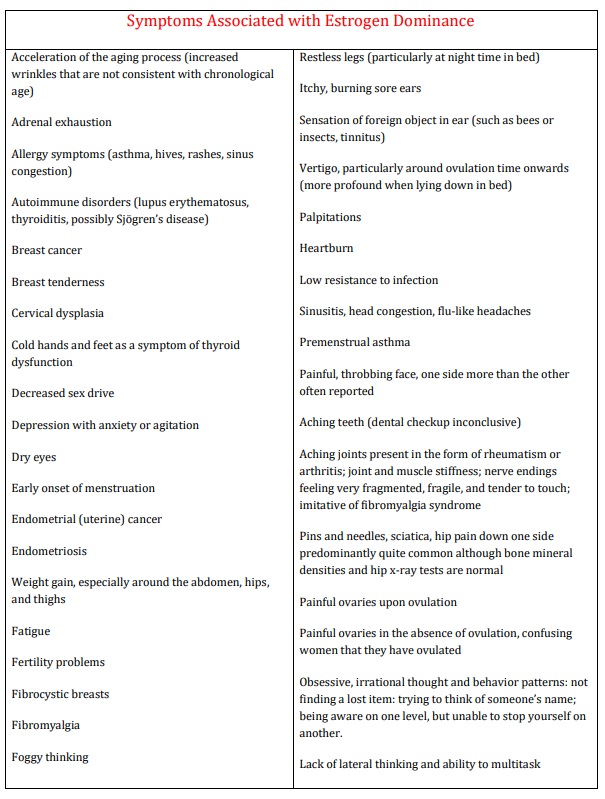
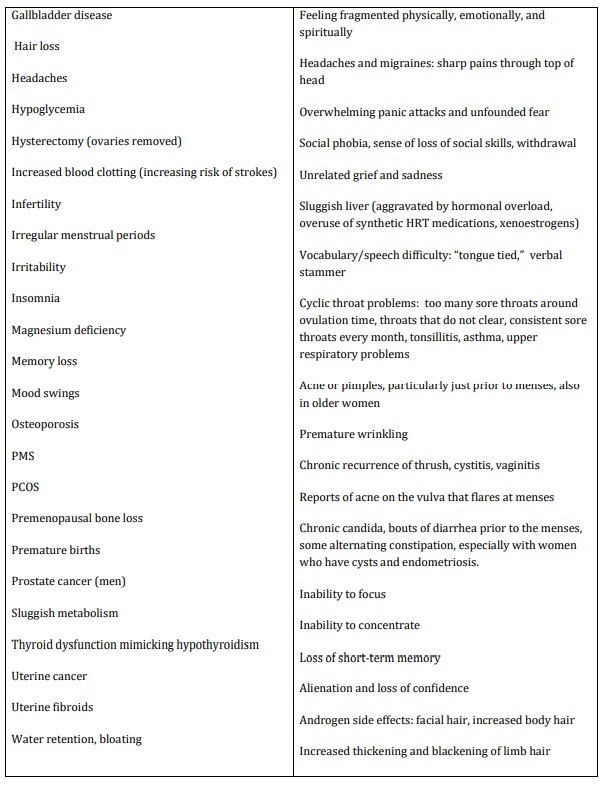
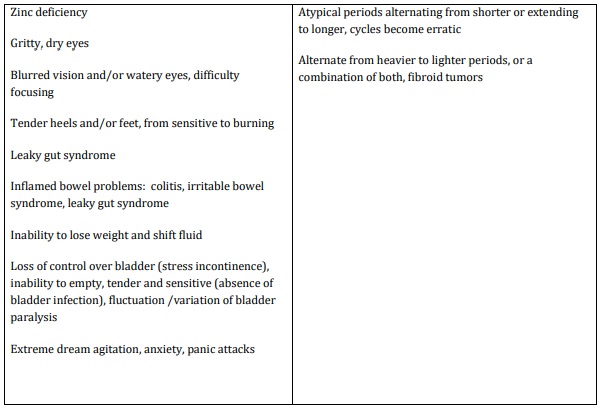
When estrogen is normal or high and progesterone is low, this is known as estrogen deficiency.
The list of symptoms associated with estrogen dominance follows:
 PART 2FI
 PART 2g
Hormonal imbalances disguised as any of the above conditions can lead to
It takes many years to accumulate and can be insidious in its physical presentation.
Just remember, it took time to get to this point in your life, and it may take time.
to improve, reverse, and eliminate many of these problems.
Estrogen dominance and disease
Most cases of breast cancer, uterine cancer, and fibroid tumors are
attributed to the effects of estrogen. Menstrual cramps, mid-cycle pain, and heaviness.
Periods are due to estrogen dominance. Postmenopausal bleeding is often attributed to
due to estrogen dominance, and the overgrowth of Candida in the intestines and female genitalia is
linked to estrogen.
Besides causing cancer, it causes high estrogen and low progesterone levels in women.
They are associated with benign tumors, such as fibroid tumors, ovarian cysts,
Breast disease, endometriosis, and cervical dysplasia with abnormal Pap smear.
In men, the highly prevalent condition known as benign prostatic hyperplasia (BPH)
It is attributed to estrogen dominance. Symptoms of BPH include a frequent urge to urinate due to pressure on the urethra caused by the overgrowth of the prostate. Complete
Urethral obstruction can sometimes result. Prostate cancer, surprisingly, is also a possible cause.
attributable to estrogen dominance.
A more comprehensive list of pathologies potentially caused by endocrine-disrupting chemicals includes the following:
Environmental allergies
Food allergies and food sensitivities
Chronic sinusitis
Asthma
Atopic dermatitis
Migraine
Hair loss (alopecia)
Hyperlipidemia
Hypertension
Diabetes
Cardiovascular diseases
Abdominal problems (bloating, cramps, constipation)
Diarrhea (symptoms of irritable bowel syndrome (IBS))
Candida (vulvovaginitis)
Recurrent urinary tract infections (UTIs)
Dysmenorrhea, menorrhagia, irregular menstruation
Ovarian cysts, polycystic ovary syndrome (PCOS)
Fibroid tumors
fibrocystic breast disease
Endometriosis
Cervical dysplasia with abnormal Pap smear
Benign prostatic hyperplasia (BPH) in men with increased frequency of
urination
Nocturia
Arthritis
Fibromyalgia
Urticaria
Angioedema
Episodes of hypoglycemia and hypotension leading to dizziness and
dizziness
Agitation
Anger
Behavioral problems
Bad mood
Decreased concentration
Depression
Anxiety
Sleep disorders
Hyperphagia (overeating)
Obesity
Hypothyroidism
Hashimoto's thyroiditis
Graves' disease
Autoimmune diseases (lupus, rheumatoid arthritis, multiple sclerosis)
Heat waves
Night sweats
Hazy thinking
Fatigue
Cancer
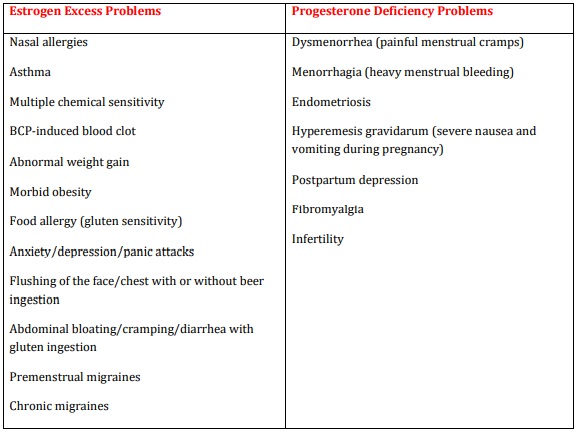
Table 1 identifies the symptoms attributed to estrogen or progesterone dominance.
deficiency.
 PART 2gg
Estrogen dominance and its relationship with obesity, diabetes, and hypertension.
Estrogen dominance leads to an increase in insulin, which is often first noticed as
Episodes of hypoglycemia (low blood sugar), especially in women. Around noon and
Before lunch, blood glucose levels drop due to high insulin levels. As a result, the
The individual feels shaky, nervous, and easily irritable.
The overproduction of insulin causes the body to produce fat cells. Insulin directs glucose...
in fat cells, and when fat cells can no longer accommodate glucose levels in
In the body, a condition called insulin resistance develops. Insulin resistance leads to
diabetes.
Insulin resistance also plays a role in hypertension, causing salt retention, which
It raises blood pressure. Approximately half of patients with hypertension
Insulin resistance. Although high blood pressure is often referred to as "essential"
Hypertension, there's nothing essential about it. It's the result of many factors, and
One primary symptom is insulin resistance.
When progesterone decreases, estrogen increases, and this leads to an increase in insulin.
Initially, the increase in insulin causes episodes of hypoglycemia, which are more common.
in women more than in men. Hospital discharges due to hypoglycemia in 2008 were more
common in women residing in the South and Midwest regions, followed by the Northeast region.
and in the West. This trend is the same for most patients related to estrogen dominance.
conditions and for hypotension (low blood pressure). When progesterone decreases,
Aldosterone initially decreases, leading to hypotension. I've seen several [examples].
Patients, mainly women, who complain of hypotension. This is low blood pressure.
It is associated with low progesterone.
Low blood pressure causes the kidneys to release renin, which converts
angiotensinogen I converts to angiotensin I; angiotensin I converts angiotensinogen II to
Angiotensin II is produced using angiotensin-converting enzyme (ACE). Angiotensin II causes...
Aldosterone levels increase. This increase in aldosterone often exceeds the...
The mark, and the patient's blood pressure eventually increases and requires therapy.
Frequently ACE inhibitors, such as lisinopril, captopril, enalapril, Monopril and others -pril
medications for blood pressure and angiotensin receptor blockers (ARBs), such as
Losartan, candesartan, valsartan, and other sartan-based medications are used as
pressure-reducing agents.
High insulin levels also cause salt retention in the renal tubules, which ultimately leads to...
High blood pressure. These two mechanisms are the main reasons for the increase in...
high blood pressure, which is often called essential hypertension, meaning that the cause is
unknown. Estrogens directly cause high blood pressure; therefore, women with
Chronic estrogen dominance leads to more emergency room visits for hypertension and
hospital visits more often than men. The South - with its abundance of pesticides and, as
As a consequence, high levels of xenoestrogens mean it has the highest rate of hypertension in the region.
the country, followed by the Central-West, Northeast, and West regions.
The effect of estrogen dominance and progesterone deficiency on the thyroid.
Excess estrogen causes an increase in thyroid-binding globulin (TBG), which is
The protein that circulates thyroid hormones in the body. When the thyroid binds
As globulin levels increase, this protein binds to all thyroid hormones, preventing them from functioning properly.
to be released for their intended effects, which include the regulation of metabolism.
An increase in TBG causes low metabolism and increased production of fat cells. Oral,
However, when used non-transdermally, estradiol increases TBG, while testosterone decreases TBG.
Testosterone increases the T3/T4 ratio. Estradiol does not affect the T3/T4 ratio.
regardless of the route of administration; therefore, T4 replacement (Synthroid
or Levoxyl) in women with primary hypothyroidism (characterized by
(impaired endogenous T4 production) should be increased when oral estrogens are used.
administered. When progesterone is low, the thyroid may malfunction because
Progesterone helps thyroid tissue absorb minerals such as selenium and potassium.
Zinc and iodine, which are necessary to convert the thyroid prohormone T4 into
T3 is the active form. If these minerals are not present in the thyroid, T4 is converted into a...
A stored form called reverse T3 (rT3). Many healthcare professionals, when measuring...
Regarding the thyroid, they tend to measure only TSH (thyroid-stimulating hormone) and, if it is
within the normal range (0.45-4.5 reported by most laboratories), they pronounce the
Normal thyroid. This is not the case if the patient is obese or overweight. If a
If an individual has weight problems, it is likely that their thyroid is not functioning correctly.
as a result of excess thyroid-binding globulin. With the advent of estrogen and
During obesity epidemics, many women developed an inflammatory autoimmune disease.
An attack on your thyroid gland known as Hashimoto's thyroiditis. This condition is
diagnosed by the presence of thyroid antibodies, such as antithyroglobulin antibodies.
or thyroid peroxidase (TPO) antibody in the blood. Studies have shown that
The production of these thyroid antibodies goes hand in hand with gluten and dairy.
Sensitivity. Remember, dairy products can be estrogenic due to growth.
Hormones and other chemicals administered to cows that produce milk. Cows
They are fed with GMO corn that contains about 25 chemicals, and at least two – glyphosate and atrazine – are well-known estrogenic compounds. Alachlor, acetochlor, metolachlor,
Metolachlor-S and other chemicals are widely used in corn production. These chemicals are thyroid-stimulating agents.
disruptors; therefore, estrogenic chemicals along with these thyroid disruptors
This could explain the epidemic of underactive thyroid observed in the US. Furthermore, gluten-containing grains (barley, rye, wheat, spelt, kamut) are weak plant-based estrogens.
Since women generally have more estrogen than men, this may be the reason.
Women have a higher incidence of Hashimoto's thyroiditis than men. Gluten
Gluten has been demonized in recent years, but humans have been eating grains containing gluten for thousands of years without associated health problems until now.
Recently, especially in recent years since the 1990s, we have seen a surge in what is called gluten sensitivity. The increase in gluten sensitivity correlates with...
increased estrogen levels in our environment. If you have weight problems and/or
If you have thyroid problems, you may want to stop eating grains and dairy products containing gluten, because
as well as avoiding other foods and chemicals that are estrogenic. In most cases, you
You will begin to lose weight and your thyroid antibodies may decrease.
Inflammatory conditions associated with progesterone deficiency
The following inflammatory conditions are some, but not all, of the conditions that have
It was associated with insufficient progesterone and too much estrogen.
Arthritis
• Asthma
• Endometriosis
• Fibromyalgia
• Interstitial cystitis (IC). Interstitial cystitis is a chronic inflammatory disease.
The condition of the submucosal and muscular layers of the bladder. That is
a mast cell disease that is more prevalent in women than in men.
Estrogen dominance in women can cause IC. When estrogen binds to
Its receptor on mast cells causes degranulation of the mast cells.
detrusor muscles of the bladder, which leads to symptoms of IC. That is
the reason why antihistamines, such as hydroxyzine, Zyrtec and Allegra
Help alleviate IC symptoms. Hyperestrogenic problems are resolved.
balancing estrogens; therefore, providing adequate amounts of
progesterone and encourage patients to eat cruciferous vegetables.
and/or taking nutritional supplements based on cruciferous vegetable extracts
supplements such as DIM (diindolylmethane) and I3C (Indole-3-
Carbinol may help patients with IC.
• Multiple sclerosis
• Non-allergic rhinitis and seasonal/perennial allergic rhinitis
• Obesity and asthma
• Premenstrual asthma (PMA)
• Premenstrual migraines
• Premenstrual dermatitis
The effects of estrogen on coagulation.
Coagulation (also known as coagulation) is the process by which blood changes from one type of blood to another.
The liquid turns into a gel. This potentially results in hemostasis - the cessation of blood loss.
A damaged ship, followed by repairs. The coagulation mechanism involves
activation, adhesion and aggregation of platelets together with deposition and
fibrin maturation.
The most consistent effects of estrogens on coagulation proteins are as follows:
• Elevated thrombin and fibrinogen, two components of
coagulation process.
• Elevation of factors II, VII, IX, X, XII and kallikrein, all of which
to participate in the coagulation process.
• Elevated levels of protein C and plasminogen, regulators of coagulation.
Although these elevations have been attributed to the estrogenic component in
In contraceptives, the concentration of progestin can also influence these increases. This
This is the reason why some women develop blood clots when taking estrogen pills or
Isolated estrogen hormone replacement therapy, such as Premarin, and an estrogen/progestin combination.
A combination like PremPro.
The varieties of hormonal imbalances
Based on my clinical assessment of patients who present with hormonal imbalance,
Laboratory results show twelve different hormonal patterns. The first group has
no disabilities; there are very few of these individuals. The second group only lacks
progesterone; the third group lacks both progesterone and estradiol; the fourth
The fifth group lacks progesterone, estradiol, and dehydroepiandrosterone (DHEA).
This group lacks progesterone, estradiol, DHEA, and testosterone. These individuals also
many often lack pregnenolone. The other groups show variations in the presence and
absence of these hormones.
Estrogen dominance leads to increased insulin production. When insulin
As our cravings increase, we crave sweets. This is why a woman craves sweets at the end of the day.
The luteal phase of a woman's menstrual cycle. When a woman is closest to her period, she
Progesterone drops dramatically, but estrogen is noticeably higher than...
progesterone, thus becoming dominant. This craving occurs because insulin will
when estrogen is dominant. The effect of estrogen on insulin worsens when
Women reach their thirties. In their mid-thirties, women have frequent periods.
Cycles without ovulation, known as anovulatory menstrual cycles. Progesterone
It declines without ovulation, and this leads to estrogen dominance. It is, therefore,
It's interesting to note that many women begin to gain weight in their early thirties and
in addition.
If starches or foods containing sugar are consumed, blood sugar (glucose) levels will rise.
increase. Insulin then takes the glucose that the body doesn't need for energy and
It is stored in fat cells. If this process continues, an individual will begin to gain weight.
If your blood glucose level is low and your insulin level is high, as often happens in
In the late morning before lunch, you may feel shaky and even sweaty because you are
to have an episode of hypoglycemia. This causes your adrenaline to increase, and glucagon is...
released to try to send any sugar that is in your body to the brain. The rise in
Adrenaline can make you feel hyper and impatient.
Leptin and leptin resistance
If you gain weight because of high insulin levels, a point is reached when the
The fat cells are fed up with this weight gain business. They send a messenger.
A molecule called leptin travels to the hypothalamus, which is the satiety center and
Appetite signals located in the brain, telling the hypothalamus that appetite is saturated.
The hypothalamus initially receives this message and alerts insulin to stop the...
to desire and suppress appetite so that fat cells can decompress; however, nobody
You see weight loss overnight, including from fat cells, which continue to send more
messages to the hypothalamus.
Eventually, the hypothalamus becomes overloaded with messages and stops responding. When
The leptin message is ignored; this is known as leptin resistance. Leptin resistance leads to...
to insulin resistance, which simply means that insulin no longer has the ability to
to continue causing fat cells to accept glucose. As a result, glucose remains in
blood; at high levels, this is known as diabetes. [From “Estradiol Binds to Insulin and
"Insulin Receptor Decreasing Insulin Binding in vitro." Robert Root-Bernstein, Abigail
Podufaly and Patrick F. Dillon. Frontiers in Endocrinology (Lausanne). 2014; 5: 118.
Published online on July 21, 2014. doi: 10.3389/fendo.2014.00118.
The effects of leptin resistance on mental health, thyroid function, inflammation,
and weight gain
When you become resistant to leptin, the levels of a chemical called serotonin, which is
The "feel-good" hormone decreases, and you experience anxiety, depression, and panic.
attacks. To alleviate these symptoms, your primary care physician may put you in a
antidepressant, which, in turn, suppresses thyroid function. Low thyroid
This function is linked to weight gain, increased anxiety, and fatigue. Fat cells also produce
TNF-alpha and IL-6, which are inflammatory chemicals (cytokines). These
substances cause pain such as joint pain, back pain, muscle pain and
generalized muscle pain known as fibromyalgia. TNF-alpha and IL-6 are also
implicated in asthma and allergy symptoms. The more fat cells you have, the greater
the production of these substances. Fat cells stimulate skin cells and the adrenal glands.
glands to produce more estrogen. Fat cells have an enzyme (chemical) in them.
called aromatase, which converts testosterone into estrogens. Therefore, if you have a
If you have a weight problem, you probably have estrogen dominance and may also have...
Low testosterone as a consequence.
For the past eight years, I have measured testosterone levels in men and women.
and discovered that even young men and women can have low testosterone levels. Low
Testosterone leads to a low sex drive (decreased libido). This can cause marital discord.
which often leads to divorce. By the way, the number one reason for divorce in America
It's marital infidelity. It's not about money! So please, before you get divorced, fix your hormones!
Low testosterone also causes foggy thinking, forgetfulness, and apathy; and, in men,
often inflexible (anancastic personality disorder), territorial and moody behavior.
Unfortunately, those in charge of world affairs are middle-aged men experiencing the effects of low testosterone – known colloquially as "low T".
These men make decisions in government and often disagree.
The consequences of their behavior can be disastrous, as can be seen in such examples.
How to wage senseless wars. When we see the evil face of war in a person.
Like Hitler, we should ask ourselves: "What was his hormonal status?" I bet you...
He had low T10. Playing golf on chemically contaminated golf courses may not help his
Testosterone level. Above all, don't lick your golf ball clean.
Scientific references and institutional guidelines
The educational guidelines on this portal follow the clinical consensus of the leading medical societies of Allergy and Immunology: