


My son had scabies — Is it related to an allergy to insects? — How to treat insect allergies?
When symptoms or doubts arise involving My son had scabiesDistinguishing between scientifically validated information and palliative care makes all the difference in the evolution of respiratory, skin, and systemic health. This page aims to deepen understanding of... "My son had scabies — Is it related to insect allergies? — How to treat insect allergies?", providing clear context on how the immune system reacts, which signs require medical attention, and how to structure individualized and effective care.
Complementary Audiovisual Content: Click here to watch the full explanatory video on the official Brasil Sem Alergia YouTube channel..
✔ Medical content reviewed and validated by the founding clinical staff of the Brazil Without Allergies Project
Dr. Marcello Bossois (CRM-RJ 52.73214-1) · Dr. Patricia Schlinkert (CRM/RJ 5274541-3) — more than 30 years of history in Allergy and Immunology, with units in Rio de Janeiro, São Paulo and Paraná. Last reviewed: November 2026.
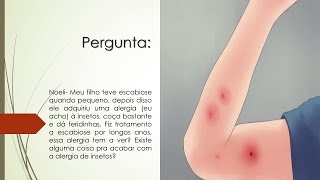
Relationship between Scabies and Insect Allergy and Treatment Options
A frequent question in allergy practices involves the emergence of allergic conditions after past skin infestations. In the case of children who had scabies (popularly known as human scabies) in childhood and who subsequently began to show a strong sensitivity to insect bites — characterized by the appearance of multiple lesions and wounds resulting from intense itching —, it is important to understand how the skin barrier behaves.
In clinical practice and immuno-allergy research, the integrity of the epithelium and skin barrier is deeply valued. Healthy skin depends on cohesive junction proteins that prevent the penetration of aggressive agents. Although it is not possible to state with absolute scientific certainty that prolonged treatment for scabies — often based on topical substances of an irritating nature — has directly caused this sensitivity, it is speculated that chronic aggression to the skin tissue and local changes may weaken the epithelium.
This change in the skin barrier, associated with changes in the local microbiome, can facilitate the penetration of substances present in the saliva of insects, such as mosquitoes. This process can act as an inflammatory and allergic trigger, predisposing the patient to the development of conditions such as prurigo strofulum (insect bite allergy) or contact eczema. This is a line of clinical and theoretical reasoning that encourages important academic discussions about the recovery of skin integrity after parasitic infestations.
Treatment and Control of Insect Allergy
With regard to the possibility of controlling or modifying the evolution of allergy to insect bites, allergen-specific immunotherapy (popularly known as allergy vaccines) emerges as a prominent therapeutic tool. Approximately 85% of patients benefit significantly from this treatment, which is the only one capable of altering the natural history of the disease, teaching the immune system to tolerate the allergen and not trigger exacerbated allergic processes.
For the correct indication of immunotherapy, it is essential to carry out complementary tests and a strict correlation between the results of allergy tests and the symptoms presented by the patient. Conditions such as prurigo strofulum deserve extra attention, as the typical lesions — which form small papules, evolve into vesicles and, when they rupture, transform into ulcerated wounds — represent important entry points for cutaneous bacteria, such as Streptococcus. The colonization of these wounds by bacteria can, in unfavorable cases, trigger secondary systemic complications, such as post-streptococcal glomerulonephritis.
Therefore, the use of standardized allergen extracts and duly registered with the competent bodies, such as Anvisa, is essential to guarantee the safety and effectiveness of the treatment. Regular follow-up with a doctor specializing in Allergy and Immunology ensures that the therapeutic plan is individualized and suited to the needs of each patient. It should be noted that this content is strictly educational and informative in nature and does not under any circumstances replace consultation, diagnosis and specialized medical evaluation.
Development in Evidence-Based Medicine: Hypersensitivity to Insect Venoms and Anaphylaxis
The EAACI and AAAAI international guidelines classify reactions to insect bites into local reactions (such as prurigo strofulum in childhood, resulting from mixed cellular and humoral hypersensitivity to dipteran/culicidae salivary antigens) and anaphylactic systemic reactions to hymenoptera venoms (bees Apis mellifera, wasps/wasps of the genera Polistes and Vespula and ants Solenopsis invicta), mediated by specific IgE. In patients with a history of systemic reaction to hymenoptera, specific immunotherapy with insect venom It has a protective efficacy of over 90%–95% in preventing new potentially fatal episodes, associated with prescription and training for the immediate use of self-injectable adrenaline in emergency situations.
💎 Diamond Plan — Protecting yourself from serious reactions to bites is possible with specific treatment. Speak to a specialist in Allergy and Immunology via teleconsultation, from any city in Brazil. Schedule a teleconsultation →
Note: Subject to prior medical evaluation (in person or via telemetry/telemedicine). Immunotherapy uses allergen-specific vaccines, which requires a prescription from the attending physician and must be administered under direct medical supervision.
Immunological Reactions to Insect Bites and Prevention of Crises
Difference between Exaggerated Local Reaction, Strophulus, and Anaphylaxis
Reactions triggered by arthropods are clinically divided between hypersensitivity to the saliva of hematophagous insects (such as mosquitoes, black flies, and fleas, which cause papular urticaria in childhood) and systemic allergy to the venom of hymenoptera (bees, wasps, and fire ants). While salivary antigens usually generate persistent pruritic papules and a risk of secondary bacterial infection from scratching, venom injected by a stinger can trigger massive mast cell degranulation mediated by IgE antibodies, requiring evaluation of baseline serum tryptase and an emergency action plan.
Etiological Diagnosis and Specific Desensitization
The investigation conducted by the specialist physician precisely identifies the antigenic fraction responsible for the condition, allowing for the establishment of the... treatment for mosquito bite allergy and, when indicated, the allergy vaccineRecognized worldwide by the World Health Organization, desensitization modifies the natural history of hypersensitivity, restoring safety to outdoor activities.
Epithelial Dysfunction, Skin Microbiome, and Delayed Sensitization
In eczematous dermatitis and cases of chronic pruritus, differentiating constitutional atopy from allergic contact dermatitis (a type IV delayed hypersensitivity reaction mediated by T lymphocytes sensitized to metals, cosmetic preservatives, fragrances, resins, or rubber) is essential. Repeated exposure to the sensitizing agent maintains active skin inflammation even with the use of anti-inflammatory ointments, requiring precise identification of the triggering factor.
Clinical Safety Criteria and Warning Signs in Allergology
Early recognition of warning signs requiring priority medical reassessment is part of the health education of every patient and their family. Symptoms such as progressive dyspnea (difficulty breathing or speaking in complete sentences), refractory wheezing, sudden edema of the lips, tongue, or glottis, dizziness due to a drop in blood pressure, persistent fever associated with skin lesions or mucous membrane involvement require immediate emergency care, followed by a structured allergy investigation to prevent future recurrences.
Impact on Quality of Life, Sleep, and Systemic Well-being
In addition to direct physical manifestations, uncontrolled conditions linked to My son had scabies profoundly interfere with the architecture of restful sleep, the ability to concentrate at school and work and emotional balance. Chronic stress, through neuroendocrine mediators and epithelial alarmins, feeds back the immune inflammatory response. In this way, instituting a comprehensive approach to clinical and environmental rehabilitation restores the individual's daily autonomy and global well-being.
Importance of Differential Diagnosis and Detailed Medical History
In the specialty of Allergy and Immunology, two patients with apparently similar symptoms involving My son had scabies may present completely different pathophysiological mechanisms. For this reason, a detailed clinical history — investigating the chronology of crises, home and professional environment, family history of atopy, use of concomitant drugs and eating habits — serves as an indispensable compass to correctly interpret laboratory tests (such as total and specific IgE levels) and functional tests. An isolated laboratory result never replaces in-person clinical judgment or specialized telemedicine, preventing mistaken diagnoses and unnecessary treatments.
Environmental Prevention, Therapeutic Adherence, and Continuous Monitoring
Long-term success in managing allergic and immunological conditions depends directly on the alliance between targeted medical treatment and daily educational measures. Maintaining well-ventilated environments free from accumulated household dust, preserving the physiological hydration of mucous membranes and the skin barrier, strictly adhering to the schedules and technique for using prescribed preventive medications, and conducting periodic check-ups allow for the stabilization of subclinical inflammation before it progresses to acute exacerbations.
Frequently Asked Questions in Clinical Practice
Mechanisms of Food Allergy, Accurate Diagnosis and Nutritional Management: The immune system associated with the gastrointestinal mucosa normally functions by maintaining oral tolerance to thousands of dietary proteins. When this immune barrier is broken—influenced by genetic predisposition, dysbiosis of the intestinal microbiota, or immaturity of secretory IgA in childhood—intact protein fractions sensitize mast cells and basophils. Therefore, a single positive blood test reflects only biological sensitization and should always be correlated with the clinical history and, when necessary, with a supervised oral food challenge in a medical setting.
Immunology of the Digestive Mucosa: Gut-Airway Axis and Differential Diagnosis: Immune-mediated disorders of the gastrointestinal tract—including eosinophilic esophagitis, celiac disease, and non-celiac gluten sensitivity—share alterations in the integrity of the tight junctions of the digestive epithelium. In eosinophilic esophagitis, frequently associated with rhinitis, asthma, and atopic dermatitis, eosinophil infiltration of the esophageal wall causes dysphagia, food impaction, and symptoms that mimic gastroesophageal reflux refractory to proton pump inhibitors.
Skin Barrier Health, Immune Inflammation, and Pruritus Control: In eczematous dermatitis and cases of chronic pruritus, differentiating constitutional atopy from allergic contact dermatitis (a type IV delayed hypersensitivity reaction mediated by T lymphocytes sensitized to metals, cosmetic preservatives, fragrances, resins, or rubber) is essential. Repeated exposure to the sensitizing agent maintains active skin inflammation even with the use of anti-inflammatory ointments, requiring precise identification of the triggering factor.
Diamond Plan: Specialized Allergy Treatment Wherever You Are
Living hundreds of miles from an allergist or having to interrupt treatment because of the price of vaccines shouldn't be anyone's fate. With the Diamond Plan, Brasil Sem Alergia brings the same standard of care from its clinics to your home, with telemedicine consultations and a more accessible path to immunotherapy. Protecting yourself from serious reactions to bites is possible with specific treatment.
Why do patients across Brazil choose the Diamond Plan?
- Teleconsultation with a specialist In Allergy and Immunology, without queues and without long commutes — ideal for those who live far from large cities.
- easy access to Immunotherapy (including allergy vaccines and immunostimulants) — indicated for the treatment of allergic rhinitis, asthma, bronchitis, atopic dermatitis, insect/mosquito bite allergy (prurigo strophulus), recurrent candidiasis, and for increasing immunity in selected patients — capable of modifying the natural course of allergic disease, always through consultation and individualized prescription.
- A more accessible route For those facing the high cost of allergy vaccines, this plan offers support for continuity of treatment.
- Continuous monitoring based on clinical evolution, with adjustments to treatment throughout the entire therapeutic cycle.
- National coverage, backed by a consolidated physical network and a founding clinical team with over three decades of experience.
More than 30 years caring for people with allergies.
Founded and run by Dr. Marcello Bossois (CRM-RJ 52.73214-1) and by Dr. Patrícia Schlinkert (CRM/RJ 5274541-3)The Brazil Without Allergies Project adds... more than 30 years of history and more than 450,000 free services, with physical presence at Rio de Janeiro, São Paulo and Paraná, one mobile clinic bus that brings testing and consultations to communities with limited access to specialized care and a platform of telemedicine which connects patients from all states to the same standard of care.
START TODAY
Your expert consultation is just a click away.
I want to join the Diamond Plan.Schedule a teleconsultation
Official telemedicine environment: brasilsemalergia.online
Do you prefer to be served in person?
Our clinical units They conduct consultations, allergy tests, and immunotherapy follow-up with doctors in person:
- Rio de Janeiro: Realengo (West Zone), North Zone, Duke of Caxias, Xerém, New Iguaçu, Itaguaí, Niterói, Iguaba Grande and Saint Peter of the Village (Lakes Region).
- São Paulo: Campo Limpo (South Zone).
- Paraná: Curitiba.
Schedule your in-person appointment. Or check the mobile bus schedule through the customer service center on WhatsApp. (21) 99954-5632.
The indication for immunotherapy, and for any treatment, depends on an individual medical evaluation. This content is for informational purposes only and does not replace consultation with a specialist.
Note: Subject to prior medical evaluation (in person or via telemetry/telemedicine). Immunotherapy uses allergen-specific vaccines, which requires a prescription from the attending physician and must be administered under direct medical supervision.
Conclusion and Summary of Guidelines
In summary, the appropriate approach to My son had scabies This requires a clear understanding of the immunological mechanisms involved, precise etiological diagnosis, and individualized medical follow-up. Avoid self-medication and investigate the root cause of symptoms—relying on specialized resources and reliable guidance such as... allergy vaccine When clinically relevant, it is the safest way to manage crises, prevent complications, and ensure sustainable quality of life.
Scientific references and authoritative sources
The guidelines on this page follow the guidelines and literature of leading international Allergy and Immunology institutions. For further information:


