


Can Montelukast be used in bronchiectasis?
When symptoms or doubts arise involving Montelukast can be used in bronchiectasisDistinguishing between scientifically validated information and palliative care makes all the difference in the evolution of respiratory, skin, and systemic health. This page aims to deepen understanding of... "Can Montelukast be used in bronchiectasis?", providing clear context on how the immune system reacts, which signs require medical attention, and how to structure individualized and effective care.
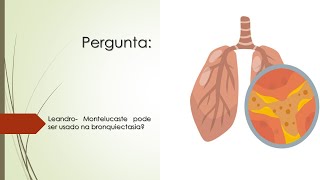
The use of montelukast in the management of bronchiectasis
Bronchiectasis is a condition characterized by permanent bronchial dilation, which facilitates the accumulation of secretions and can be triggered or worsened by chronic inflammatory and infectious processes. Given this scenario, doubts often arise about the role of specific medications, such as montelukast, in the treatment of this respiratory condition.
Montelukast acts as an inhibitor of leukotrienes, substances highly involved in inflammatory cascades, and is widely used to control conditions such as chronic rhinitis and asthma. However, its indication in bronchiectasis strictly depends on the assessment of the patient's overall clinical condition and the concomitant presence of inflammatory comorbidities, such as asthma or bronchitis. When there is an associated inflammatory component, the medication can play a relevant role in modulating the inflammatory response.
In addition to the anti-inflammatory approach, the therapeutic management of bronchiectasis often involves strategies to facilitate the fluidity and elimination of accumulated secretions. Mucolytic agents, such as N-acetylcysteine, are frequently studied and used for this purpose, helping with mucociliary clearance. At the same time, robust vaccination support constitutes a fundamental pillar in the prevention of secondary infections and serious exacerbations.
The importance of immunization and specialized monitoring
Patients with bronchiectasis and chronic respiratory diseases require strict care with immunization to avoid bacterial and viral lung infections that could worsen the clinical picture. Among the main prophylactic recommendations, the following stand out:
- Pneumococcal vaccines: fundamental in protecting against pneumonia and invasive infections caused by pneumococcus (including 13-valent and 23-valent formulations).
- Vaccine against Haemophilus influenzae type B: important to prevent aggressive bacterial infections of the respiratory tract.
- Triple acellular bacterial vaccine (DTPa): provides protection against diphtheria, tetanus and whooping cough (pertussis).
- Flu (Influenza) vaccines: available in trivalent and tetravalent presentations, essential to reduce seasonal respiratory complications.
Keeping the vaccination schedule up to date and having an individualized medical evaluation are essential steps to reduce the risk of secondary infections and pulmonary complications. It should be noted that this content is strictly educational and informative in nature and does not under any circumstances replace consultation, diagnosis and therapeutic prescription carried out by a specialist doctor.
Development in Evidence-Based Medicine: Bronchial Inflammation Control and Lung Function (GINA)
According to global guidelines of Global Initiative for Asthma (GINA), a bronchial asthma It is a chronic inflammatory disease of the airways characterized by bronchial hyperreactivity and variable obstruction to expiratory airflow, objectively documented by Spirometry (pulmonary function test with bronchodilator test)The fundamental therapeutic pillar consists of the continuous control of eosinophilic/Th2 inflammation of the bronchial mucosa through... inhaled corticosteroids (alone or in combination with long-acting beta-2 agonist bronchodilators — LABA, such as formoterol or salmeterol), using proper inhalation technique or a valved spacer. The isolated and repetitive use of short-acting bronchodilators (such as salbutamol or fenoterol) without inhaled anti-inflammatory coverage is associated with a higher risk of severe exacerbations and bronchial remodeling.
Control of Bronchial Inflammation, Lung Function, and Prevention of Remodeling
Lower Airway Hyperreactivity and the Role of Inhalation Therapy
Bronchial asthma and allergic bronchitis are chronic inflammatory diseases of the lower airways, characterized by bronchial hyperreactivity, mucosal edema, mucus hypersecretion, and variable obstruction to expiratory airflow. When eosinophilic or allergic inflammation (type 2) remains uncontrolled over the years—or when the patient uses only short-term bronchodilators without treating the underlying inflammation—thickening of the basement membrane and hypertrophy of the bronchial smooth muscle occur, a process known as bronchial remodeling.
Inhalation Technique, Environmental Control and Respiratory Immunotherapy
The integration between environmental control of household dust, adherence to the prescribed preventive plan, and implementation of allergy test allows you to customize the asthma treatmentIn the presence of proven IgE sensitization, the asthma vaccine It acts on the immunological cause of respiratory hyper-reactivity, while cases of severe refractory asthma now have access to highly precise immunobiological drugs.
Inflammation of the Respiratory Mucosa, House Mites, and Local Complications
Under the medical concept of a 'single airway', uncontrolled inflammation of the nasal cavities and paranasal sinuses directly impacts the ears (Eustachian tube dysfunction), eyes (rhinoconjunctivitis), sleep quality, and bronchi. In specific subgroups, such as Aspirin-Exacerbated Respiratory Disease (AERD), recurrent nasal polyposis, asthma, and intolerance to COX-1 inhibitor anti-inflammatory drugs are also present, requiring specialized diagnosis to restore the sense of smell and respiratory patency.
Immediate Reactions, Delayed Drug Reactions, and Risks of Self-Medication
Drug hypersensitivity reactions encompass distinct immunological and pharmacological mechanisms: from immediate reactions (up to one to six hours after dosing, manifested by urticaria, labial or palpebral angioedema, bronchospasm, and anaphylaxis, common with COX-1 inhibitor analgesics and beta-lactams) to delayed drug eruptions mediated by T cells, such as maculopapular rashes and DRESS syndrome — a systemic condition that arises weeks after the start of anticonvulsants, sulfones, or allopurinol, presenting with fever, lymphadenomegaly, eosinophilia, and the need for immediate discontinuation under hospital supervision.
Vaccine Mechanisms, Excipients, and Assessment of Immune Competence
In assessing the competence of the immune system—whether in recurrent infections, laboratory alterations in immunoglobulins (IgG, IgA, IgM, IgE), or in people living with HIV under monitoring of CD4 T lymphocyte counts—a careful distinction is made between the use of inactivated/subunit vaccines (widely safe even in immunocompromised individuals) and live attenuated vaccines, whose indication depends on the degree of preservation of cellular immunity. Furthermore, patients undergoing allergy immunotherapy can maintain their vaccination schedule, respecting only small operational intervals as directed by the medical team.
Clinical Safety Criteria and Warning Signs in Allergology
Early recognition of warning signs requiring priority medical reassessment is part of the health education of every patient and their family. Symptoms such as progressive dyspnea (difficulty breathing or speaking in complete sentences), refractory wheezing, sudden edema of the lips, tongue, or glottis, dizziness due to a drop in blood pressure, persistent fever associated with skin lesions or mucous membrane involvement require immediate emergency care, followed by a structured allergy investigation to prevent future recurrences.
Impact on Quality of Life, Sleep, and Systemic Well-being
In addition to direct physical manifestations, uncontrolled conditions linked to Montelukast can be used in bronchiectasis profoundly interfere with the architecture of restful sleep, the ability to concentrate at school and work and emotional balance. Chronic stress, through neuroendocrine mediators and epithelial alarmins, feeds back the immune inflammatory response. In this way, instituting a comprehensive approach to clinical and environmental rehabilitation restores the individual's daily autonomy and global well-being.
Conclusion and Summary of Guidelines
In summary, the appropriate approach to Montelukast can be used in bronchiectasis It requires a clear understanding of the immunological mechanisms involved, precise etiological diagnosis, and individualized medical follow-up. Avoiding self-medication and investigating the root cause of symptoms—relying on specialized resources and reliable guidance such as specialized allergy and immunology care when clinically relevant—is the safest way to control flare-ups, prevent complications, and ensure sustainable quality of life.
Scientific references and institutional guidelines
The educational guidelines on this portal follow the clinical consensus of the leading medical societies of Allergy and Immunology:


